Chapter 3: The Broken Canvas
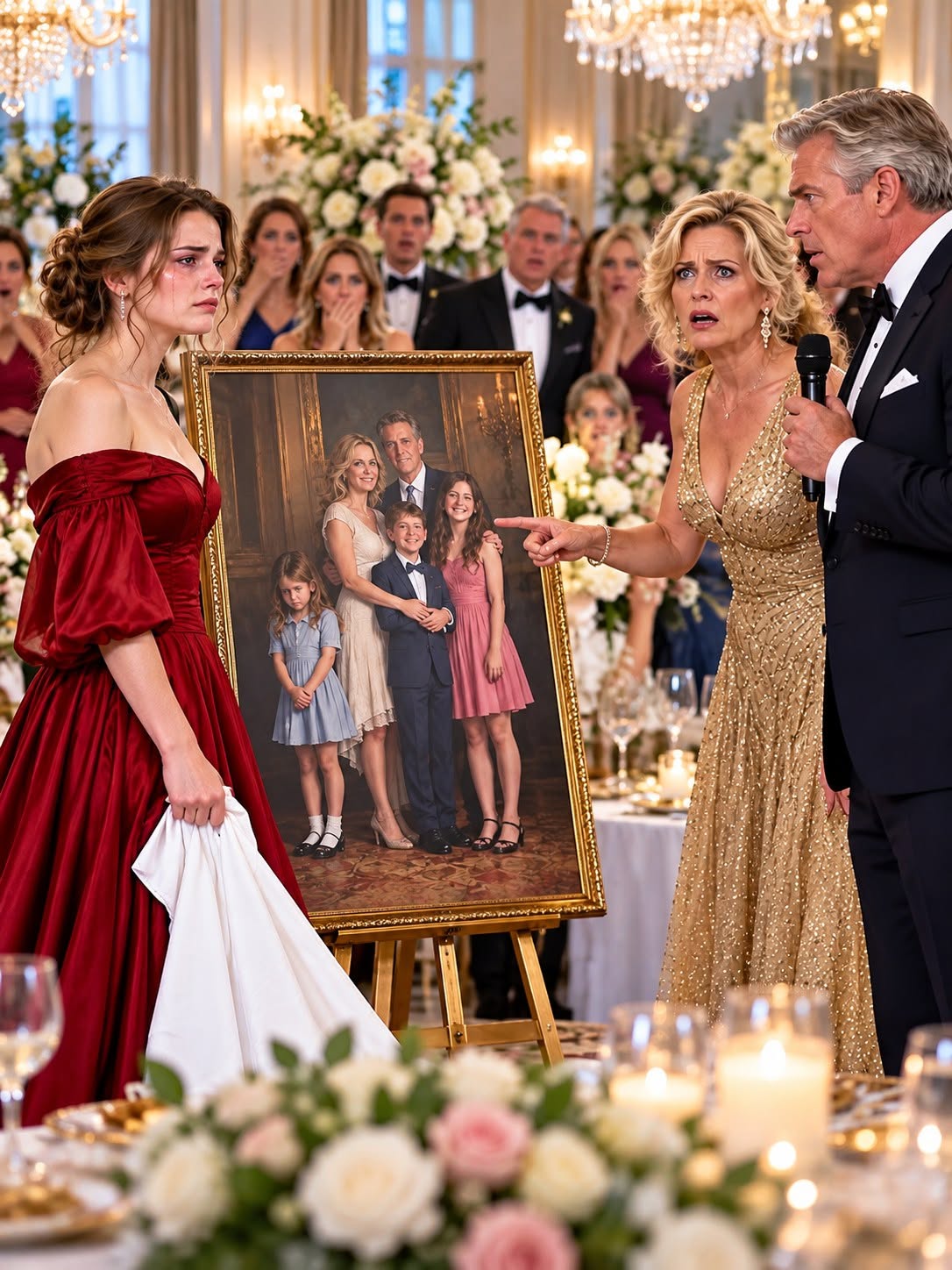
Ruth’s house sat on a dusty half-acre outside of town, surrounded by weathered cedar fencing and wild chamisa bushes that turned gold in late autumn.
She didn't keep a television. When I arrived, the screen door slapped shut behind me, and the house smelled of steeped mint and woodsmoke. Ruth was sitting at her kitchen table, wearing a loose linen shirt and her turquoise rings, paring apples into a ceramic bowl.
""Sit,"" she said, gesturing with the paring knife toward the opposite chair. ""You look like you haven't eaten since yesterday.""
She pushed a plate of warm cornbread toward me. I sat down, the wood of the chair solid and reassuring against my back.
""Dad took the painting,"" I told her, taking a small bite.
""I know,"" Ruth said, slicing cleanly through an apple core. ""He called me at midnight. First time David has called me after nine o'clock in ten years.""
""What did he say?""
""He asked if I helped you plan it."" She let out a dry, quiet laugh that barely moved her shoulders. ""I told him you didn't need my help to hold up a mirror. I told him he provided the material; you just supplied the canvas.""
I looked across the table at my father's older sister. Ruth had never married. She had lived in this low-slung adobe house since my grandparents died, running a small native plant nursery and keeping her distance from the manicured, country-club social circles my parents cultivated. She was the only Miller who had ever looked at my work as something more than decorative paper.
""Megan came to the studio today,"" I said. ""She told me you mentioned the blue chest.""
Ruth's knife paused against the cutting board.
For a long moment, the only sound was the wind scratching the dry branches of the cottonwood against the tin roof. She laid the knife down, wiped her hands on a linen towel, and looked at me with eyes that were identical to my father's—the same sharp gray-blue, but without the defensive barrier he always kept raised.
""Your father wasn't always a businessman, Rebecca,"" she said quietly.
""You told me that once. You said he used to draw.""
""He didn't just draw,"" Ruth said. ""He was brilliant. When David was eighteen, he spent seven months painting a mural across the south wall of the old agricultural hall in town. It was honest work—laborers, dry earth, the mountain light. Real work.""
She folded her hands on the table.
""Our father—your grandfather Arthur—was a hard, narrow man. He thought art was an indulgence for people who didn't want to sweat. When the hall committee held a reception to unveil the mural, Arthur stood up in the crowd. Just like David did last night. He made a joke about how David must have inherited his hands from a traveling salesman because no Miller had ever wasted daylight on colored mud.""
The breath caught in my throat. The room felt suddenly colder.
""The whole town laughed,"" Ruth continued, her voice level, stripped of sentiment. ""David stood there in his Sunday suit with paint under his fingernails and smiled until his jaw ached. The next morning, before sunrise, he went down to the hall with three cans of gray industrial primer. He rolled over the entire wall. Every inch of it.""
I stared at her, my fingers gripping the edge of the kitchen table. ""And the blue chest?""
""That's where the sketchbooks went,"" Ruth said. ""The brushes. The charcoal. The acceptance letter from the Chicago Art Institute that Arthur refused to co-sign. David locked it up the week before he enlisted in the Army. He told me he was going to build something nobody could laugh at.""
""So he built Miller Roofing,"" I murmured.
""He built a business,"" Ruth said. ""He married your mother, who understands invoices and social standing, and he had three children. Jason was safe—Jason wanted to count money. Megan was safe—Megan wanted to win games.""
She leaned forward, her sharp gaze pinning me to the chair.
""And then you came along.""
""He made the joke when I was seven,"" I said, the memory rising like bile. ""On the driveway. I was drawing a horse with chalk.""
""Because you were seven,"" Ruth said softly. ""And you weren't asking for permission. You were just doing it. Every time David looked at you holding a brush, he didn't see an odd duck who didn't fit. He saw the boy in the agricultural hall who had covered his own life in gray primer.""
""That doesn't make it okay, Ruth,"" I said, my voice rising, the anger cracking through the surface. ""Understanding his trauma doesn't erase twenty-one years of being treated like a second-class citizen in my own home.""
""I didn't say it made it okay,"" Ruth replied sternly. ""I told you that understanding isn't excusing. But if you think your father left you out of that photograph because he doesn't care about you, you're missing the painting for the frame.""
""He didn't invite me, Ruth! He told them I was too busy!""
""He left you out because he couldn't look at you without seeing everything he surrendered,"" Ruth said. ""And your mother... your mother went along with it because she has spent thirty years keeping your father from looking backward. If David starts looking at what he gave up, the whole foundation of their sensible, practical life starts to shake.""
I leaned back, my head spinning.
All my life, I had assumed my father viewed me with condescension—that I was a mild embarrassment, an impractical dreamer who needed to be tolerated. The reality felt far more grotesque: I had been an open wound walking through his living room.
""Why tell me about the chest now?"" I asked.
Ruth picked up her knife again, turning the apple slice over in her hand.
""Because David took your painting to the storage room last night,"" she said. ""Megan didn't tell you the whole story because she doesn't know. Your mother called me this morning after David left the house. She said he didn't sleep. She found him sitting in the basement at four in the morning with the padlock open.""
---
Related Stories