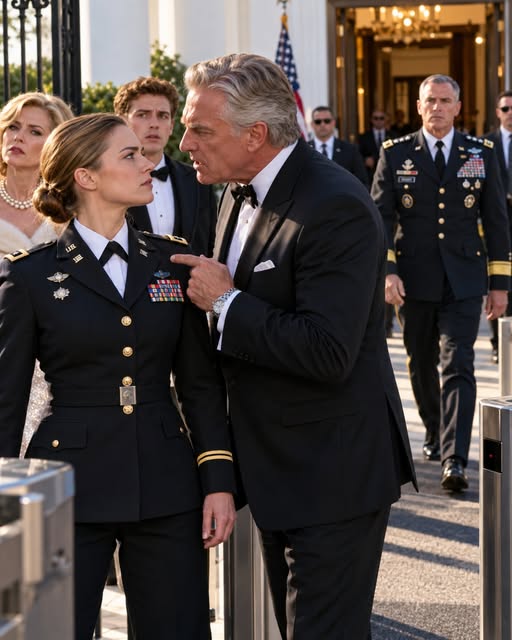
Chapter 4: The Archive on Tradd Street
The room dropped into an absolute, suffocating stillness. The only sound was the distant lapping of the harbor waves against the hotel pilings and the faint, rhythmic ticking of a grandfather clock in the hallway.
“The Shigal Valley,” I whispered, my hand moving instinctively toward the thin white scar beneath my left ear, feeling the phantom burn of shrapnel that had nearly severed my carotid artery twenty-four years ago.
“Your father told Melanie you were wounded in a training accident in Texas,” Mick said, rising from his knees beside the chair, keeping one large hand resting gently on my sister’s shoulder. “He told your relatives in Charleston that you were clumsy, that you had dropped a piece of heavy equipment during a routine motor pool exercise, and that the Army had given you a Purple Heart out of pity so you wouldn't file an administrative complaint.”
Mick reached inside his dress uniform jacket, pulled out an old, water-stained field notebook bound in faded olive-drab canvas, and handed it to me.
“Melanie brought me this,” Mick continued. “Your grandmother’s personal household diary, preserved from the family estate on Tradd Street. Inside the back cover was an original copy of your maternal grandfather’s testamentary trust, dated 1965.”
I opened the notebook with my gloved fingers. The brittle pages smelled of cedar shavings, damp river mist, and old ink.
Across the yellowed parchment, written in the elegant, sweeping hand of Judge Arthur Vance—my mother’s father, who had served on the federal bench for thirty years before his death—was the distribution clause that had governed the family’s wealth:
*“To my granddaughter, Quinn Eleanor Braddock, in recognition of her unyielding moral courage and independent spirit, I bequeath the fee-simple title to the residential estate at 44 Tradd Street, along with the two-thousand-acre timber and agricultural preserve in Colleton County, upon the completion of her fifth year of honorable active-duty service in the United States Armed Forces. Should she choose a civilian life, the property shall revert to the general family trust under the administration of Thomas Braddock.”*
The breath left my lungs in a sharp, cold hiss.
“He lied to me,” I murmured, my vision blurring as the fifty-eight years of my life rearranged themselves in the dark.
When I was seventeen, sitting at the mahogany dining table on Tradd Street with my acceptance letter to West Point clutched in my fist, my father had looked at me with cold, disgusted amusement. *“You’re throwing away your life, Quinn,”* he had told me, his voice smooth and contemptuous as he cut his roast beef. *“You won't get a nickel from this family. Not for tuition, not for clothes, not for a wedding. If you put on that uniform, you walk out of this house with nothing but the shirt on your back, and you never inherit an inch of Charleston ground.”*
He hadn't cut me off because he was disappointed in my choice.
He cut me off because my enlistment was the exact trigger that stripped him of his control over the entire family fortune.
If I completed five years of service, the Tradd Street mansion, the ancestral timberland, and the four-million-dollar Vance maritime endowment transferred directly into my sole legal ownership. But if he convinced me that I was disowned—if he convinced me that I was an unwelcome stray whose very presence was a disgrace to the family—I would never return to Charleston to inspect the probate records at the county courthouse.
“He told the probate court you had died in Afghanistan in 2002,” Melanie sobbed, pulling herself upright in the chair, her face contorted in agony. “When your name appeared on the preliminary casualty notification list after the helicopter went down in Shigal, Dad took a forged death certificate to the probate judge in Colleton County. He had the title to Tradd Street transferred into his corporate shell company before your medical evacuation flight even landed at Landstuhl!”
“And when you woke up from your coma in Germany,” Mick added, his jaw set into an iron block of fury, “your father had already signed a fraudulent lease agreement encumbering the timber acreage to secure his commercial shipping lines. When you called home from Walter Reed three months later, he told you that your mother had suffered a nervous breakdown from the stress of your injury, and that if you ever came back to Charleston, the emotional shock would kill her.”
I closed the notebook. The sound was as sharp and final as an executioner’s axe.
Thirty-six years.
Thirty-six years of believing that I was the cold daughter. The difficult daughter. The daughter who was too hard, too stubborn, too detached to deserve the warmth of a family dining room. I had spent three decades sleeping on canvas cots in combat zones, enduring freezing rains and mortar fire, telling myself that my service was the only thing I had because I wasn't built for love.
I wasn't an outcast. I was a target.
I was an asset whose legal existence was a loaded gun pointed directly at Thomas Braddock’s head.
“Where is he now?” I asked, my voice dropping so low that even the two federal agents by the door instinctively straightened their ties.
“He’s in the library off the main ballroom,” Mick answered, pointing toward the side corridor. “He thinks the wedding is delayed because Melanie had a panic attack about her dress. He’s drinking eighteen-year-old scotch with the president of the Carolina Yacht Club, telling everyone who will listen that his new son-in-law is an authentic war hero who knows how to keep an unruly family in line.”
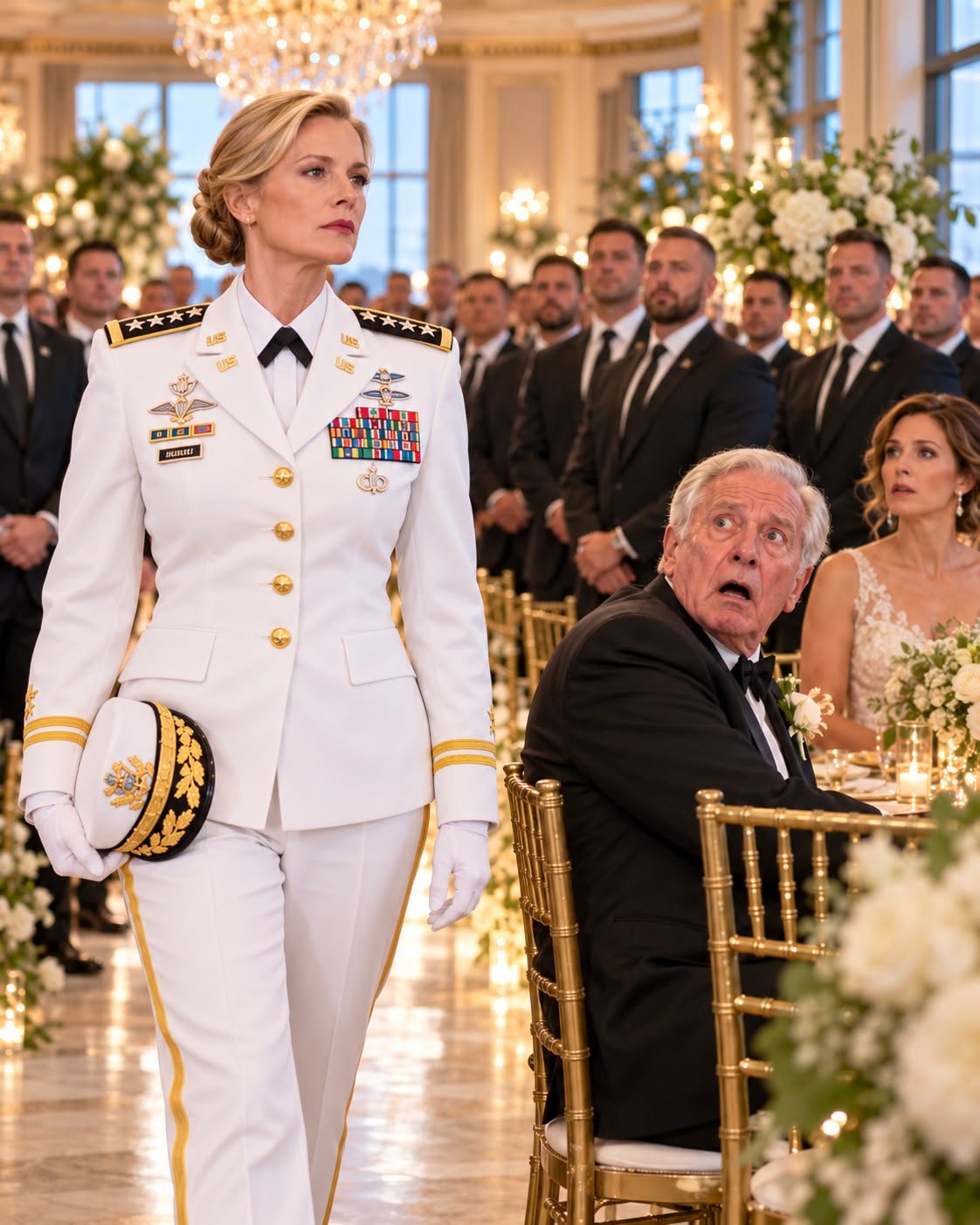
I handed the field notebook back to Mick, pulled my white gloves tight over my fingers, and picked up my service cap from the dressing table.
“Major,” I said, looking at the senior DCIS agent standing by the threshold.
“Yes, General Braddock?” the agent responded, stepping forward with his briefcase.
“Have your agents secure the perimeter of the library,” I commanded. “Nobody leaves through the terrace doors, and nobody makes a telephone call to the harbor master. It’s time my father had his debrief.”
Related Stories