Chapter 3: The Price of the Princess
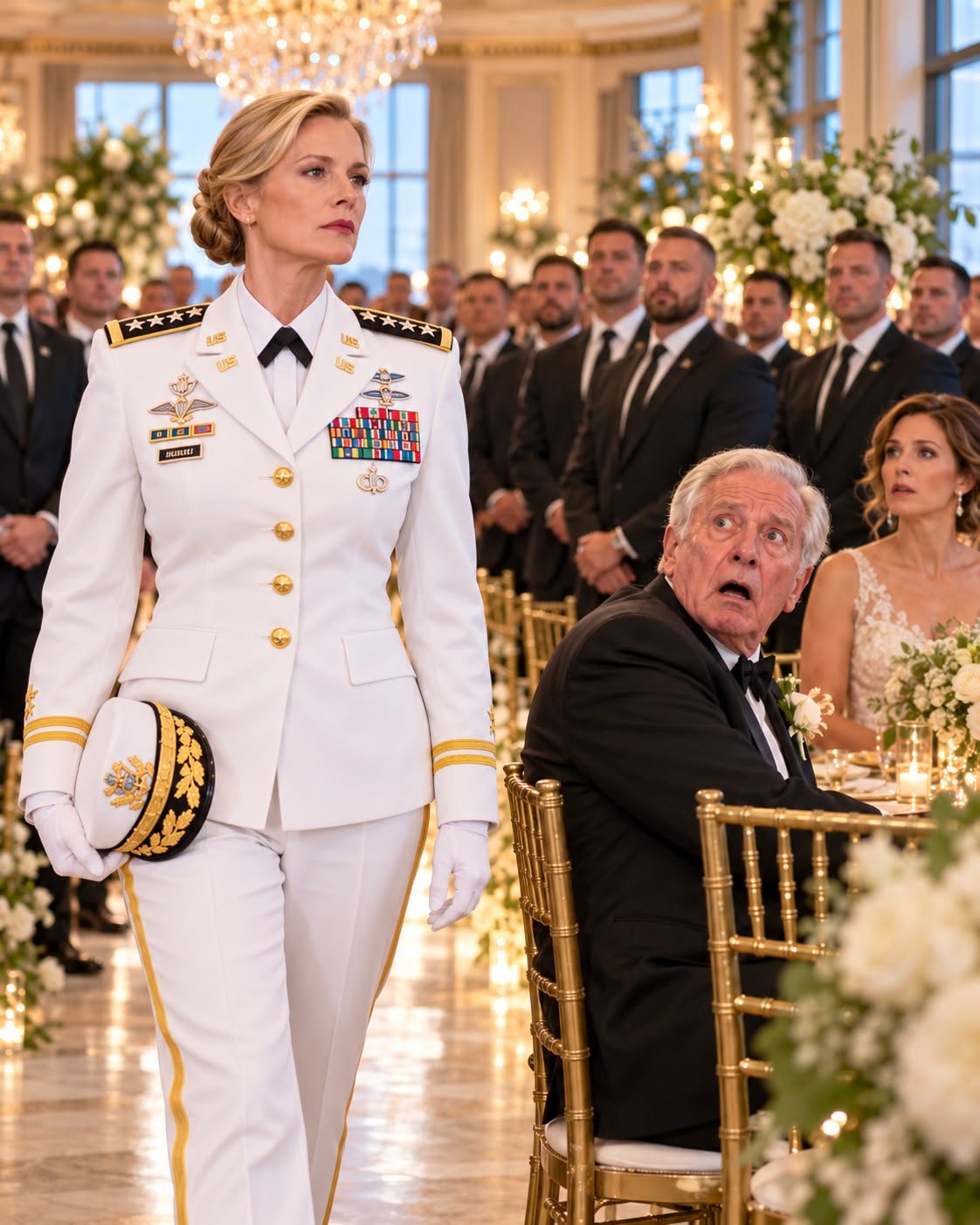
The heavy paper of the shipping waiver felt cold and greasy against my white cotton gloves. The official letterhead at the top bore the blue-and-gold emblem of the United States Transportation Command, stamped with a priority routing code that belonged exclusively to the four-star commander of Army Materiel Command—my command. Right beneath the cargo manifest block, authorizing the tax-exempt, uninspected transit of forty-two commercial shipping containers through the restricted military docks at the Port of Charleston, was my signature.
The slant was identical to mine; the loop of the *Q* had that sharp, distinctive hitch I had developed after breaking my right thumb during an airborne drop at Fort Kobbe thirty years ago. But the ink was wrong. It had been pressed with an autopen machine, the kind used by corporate legal offices to sign high-volume municipal leases, not the black permanent ink required by Department of Defense security protocols.
“Forty-two containers,” I said, my voice dropping into that low, level register that my staff officers knew preceded a general court-martial. “What was in them, Melanie?”
Melanie collapsed into the tufted armchair Eleanor had just vacated, her lace train draping over the armrest like an abandoned shroud. She buried her face in her hands, her shoulders heaving with silent, dry sobs that seemed to come from the very marrow of her bones. “Heavy industrial machining equipment. Unlicensed semiconductor fabrication components destined for export to maritime shell companies in Panama and Dubai. Dad’s logistics brokerage has been running on the brink of insolvency for seven years, Quinn. His private debts at the Carolina Yacht Club and his losses in the offshore real estate market were over six million dollars. When the banks began calling the personal notes on the Tradd Street house, he went to a private freight syndicate operating out of Wilmington.”
“And they needed a military customs exemption,” I finished, the puzzle assembling itself in my mind with the sickening, mechanical clarity of an artillery fire plan. “Under the Defense Production Act, shipments flagged for joint military infrastructure projects bypass civilian customs inspections and harbor tariff audits. All he needed was an active four-star general’s logistical waiver to stamp the bills of lading.”
Eleanor stood frozen beside the marble fireplace, her manicured fingers clawing at the pearls at her throat until the silk thread snapped. The small white spheres showered down across the hearthstones, clicking and bouncing across the parquet floor like teeth. “Your father was trying to save our name, Quinn! The Braddocks have held that property on Tradd Street since the colonial charter! Were we supposed to let the banks hang an auction notice on the wrought-iron gate? Were we supposed to move into a suburban subdivision in North Charleston like common clerks?”
I looked at my mother, seeing her clearly for the first time in fifty-eight years.
I saw the woman who had packed my bags for West Point in cardboard boxes while buying custom-made trunks for Melanie’s summer tours in Europe. The woman who had sent me birthday cards with twenty-dollar bills tucked inside while buying six-thousand-dollar dressage saddles for my sister. She had not ignored me because she thought I was difficult; she had ignored me because I was the only person in the family who refused to play along with the grand, rotting illusion of Southern royalty that kept her husband from having to admit he was an incompetent, bankrupt fraud.
“You didn't just forge my signature, Mother,” I said, stepping closer until she could see the cold, unblinking gray of my eyes. “You committed treason against the United States government. Those export restrictions exist to prevent dual-use military technology from falling into the hands of foreign defense syndicates in the Gulf. If those containers clear the harbor under my name, my entire career—thirty-six years, four stars, and the blood of every soldier I ever buried—becomes the cover story for your country club dues.”
“He told me it was legal!” Eleanor wept, her voice rising into that shrill, piercing register of a child who had been caught breaking a parlor vase. “Thomas told me that because you were his daughter, the family was entitled to use your administrative privileges! He said the military takes care of its own! He said nobody would ever check a shipment signed by a Braddock!”
The door behind me swung open with a sharp, heavy thud.
Mick Garrity stood in the frame, his service cap tucked beneath his left arm, his jaw clamped shut like an iron trap. Behind him, two federal special agents from the Defense Criminal Investigative Service, wearing dark suits with brass federal badges clipped to their lapels, stepped into the anteroom.
Mick looked at Melanie, his scarred face softening with a profound, aching tenderness that transformed the hard-bitten command sergeant major into a husband who had just pulled his wife out of a burning room. He crossed the floor in three long strides, knelt beside her chair, and took her trembling, cold hands in his broad, calloused palms.
“It’s done, Mel,” Mick murmured, his thumb gently smoothing over her knuckles. “The federal injunction was signed by Judge Henderson twenty minutes ago. The marshals have already seized the terminal cranes down at the Cooper River docks. The containers are under military guard. Nobody is touching you.”
Melanie leaned forward, resting her forehead against Mick’s shoulder, her tears soaking into the gold braid of his dress uniform. “Mick... did you tell her? Did you tell Quinn why I said yes to you?”
Mick paused, his shoulders tightening beneath his coat. He lifted his head slowly, looking up at me where I stood beneath the chandelier.
“Tell me what, Sergeant Major?” I asked.
“Your sister didn't meet me through an investigation, General,” Mick said, his voice flat, steady, and heavy with twenty years of unspoken history. “She came to my office at Fort Bragg fourteen months ago. She took a commercial bus from Charleston in the middle of a thunderstorm, walked into the Special Operations Association building with a manila folder soaked in rainwater, and asked to speak to the senior non-commissioned officer who served with Captain Quinn Braddock in the Shigal Valley in 2002.”
Related Stories