Chapter 5: The Eighth Day
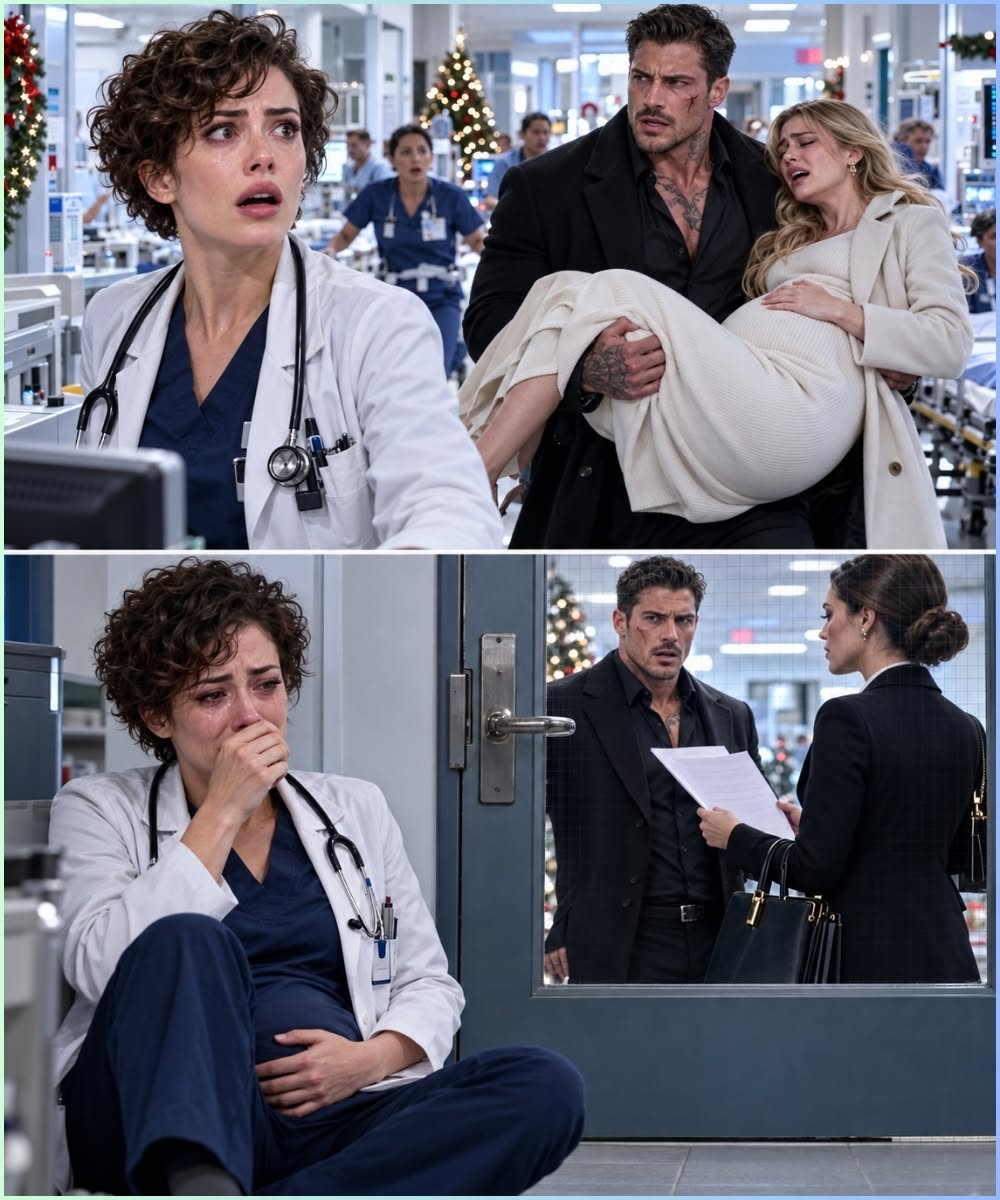
The private surgical suite inside the abandoned St. Jude’s clinic on Eighteenth Street was illuminated by high-output halogen work lights, their cold white glare reflecting off stainless-steel prep tables and plastic-wrapped monitors.
It smelled of ozone, fresh isopropyl alcohol, and the sharp, coppery scent of fear.
Dr. Mark Bradley sat on a rolling metal stool beside a mobile infusion pump, his hands shaking so violently that the plastic IV tubing rattled against the chrome pole. His white lab coat was wrinkled, his silk tie loosened at his collar, his pale eyes darting frantically toward the two men in dark suits standing motionless beside the reinforced steel door.
Adrian Bellandi stood near the medication cart, his overcoat discarded across a folding chair, his charcoal suit jacket unbuttoned, his cuffs rolled back once to reveal his heavy platinum watch.
The digital timer on the infusion pump read: **00:00:00.**
I lay on the elevated examination gurney, wrapped in a thick wool blanket that smelled of Adrian’s car.
My skin was clammy, mottled with that faint, purplish tint that signals acute peripheral circulatory collapse. The pain in my chest was no longer a dull ache; it was a tight, iron band ratcheting tighter around my ribs with every third heartbeat. The pulse oximeter clipped to my left forefinger blinked erratically: *84%... 82%... 85%.*
“Mr. Bellandi, please,” Dr. Bradley stammered, his voice cracking into a high, pathetic pitch. “You don't understand the pharmacological risks! The monoclonal antibody requires a twenty-four-hour titration ramp! If we push the full loading dose into a decompensated heart, the sudden clearance of amyloid fibrils can induce immediate ventricular fibrillation! It’s a fifty-fifty chance of catastrophic cardiac arrest!”
Adrian didn't look at the doctor.
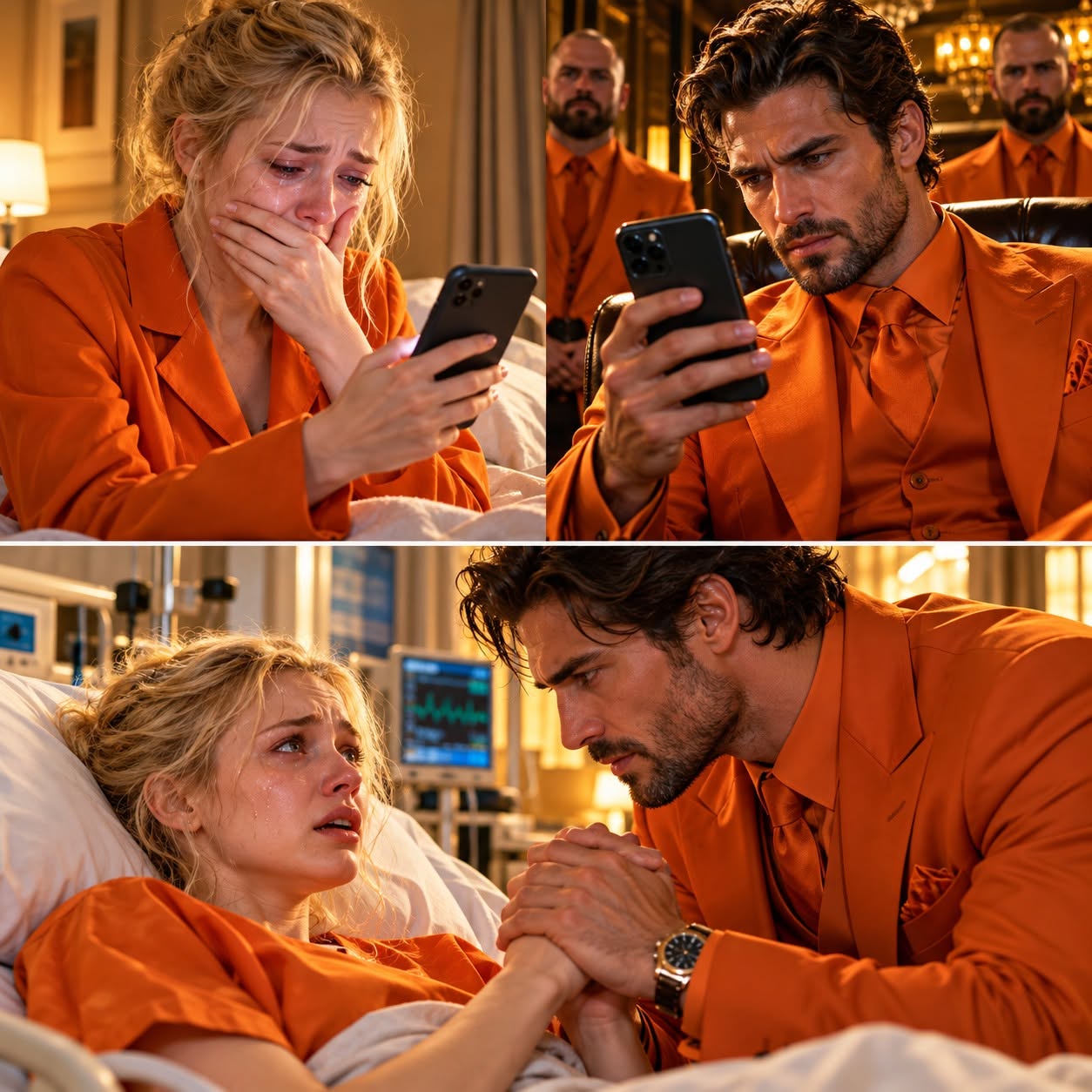
He walked over to the edge of the gurney, reached down, and took my cold, trembling right hand into his large, warm grip.
“Lena,” Adrian said, his voice cutting through the hum of the cardiac monitor like a clean blade. “Look at me.”
I forced my heavy eyelids open.
The white lights strobed into halos around his face, but his dark eyes were sharp, clear, and unshakeable.
“It’s your choice,” Adrian whispered, his thumb smoothing over the bruised skin where the old IV needles had scarred my wrist. “If you tell me to stop, we walk out that door. I take you to a private palliative villa in Lake Geneva. You spend your week looking at the trees, with all the morphine you need, and nobody ever touches your dignity again.”
He leaned closer, his breath warm against my freezing temple.
“Or we push the line. You take the fifty percent. And you fight for your thirty-second year.”
I looked past his shoulder at the small digital clock on the wall.
*Tuesday. 11:42 PM.*
I thought about the unfinished canvas in my living room—the angry, bruised indigo waves slashes across the bottom half, drying in the dark while empty cardboard boxes sat on my dining table.
I thought about Clara sitting in her warm kitchen, checking the clock, waiting for the phone call from the hospital that would clear her husband’s debt.
I squeezed Adrian’s fingers with every ounce of strength left in my fading body.
“Push the line,” I whispered.
Adrian lifted his head, his gaze locking onto Dr. Bradley with the absolute, concussive finality of an executioner’s axe.
“Run the pump, Doctor,” Adrian commanded. “And if her rhythm breaks, you had better pray your chest compressions are better than your paperwork.”
Bradley swallowed hard, his face the color of curdled milk. He reached out with trembling fingers, punched the four-digit authorization code into the pump, and threw the secondary valve open.
The pump gave three rapid, high-pitched chirps: *BEEP. BEEP. BEEP.*
The clear, viscous fluid began to move down the plastic line, cool and heavy, entering the vein in my right forearm like liquid ice.
For thirty seconds, there was only the sound of the pump’s mechanical rotor: *shhh-chunk, shhh-chunk, shhh-chunk.*
Then the fire hit.
It started in my throat—a searing, suffocating heat that radiated straight down into the center of my breastbone. My back arched off the gurney, my lungs seizing as if someone had poured molten lead into my bronchial tubes.
The cardiac monitor went wild.
The steady *beep... beep... beep* dissolved into a frantic, chaotic shriek: *BEEP-BEEP-BEEP-BEEP-BEEP.*
“Ventricular tachycardia!” Bradley screamed, lunging for the crash cart. “Her rhythm is degenerating! The fibril lysis is triggering a massive potassium dump! Grab the paddles!”
“No paddles!” Adrian roared, his left arm shooting out like an iron bar, shoving the doctor back against the rolling tray with enough force to send three stainless-steel basins clattering across the floor.
Adrian leaned over me, his hands clamping down on my shoulders, pinning me flat against the mattress as my body convulsed beneath the shock of the sudden chemical flood.
“Hold on, Lena!” Adrian’s voice tore into my fading consciousness, stripped of all its cold reserve, raw and desperate. “Look at the water! Look at the lake, damn you! Do not let go of that brush!”
My vision exploded into blinding, white-hot fractured light.
I could feel my heart thrashing inside my ribs like a wild bird trapped in a wire cage—fluttering, missing beats, stalling for three agonizing seconds, then slamming against my sternum with a concussive, bone-jarring heave.
*One.*
*Two.*
*Three.*
Then, through the roar of blood in my ears, the heavy double doors of the clinic suite were thrown open with a violent, concussive crash.
The sound of tactical boots striking linoleum echoed through the hallway.
“Chicago Police! Federal Task Force! Step away from the patient! Keep your hands where we can see them!”
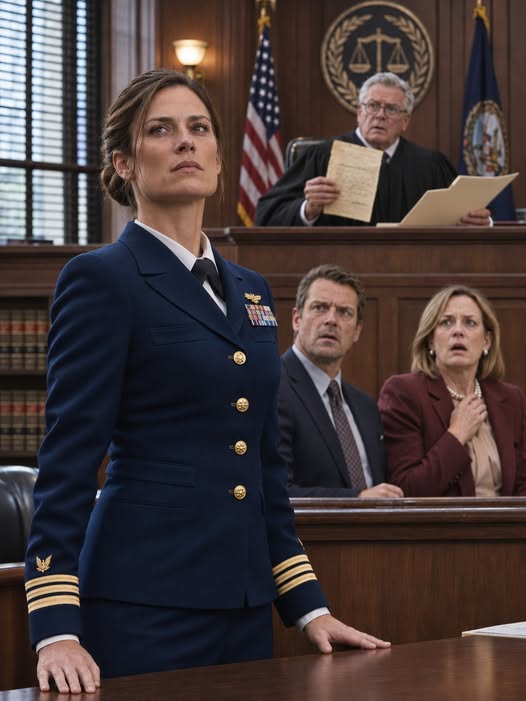
Standing in the doorway, flanked by four armed tactical officers with their carbines leveled, was Clara Ellis.
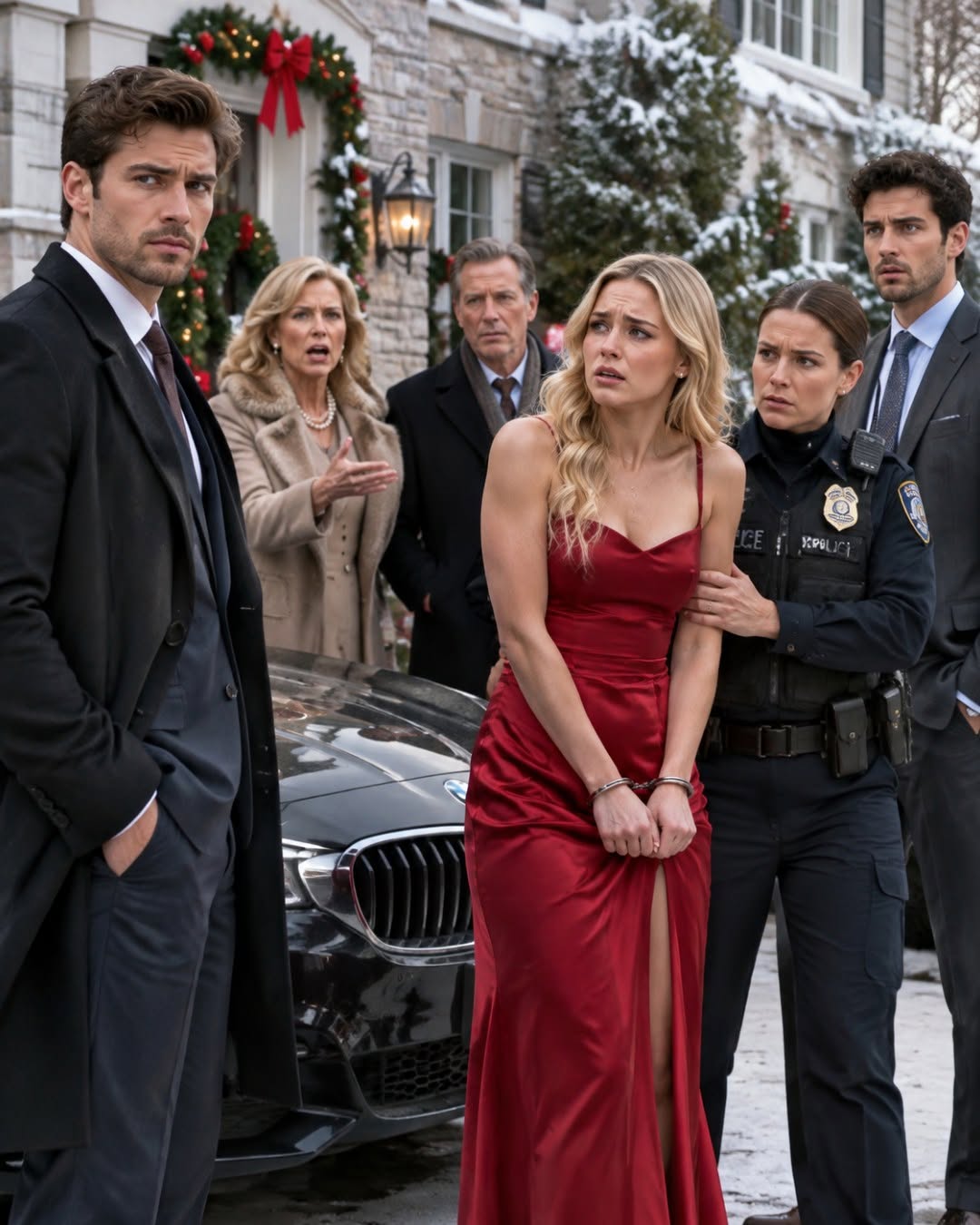
She was wearing her camel-hair coat, her hair disheveled, her face twisted in an ugly, triumphant fury as she pointed a manicured finger straight at Adrian Bellandi.
“That’s him!” Clara shrieked, her voice echoing off the tile walls. “That’s Adrian Bellandi! He abducted my sister from her apartment! He’s using medical coercion to force her to sign over our family estate before she dies!”
Beside her, a federal agent in a dark windbreaker stepped forward, his service weapon drawn, his badge displayed in his left hand.
“Adrian Bellandi,” the agent announced, his voice booming over the screaming cardiac monitor. “Step away from the gurney. You are under arrest for kidnapping, medical endangerment, and interstate extortion under Title Eighteen.”
Adrian didn't raise his hands.
He didn't turn around.
He stayed bent over me, his hand still locked around my wrist, his thumb resting directly against the fluttering, chaotic pulse at the base of my thumb.
On the gurney, the monitor’s shrieking tone suddenly hitched.
The chaotic, jagged spikes on the screen flattened for one horrifying, breathless second into a straight green line.
*BEEEEEEEEEEEEEP.*
Clara gasped, stepping back into the hallway, her hand flying to her mouth in manufactured horror. “She’s flatlining! He killed her! Arrest him!”
Then, with a concussive, wet snap that vibrated through Adrian’s palms and drove the air back into my lungs with the force of a detonating flare—
My heart struck.
*THUMP.*
The green line jagged upward in a sharp, clean, textbook QRS complex.
*THUMP. THUMP. THUMP.*
A steady, sinus rhythm—one hundred and ten beats per minute, strong, regular, and tearing through the chemical blockage like an axe through rotten wood.
My eyes snapped open.
The gray static cleared. The white halogen glare resolved into the ceiling tiles above, into the circle of drawn weapons, into my sister’s frozen, terrified face in the doorway.
I lifted my left hand.
It wasn't shaking.
For the first time in three years, the tremor in my fingers was completely, miraculously gone.
I reached up, caught the edge of Adrian’s lapel, and pulled myself upward until I was sitting upright on the gurney, the IV line running clear and steady into my arm.
The entire room went dead silent.
The tactical officers lowered their weapons by two inches, their eyes widening in disbelief as they looked from the living woman on the gurney to the pale, shaking sister in the doorway.
I looked straight past the federal badges, straight past the drawn guns, and locked my eyes onto Clara.
“The key to the safety box is in my pocket, Clara,” I said.
My voice was raspy, scarred by the fire in my veins, but it carried through the surgical suite with a cold, absolute authority that made my sister take half a step backward into the hall.
“And you have seven days,” I whispered, “to pack your things before I take back my house.”""
Related Stories