Chapter 3: The Stolen Horizon
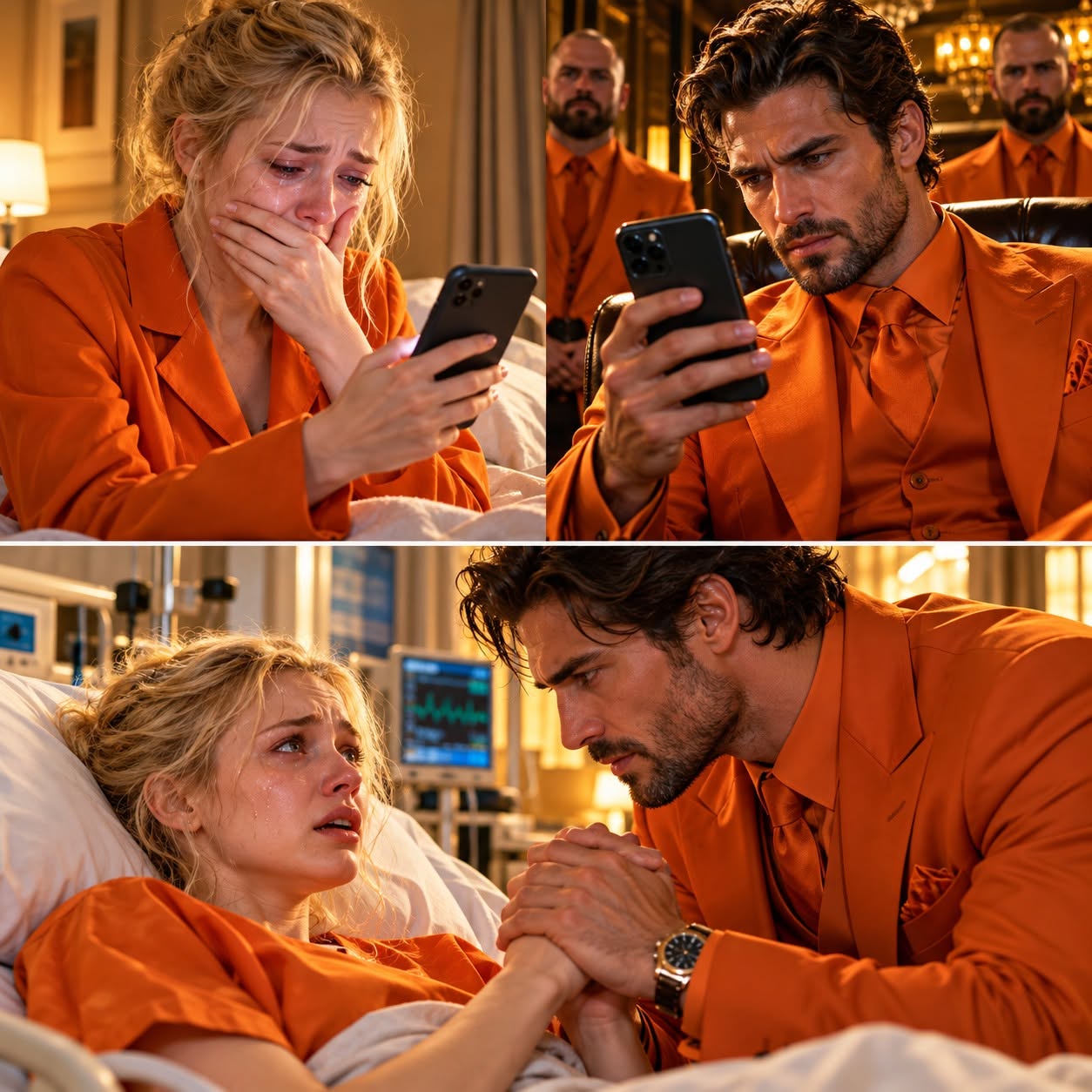
The phone stayed pressed against my ear, the plastic casing growing slick against my palm.
“What did you say?” I whispered.
The word barely carried past my lips. Outside my third-floor window, the elevated train on the Brown Line rattled over the iron trestles, a grinding screech of steel that vibrated through the glass panes.
“Her name is Clara Ellis,” the man’s voice came back, steady and unyielding. “She signed an emergency power-of-attorney revocation at St. Jude’s clinic on Thursday afternoon. She presented a notarized medical proxy stating that you were experiencing acute cognitive exhaustion from the immunotherapy, and that you had requested the immediate termination of the monoclonal antibody protocol.”
“No,” I choked out, pushing myself up from the floor, my hand catching the door handle for balance. “No, that’s... that’s impossible. Dr. Bradley said the trial was canceled by the pharmaceutical board. He said the phase-three markers showed irreversible myocardial necrosis. He told me the drug had failed.”
“The drug didn't fail, Lena,” the voice said. There was no hesitation in his tone, no pity, just the cold, surgical delivery of a man reciting an invoice. “The drug was keeping the amyloid proteins from calcifying your left ventricle. You missed your Friday infusion. You missed your Monday booster. Without the synthetic antibodies, your troponin levels spiked six hundred percent in seventy-two hours. Bradley didn't give you seven days because your disease progressed naturally. He gave you seven days because your heart is suffocating without the blocker.”
The room seemed to tilt sideways.
I staggered toward the dining table, my hip slamming into the corner of the wood. The cardboard banker boxes Clara had left behind rattled, empty and hollow.
*“We need to be practical, Lena,”* her voice echoed in my ears. *“Who do you think has to clean this up when you’re gone?”*
“Who are you?” I demanded, my fingernails digging into the laminate tabletop until the beds turned white. “How do you have my medical records? How do you know my sister’s name?”
A pause stretched across the line—three seconds of heavy, deliberate silence.
“Look out your front window,” he said.
My heart hitched against my ribs, a sudden, violent flutter that made my vision blur with gray static at the edges. I walked to the bay window, pushing the lace curtain aside with a shaking hand.
Down on Clark Street, parked directly beneath the bare branches of a stunted maple tree, sat a dark gray sedan. The windows were blacked out, reflecting the pale, overcast sky.
As I watched, the rear door opened.
A man stepped out onto the wet asphalt.
He was tall, broad-shouldered beneath a charcoal cashmere overcoat that fell past his knees, his dark hair cropped short and silvered at the temples. He didn't look like a doctor. He didn't look like a social worker. He looked like an iron beam that had been pulled from an industrial furnace—weathered, dark, and entirely out of place among the vintage boutiques and organic coffee shops of Lincoln Park.
He looked up at the third floor.
His eyes found mine through the glass with the terrifying accuracy of a marksman. He held the phone to his ear, his posture completely relaxed, unbothered by the cold rain misting across his shoulders.
“My name is Adrian Bellandi,” he said through the receiver.
The name didn't register at first. Then, like an icy needle sliding behind my ear, the memory of an old headline surfaced: a Tribune front page from three years ago, a federal racketeering trial that collapsed when four state witnesses vanished from the county docket on the same morning.
*The Bellandi Syndicate.*
The men who owned the docks along the Calumet River. The men who controlled the logistics warehouses in Cicero.
“You’re... you’re Bellandi,” I whispered, taking half a step back from the glass.
“Yes,” he said.
“Why do you have my number?” My breath was coming in ragged, shallow hitches now, my ribs aching with every pull of air. “Why would a man like you answer a text from a dying woman?”
“Because six years ago, your father died in room four-twelve at Northwestern Memorial,” Adrian said, his voice never varying in pitch, cutting through the receiver like a dull blade. “And my brother died in room four-fourteen on the same night.”
The world stopped spinning.
The room, the boxes, the wet paint on the canvas—everything receded into a distant, gray blur.
“Frankie,” I breathed, the name surfacing from a night I had buried under six years of my own medical charts.
“Frankie,” Adrian confirmed. “He was twenty-four. He had three armed marshals outside his door and two bullets in his liver. The nurses were terrified of him. The orderly wouldn't even change his water pitcher because they thought someone was going to throw a pipe bomb through the window.”
Adrian lowered the phone slightly, his eyes still pinned to my third-floor window.
“At three in the morning, when the machines started screaming, you walked out of your father’s room with an extra cup of black coffee from the waiting room machine,” Adrian continued, his voice softer now, but heavier than lead. “You walked right past the guards. You didn't ask his name. You didn't ask what he had done. You sat in the plastic chair beside his bed, held his hand, and gave him a sip of water so he wouldn't die choking on his own blood while I was stuck at a roadblock on the Skyway.”
Tears welled in my eyes, spilling over my lashes, hot and sudden.
I remembered.
I remembered a boy with black curls and gray skin, handcuffed by one wrist to the stainless-steel hospital rail, shivering so hard his teeth clicked. I had just watched my father take his final breath twenty minutes earlier. The ICU hallway had been empty, cold as a meat locker. I hadn't thought about who the boy was; I had only thought that nobody should die looking at a drywall ceiling with no one holding their hand.
“Before they bagged his personal effects,” Adrian said, “I went through his pockets. In his jacket was a scrap of a prescription pad with a phone number written in your handwriting. He told me before they took him down to the morgue: *‘If that girl ever needs a favor, Adrian, you pay it.’*”
Adrian looked down at the sidewalk, then back up at the glass.
“I saved the number in my personal phone that night,” he said. “I didn't put a name on it because names in my business are subpoenas. For six years, nobody called. Then yesterday afternoon, my phone lit up with a message saying you had seven days to live.”
He paused.
“I don't leave debts open, Lena.”
“Adrian...” I leaned my forehead against the cold windowpane, my knees trembling so violently I had to brace my forearm against the sash. “Clara... why would Clara do this? She’s my sister. We shared a bedroom until I was fourteen.”
“Come down to the car,” Adrian said.
“I can't,” I whispered, looking down at my paint-stained sweatpants, feeling the crushing weight of the fluid building in my chest. “I don't have the strength to walk down those stairs again.”
“Then unlock the deadbolt,” Adrian replied, hanging up the phone before I could answer.
Down on the street, he didn't run. He walked with that same slow, unhurried authority across the asphalt, pushed through the outer glass door of the building, and disappeared into the entryway.
Thirty seconds later, the heavy tread of his leather boots sounded on the third-floor stairwell.
I stood in the center of my apartment, my hands clamped over my chest, listening as his footsteps stopped outside my door.
The brass knob turned once.
Then, three measured, heavy knocks vibrated through the wood.
---
Related Stories