Chapter 4: The Debt on the Chapel Floor
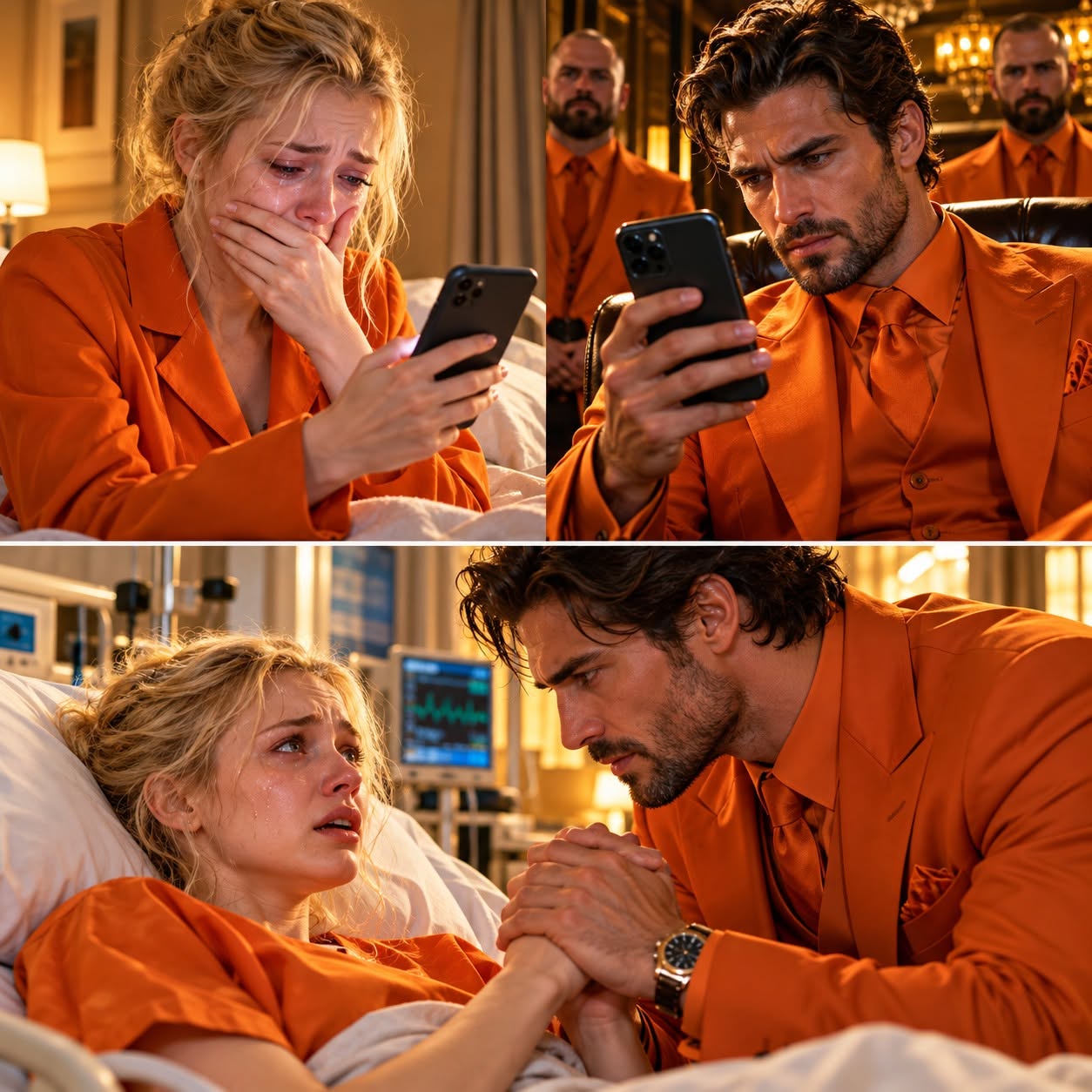
The door didn't creak when I opened it; it simply gave way to six feet two inches of charcoal wool and cold November air.
Up close, Adrian Bellandi was far more formidable than he had appeared from the third-floor window. There were fine white scars along his jawline, the skin around his dark eyes weathered by decades of decisions that left no room for error. He smelled of rain, expensive cedar tobacco, and the faint, bitter trace of gun oil.
He stepped across the threshold without asking, closing the door behind him with a single, firm push of his heel.
His eyes swept the apartment—taking in the bare lightbulb, the stack of flattened cardboard boxes on the table, the dirty teacups, and finally the easel standing by the window.
He stopped in front of the canvas.
He didn't speak for a full minute. He stood with his hands in his overcoat pockets, studying the violent slashes of indigo and white paint where the water met the sky.
“You have your father’s hands,” Adrian said, his voice filling the small room with a low, resonant rumble. “He was an architectural draftsman, wasn't he?”
“A carpenter,” I corrected him, leaning against the back of the sofa, my breathing shallow. “He built church pews in Grand Rapids before we moved to the city.”
Adrian nodded slowly. “Frankie told me the girl in the hallway smelled like sawdust and turpentine. He thought you were an angel until you cursed at the nurse for ignoring his morphine pump.”
A faint, broken smile touched my mouth, then vanished.
Adrian turned away from the painting, reached inside his tailored coat, and pulled out a heavy manila folder bound with black legal tape. He laid it flat on the dining table, right beside the cardboard boxes Clara had brought.
“Sit down, Lena,” he commanded softly.
I sat in the wooden chair, my hands curled in my lap to hide the fine, rhythmic tremor running through my fingers.
Adrian opened the folder.
“Your grandmother, Eleanor Cole,” Adrian said, turning the first page toward me. “When she died in 2020, she left her estate in a generation-skipping trust. The commercial properties in Saugatuck, the three multi-family units in Logan Square, and the liquidity accounts at Northern Trust.”
“The trust was divided equally,” I said, frowning. “Clara handles the management fees because I was too sick to review the filings.”
“The trust was not divided equally,” Adrian said, pointing a scarred forefinger at the third paragraph of the primary charter. “Under the original terms drafted by Eleanor’s attorneys, the entire corpus of the trust—valued at three point four million dollars—vests unconditionally in you on your thirty-second birthday.”
I stared at the black legal print.
“My thirty-second birthday?” I whispered.
“November fourteenth,” Adrian said. “Eight days from today.”
The silence that followed was so complete that I could hear the faint *tick-tick-tick* of the cheap quartz clock above the stove.
“And if I don't reach my thirty-second birthday?” I asked, my voice barely a thread of sound.
Adrian turned the page.
“Section Nine. The survivorship reversion,” he read, every word landing like an iron spike into the floorboards. *“‘In the event the primary beneficiary, Lena Cole, does not survive to attain the age of thirty-two years, the entire principal, accrued interest, and real property holdings shall revert immediately and without encumbrance to Clara Cole Ellis.’”*
I looked down at the paper.
The date at the bottom was June 14, 2020. The signature was my grandmother’s spidery, elegant script, witnessed by two independent partners from a firm on LaSalle Street.
“Clara’s husband, Greg Ellis,” Adrian continued, pulling a secondary financial ledger from the folder. “His commercial logistics firm took out a two-million-dollar mezzanine loan from an offshore lender in 2024 to finance a speculative cold-storage warehouse in Gary, Indiana. The project failed. The lender called the note ninety days ago. If Greg doesn't produce two point four million dollars in cash by next Tuesday... his firm enters involuntary liquidation, and his personal guaranties kick in.”
The room seemed to lose all its heat.
The pieces assembled themselves in my mind with the terrifying, mathematical precision of an execution.
Clara hadn't brought cardboard boxes because she wanted to save me from the indignity of hospice.
She had brought them because she was counting the hours until the clock ran out.
“The clinical trial,” I whispered, looking up into Adrian’s dark, unblinking eyes. “The monoclonal antibodies... they were working?”
“They were reversing the amyloid deposits,” Adrian said. “The trial protocol required twelve consecutive monthly infusions to achieve permanent stabilization. You completed ten. Your nine-month cardiac MRI showed a twenty-eight percent reduction in left ventricular wall thickness.”
He tapped the medical file on the table.
“Dr. Mark Bradley received an anonymous administrative complaint three weeks ago alleging that you were non-compliant with the clinical protocol,” Adrian said, his jaw tightening into iron. “The complaint included a forged diary indicating you were taking unapproved herbal supplements. When Bradley hesitated, Clara presented the medical proxy, withdrew you from the trial, and told Bradley that you had chosen to discontinue treatment due to intolerable neuropathic pain.”
Adrian leaned across the table, his knuckles whitening against the wood.
“Bradley didn't verify the diary, Lena. Because Greg Ellis happens to sit on the board of trustees for the hospital’s fundraising foundation. Bradley thought he was doing a prominent donor’s family a favor by easing an uncomfortable transition.”
A wave of nausea swept through my stomach, violent and cold.
For three years, I had blamed my body. I had looked in the mirror every morning and hated my own failing tissue, hated my lungs for wheezing, hated my heart for being too weak to carry me into thirty-two. I had spent yesterday afternoon crying in a yellow cab because I thought the universe had simply run out of patience with me.
And all the while, my sister was standing behind the curtain, turning the valve shut.
“What do I do?” I whispered, looking up at the feared head of the Bellandi syndicate with wide, terrified eyes. “Adrian... I have six days. The infusion... if I missed two doses, can it even be restarted?”
“Dr. Bradley is currently sitting in a private conference room at my logistics office in Pilsen,” Adrian said, his voice dropping into that terrifying, absolute stillness that had silenced judges and prosecutors for two decades. “He has your complete medical history, the original trial vials from the manufacturer’s distribution hub in Indianapolis, and four armed men ensuring he doesn't look at his phone until I tell him to.”
He extended his right hand across the table, palm up.
His fingers were calloused, scarred, and steady as an anvil.
“You have two choices, Lena,” Adrian said softly. “You can sit in this chair, let your sister pack your grandmother’s silver into those boxes, and wait for your heart to stop on Sunday night.”
He stepped half an inch closer, his shadow falling across the half-finished canvas by the window.
“Or you take my hand, you walk down those stairs, and we show Clara Ellis what happens when you try to bury someone before they’re dead.”
---
Related Stories