Chapter 1: The Weight of an Unfinished Sky
The three dots appeared almost immediately, pulsing in the gray bubble on my screen like a quiet heartbeat.
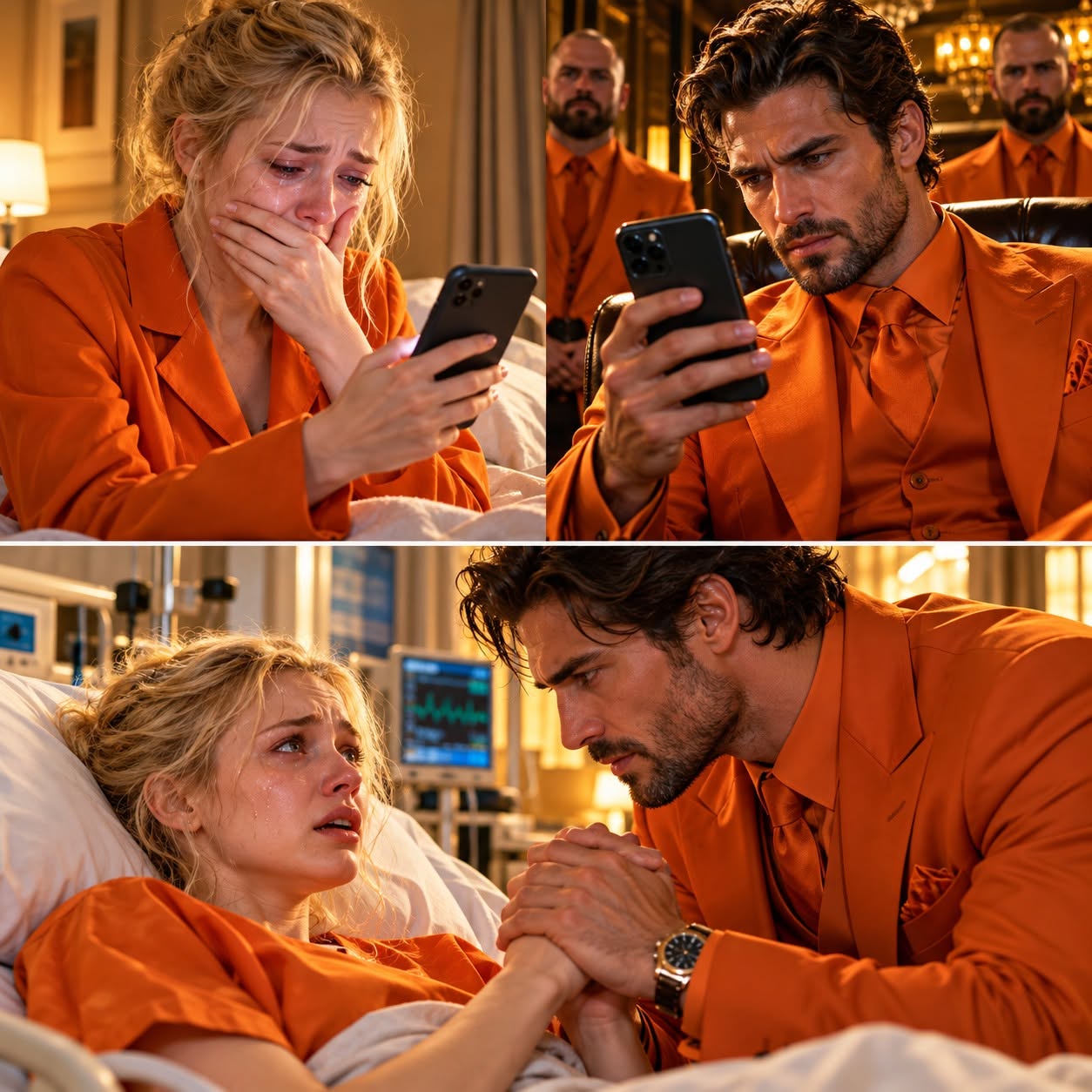
I sat on the edge of my faded armchair, my coat still half-draped over my shoulders, staring at the screen with my breath caught in my throat. I had spent three years preparing for silence. When you are sick for a long time, you learn to read the specific grammar of people’s withdrawals—the way a text takes four hours to answer, then twelve, then two days, until finally every interaction is reduced to a prayer-hands emoji or an apology for being swamped with work.
I expected a mistake. I expected: *Sorry, wrong number.*
Instead, the screen updated.
*“Tell me where you are.”*
I swallowed, the dry air of my apartment catching in my throat. I typed with thumb strokes that felt clumsy and cold.
*“In my living room. In Lincoln Park. Looking at a painting I never finished.”*
*“What’s on it?”*
The reply was so fast it was almost rude, devoid of the soft, padded condolences I had grown so used to deflecting. No *I’m so sorry to hear that.* No *Have you gotten a second opinion?* Just a clean, direct line into the room with me.
*“A sunset over Lake Michigan,”* I wrote, my fingers moving faster now, loosening. *“I spent three weeks getting the gold and the violet right in the clouds. But the bottom half is blank white canvas. It was supposed to be the water. I kept waiting for a day when my hands didn’t shake so I could paint the waves properly.”*
Across the city, in a corner office fifty stories above the Chicago River, Adrian Bellandi rotated his phone in his palm.
The room behind him was vast, paneled in dark walnut, silent except for the low hum of the city’s evening traffic filtered through triple-paned glass. On the mahogany desk lay three passports, a signed shipping manifest from the Port of Montreal, and an unsealed envelope containing surveillance photographs of a city alderman who had spent the last six months underestimating him.
Dante, his head of security, was standing just outside the threshold, waiting for permission to re-enter. Adrian didn't wave him back in. He stayed leaned against the glass, his tailored overcoat unbuttoned, watching the gray fog roll off the lake and smother the streetlamps below.
His private phone was not a device people texted by accident.
Only seven people possessed the number. Four of them were family; the other three knew that disturbing it without a catastrophic reason was a fatal error in judgment.
He looked down at the message.
*I kept waiting for a day when my hands didn’t shake so I could paint the waves properly.*
There was no panic in the syntax. No hysterical plea. It had the terrible, calm exhaustion of a soldier who had realized the relief column was never coming.
He tapped the glass with his thumb.
*“Then paint the water tonight,”* he sent back. *“Don't wait for a good day. You don't have enough of them left to be polite to a canvas.”*
In my apartment, I let out a sound that was half-laugh, half-sob.
It was an abrasive, arrogant thing to say to a dying woman. If my sister Clara had said it, I would have shrunk into myself with shame. But from this unknown number—from this stranger who had no face, no history with me, no polite obligation to look mournful—it hit like a splash of freezing water against my collarbone.
I looked at the canvas. The titanium white at the bottom looked glaring, almost mocking.
*“Oil takes days to dry,”* I replied. *“If I paint it tonight, I might not even be here to see it set.”*
The dots danced.
*“Then it dries without you,”* the stranger replied. *“At least it won’t be blank.”*
I set the phone on the coffee table. My heart was thudding with a dull, heavy ache in the center of my ribs, a familiar physical drag that had dictated every choice I made since my diagnosis three years ago. The viral myocarditis had scarred the muscle tissue, slowly turning the flexible chambers into rigid, failing stone. The doctors had tried steroids, immune therapies, experimental anti-fibrotics. Today, Dr. Bradley had simply run out of columns on his spreadsheet.
I walked to the closet.
My easel was an old wooden French box my father had bought me when I got into the Art Institute. I dragged it toward the window, pulled out my tubes of Prussian blue, burnt umber, and zinc white, and unscrewed the caps. The smell of linseed oil and turpentine rose into the dim room, sharp and alive.
My phone vibrated once against the wood.
*“Did you pick up the brush?”*
I picked up the phone with paint-stained fingers.
*“Yes.”*
*“Good. What’s your name?”*
I hesitated, my thumb hovering over the keypad. In the silence of the room, giving my name felt like an irreversible contract, like walking out onto ice that hadn't been tested.
*“Lena,”* I typed. *“Who are you?”*
There was a long pause. A full two minutes passed. Down on Clark Street, a CTA bus hissed as its pneumatic doors opened, spilling a handful of commuters into the autumn drizzle.
Then the phone lit up.
*“Someone who is listening, Lena. Keep painting.”*
Fifty stories up, Adrian set the phone down on his desk blotter. He reached out and pressed the brass call button on his console.
Dante stepped through the heavy walnut door immediately, his hands folded in front of his suit jacket. “Sir? The meeting with the Moretti crew—""""
“Reschedule it for tomorrow morning,” Adrian said, not looking up.
Dante blinked, caught off guard. In twelve years of service, he had seen Adrian delay business for funerals and federal raids, but never for a silent hour at his desk. “Are you alright, boss?”
Adrian slid the burner phone across the blotter toward his enforcer.
“Run that number,” Adrian said, his voice flat, gravelly, and quiet. “I want her name, her address, her medical chart, and every doctor she has seen in the last six months. And I want to know whose pocket she was in when she got this line.”
“Is it an angle?” Dante asked, his eyes darkening as he reached for the device. “A wire?”
Adrian looked out toward the lake, where the water had dissolved entirely into the black mist of the November night.
“No,” Adrian murmured, remembering the simple, brutal truth of the text. *At least it won't be blank.* “It’s not an angle. But find out anyway.”
---
Related Stories