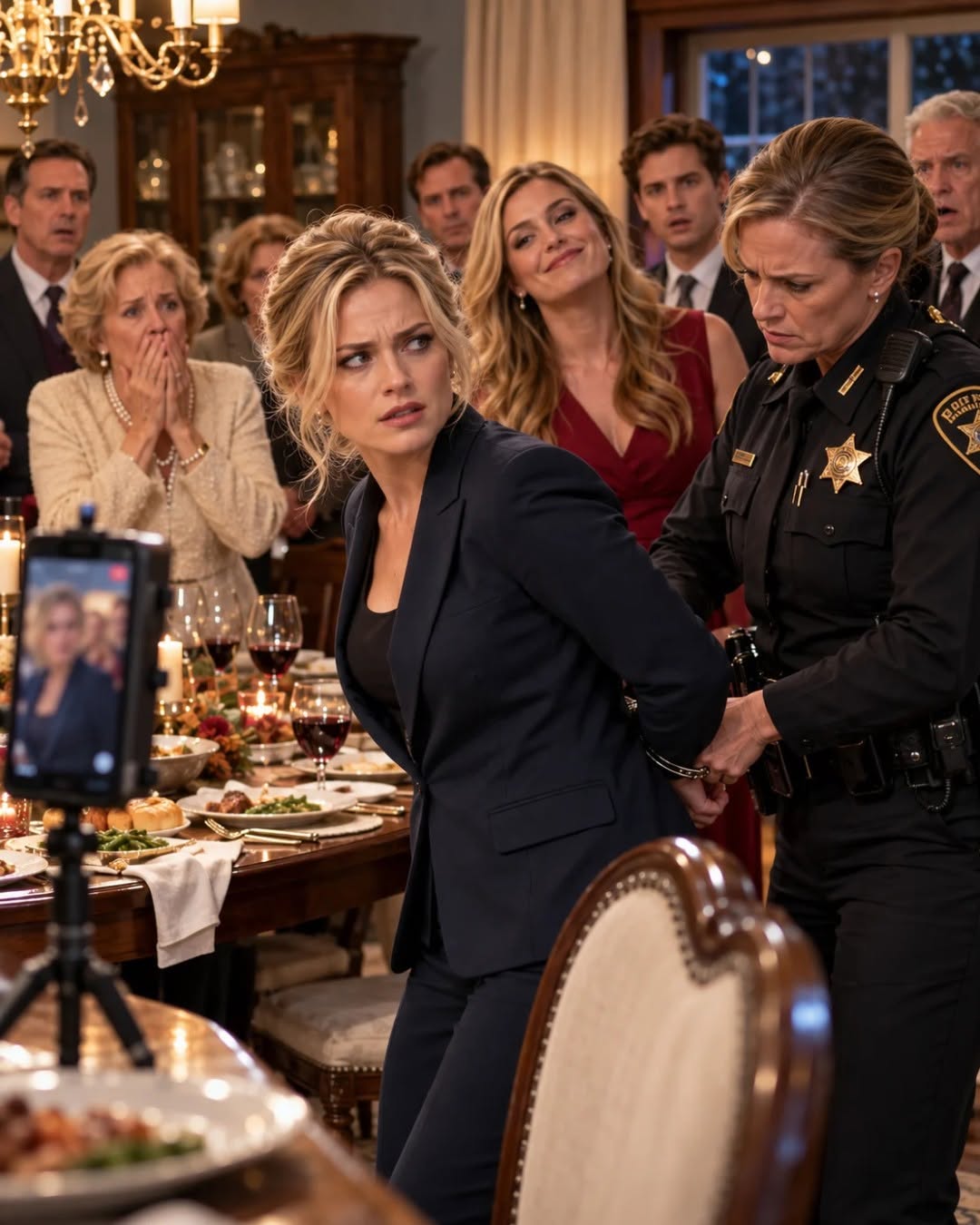
Chapter 4: The Guest at the Easter Service
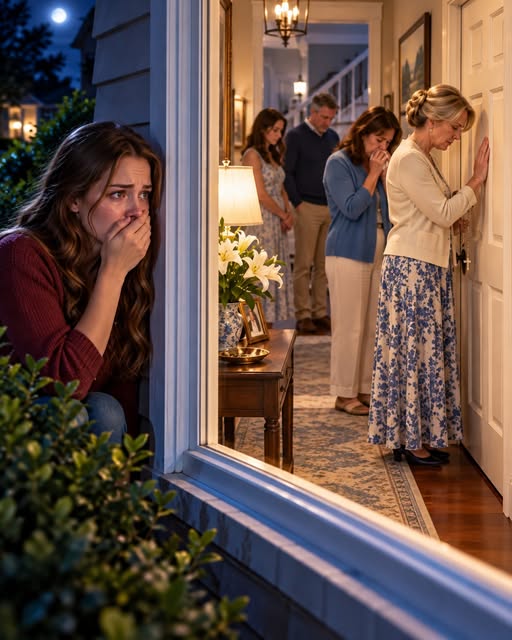
The bells of St. Luke’s Episcopal Church rang across the manicured lawns of downtown Fort Valley, their deep, bronze tones vibrating through the warm spring morning air.
It was nine-forty-five on Easter Sunday.
The circular asphalt drive of the historic red-brick sanctuary was choked with black luxury SUVs, state-plated sedans, and high-end German convertibles. Society women in wide-brimmed pastel hats and white linen gloves climbed the stone steps, escorted by men in seersucker suits and polished leather loafers, exchanging polite, Southern-drawled pleasantries under the shade of blooming dogwood trees.
A large, professional white banner was suspended between two towering Corinthian columns above the brass double doors:
THE EIGHTH ANNUAL STACEY MILLER MEMORIAL SERVICE & YOUTH ADVOCACY GALA.“Honoring the Legacy of an Angel. Welcoming Candidate Mitchell Miller.”
I sat in the driver’s seat of Ruth’s Buick LeSabre, parked across the street behind the brick wall of the public library.
I wasn't wearing my work jeans.
I wore an ivory-colored linen dress with a high collar that Ruth had taken from her cedar chest—the dress she had worn to her own sister’s graduation in Savannah forty years ago. It was simple, elegant, and pressed with razor-sharp creases. My dark hair was pulled back into a sleek, severe chignon, pinned with two silver combs. On my face was no makeup, save for the faint pink scar running along my left hairline—a mark I had spent eight years hiding behind bangs, now bare for the world to see.
Beside me on the bench seat sat Ruth, looking formidable in a dark navy church suit and an antique straw hat, her gloved hands resting firmly on the handle of her leather purse.
""Look there,"" Ruth muttered, pointing a gloved finger through the windshield.
A gleaming black Lincoln Navigator with tinted windows pulled up to the red carpet at the foot of the church steps.
The chauffeur opened the door.
Mitch stepped out first, wearing a bespoke charcoal three-piece suit, an ivory silk tie, and a fresh white rose pinned to his lapel. He smiled radiantly for three local newspaper photographers who immediately raised their lenses, their flashbulbs popping against the stone facade.
He turned, offering his hand to Avery Vance.
Avery looked breathtaking. She was twenty-five, slender, with golden hair falling in cascading curls over an emerald-green silk dress. Her face was radiant with pride as she looked at my brother, her left hand catching the sunlight to display a four-carat cushion-cut diamond that had undoubtedly been financed by the ""administrative stipends"" of my memorial trust.
Following them out of the vehicle were Judge Harrison Vance—tall, austere, with silver hair and the commanding posture of an appellate judge—and his wife, Carolyn, wearing black lace gloves, holding a small leather prayer book against her ribs.
And bringing up the rear were my parents.
My mother, Eleanor, looked triumphant. Her chin was held high, her diamond earrings swinging with every step, her lavender suit immaculate. My father walked a half-step behind her, staring at the stone steps with the same hollow, haunted expression he had worn at midnight.
""They look like they're heading to an inauguration,"" I whispered, my heart fluttering against my ribs like a trapped sparrow.
""They're heading to a harvest, Stacey,"" Ruth said, her voice gravelly and steady as a mountain. ""They planted eight years of lies. Today they reap the crop.""
She reached into her purse, pulled out two white guest passes printed with gold foil seals: VIP RESERVED SEATING – FOUNDATION BENEFACTORS.
""Where did you get those?"" I gasped.
""The church organist has bought peaches from my grandfather since 1952,"" Ruth smiled, a sharp, dangerous glint in her blue eyes. ""She doesn't like Eleanor Miller. Says Eleanor withheld choir dues during the roof restoration five years back. Now get your shoulders back, Stacey. You walk up those steps like you own the ground beneath your feet.""
We stepped out of the Buick.
The morning sun was warm, carrying the sweet scent of honeysuckle and freshly cut grass.
We crossed the street, joining the procession of worshippers filing through the arched oak doors.
The interior of St. Luke’s was vast, cool, and bathed in the brilliant jewel tones of century-old stained glass. Three hundred people filled the dark walnut pews, their quiet chatter mingling with the soft, majestic prelude humming from the massive pipe organ in the loft.
Near the altar, on a raised velvet pedestal draped in white satin, stood a life-sized oil painting of me.
It was an idealized, angelic rendition: my eighteen-year-old face smiling down from a cloud of soft golden light, painted with translucent white angel wings arching behind my shoulders. Beneath the portrait lay twenty bouquets of white lilies, flanking a ceremonial brass urn.
In the front row, directly beneath the portrait, sat the Vance and Miller families.
Mitch was leaning over, whispering something charming into Avery’s ear, making her blush and rest her hand over his knee.
Ruth guided me down the far side aisle, our footsteps swallowed by the thick crimson runner.
We reached the third pew on the left—reserved for special donors, directly across the aisle from where Avery’s mother, Carolyn Vance, was currently kneeling in prayer, her black-gloved hands clasped around her silver rosary beads.
We slid into the pew.
I sat on the aisle, directly in Carolyn’s line of sight.
The organ music swelled into a thunderous, triumphant chord as the choir began the opening processional hymn: ""Christ the Lord Is Risen Today.""
Three hundred people stood up, opening their hymnals, their voices rising to the vaulted timber ceiling.
Across the four feet of red carpet, Carolyn Vance finished her silent prayer, crossed herself, and opened her eyes.
She turned her head to look across the aisle.
Her eyes drifted over Ruth’s navy suit, then moved to the young woman standing beside her in the ivory linen dress.
Carolyn’s hymnal slipped from her fingers.
It hit the wooden kneeler with a dull, echoing thump.
Carolyn stared at my face.
She stared at the dark hair pulled into the chignon. She stared at the hazel eyes that matched the oil painting on the altar. And then her gaze locked onto the faint, thin surgical scar running along my left hairline—the exact scar she had seen documented in the medical autopsy reports eight years ago.
Carolyn’s breath hitched in a sharp, audible wheeze that cut right through the organ music.
Her gloved hand rose slowly, trembling, pointing a single finger at my chest.
""Stacey?"" Carolyn whispered, the name tearing out of her throat like a gasp for oxygen in a drowning room.
Related Stories