Chapter 5: The Architect in the Parlor
The small briefing room inside the trailer felt instantly claustrophobic. The hum of the generator outside vibrated through the metal walls, a steady, low-frequency drone that made the red-bordered document on the desk seem to pulse beneath the fluorescent light.
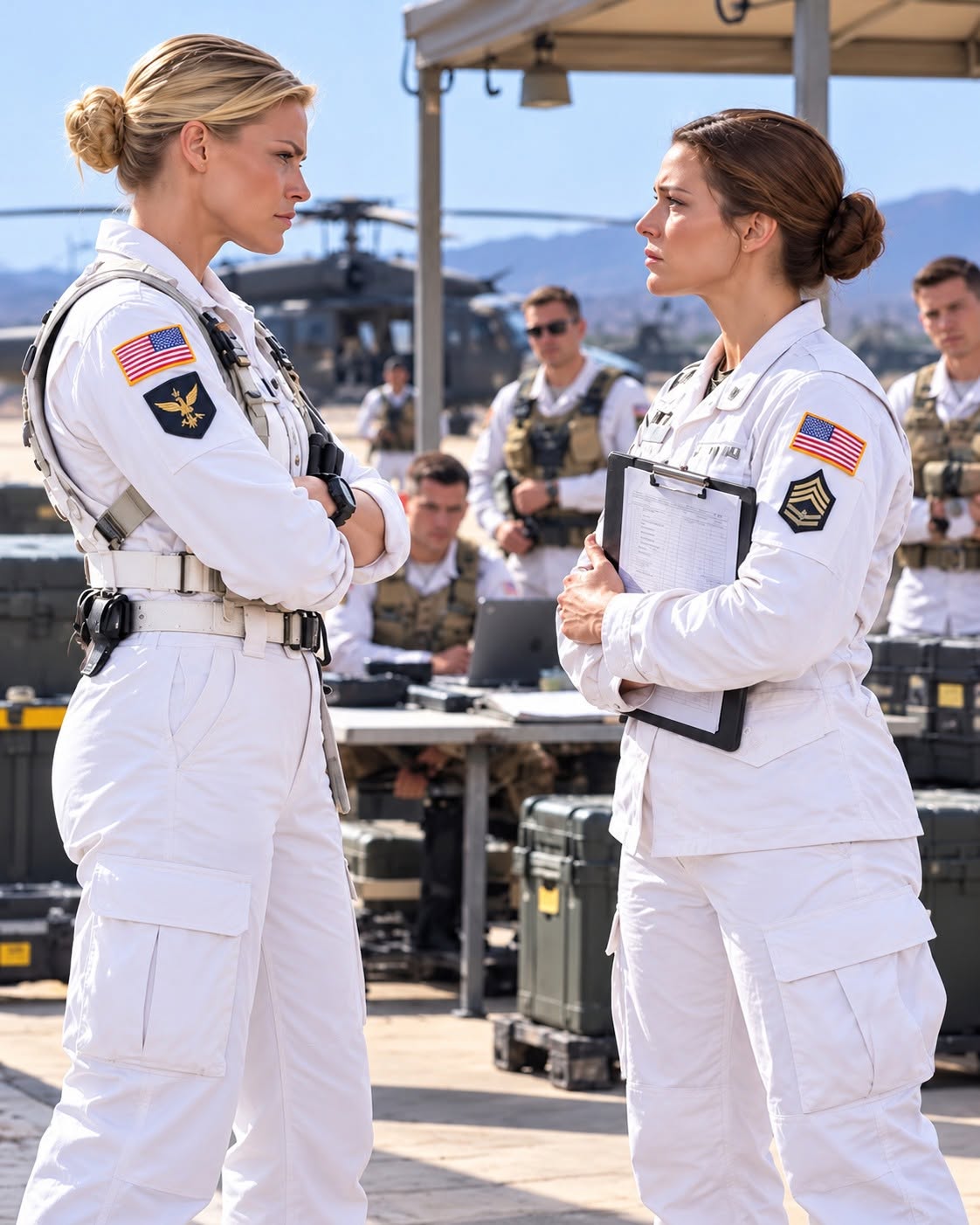
Major Karen Davis, the Inspector General representative, leaned forward, resting her forearms on the table. Her eyes were sharp, analytical, and entirely stripped of sympathy.
“Sergeant First Class Natalie Bennett,” Major Davis began, her voice crisp and formal. “At twenty-two-hundred hours last night, an anonymous security referral was transmitted through the Department of Defense whistleblower portal. The report alleges that between August 2024 and October 2025, while assigned as a senior weapons technician supporting joint testing programs in Europe, you received recurring, unvetted financial disbursements from a foreign defense contractor headquartered in Zurich, Switzerland.”
I didn't blink. I kept my chin level, staring straight at the document. “The disbursements were authorized travel reimbursements and competition prize stipends from the Swiss Armed Forces Marksmanship Festival, Major. Every dollar was declared on my annual OGE-450 confidential financial disclosure, vetted by the ethics counselor at the Army Marksmanship Unit, and cleared by the regional counterintelligence field office in Stuttgart before the funds were transferred into my Navy Federal account.”
“We know that, Sergeant Bennett,” Colonel Albright interrupted, his deep voice slicing through the bureaucratic tension. He reached across the desk and tapped a printed exhibit attached to the back of the suspension notice. “The ethics filings were verified by our legal staff at zero-four-hundred this morning. Your security clearance is not in jeopardy. What concerns this command... is where the anonymous report originated.”
Albright turned the page toward me.
At the bottom of the electronic referral form was an IP address routing header, traced through the military portal’s secure server logs.
Beneath the technical data was a residential internet service provider account registered to a private address on Monument Avenue in Richmond, Virginia.
Our mother’s house.
Attached to the digital report was an unredacted scan of a personal bank statement from my private savings account—a statement from three years ago that had been mailed to my home address in Virginia while I was deployed to the Middle East. It was a document that had been stored in a sealed plastic storage bin in our family’s attic, behind my high school track medals and my childhood photo albums.
The room seemed to tilt beneath my boots.
The heat in my chest didn't flare into anger; it froze into an absolute, suffocating ice.
Lauren hadn't filed the security report. Lauren had been standing on Range Eleven with me at twenty-two-hundred hours, running through dry-fire drills and panicking about her marksmanship qualification.
The person who had climbed the attic stairs in Richmond, pried open my personal storage boxes, scanned my bank records, and submitted a fraudulent treason allegation to the Department of Defense was our mother.
Eleanor Bennett had not just defended her golden child over dinner. She had actively, calculatedly attempted to brand her younger daughter as a foreign intelligence asset to ensure that my voice would be permanently silenced before the promotion board convened.
“Sergeant Bennett,” LTC Mercer said, his voice soft, carrying a profound, personal gravity that acknowledged the horror sitting on the desk. “The login credentials used to submit this file belonged to your late father, Colonel Arthur Bennett. His retired military account access was utilized to bypass standard security filters. Someone in your family committed federal identity theft and submitted a fraudulent official complaint against an active-duty soldier.”
Before I could answer, the door to the briefing room swung open with a violent, metallic crash.
Lauren stood in the doorway, her helmet in her hand, her hair damp with sweat, her face twisted in a desperate, furious panic. Behind her, Master Sergeant Reed stepped into the entryway, his hand hovering near his belt, ready to physically restrain her.
“You can’t take my weapon, Reed!” Lauren shouted, pushing past him into the small room, completely ignoring the senior officers sitting at the table. “That rifle is my personal property! Natalie has no right to inspect my internal components without an authorized property officer present!”
Colonel Albright stood up from his chair. The movement was slow, deliberate, and terrifying.
At six-foot-three, with thirty years of combat infantry leadership behind him, Albright’s presence filled the small room like an anvil falling onto a glass table.
“Major Bennett,” Albright whispered, his voice vibrating with a fury so cold that Lauren stopped dead in her tracks, her mouth freezing half-open. “You have just entered a closed command briefing without permission. You will stand at attention, shut your mouth, and do not speak again until you are addressed by this table.”
Lauren’s spine snapped straight, her chin tucking in, her fingers trembling against the rim of her helmet as she finally noticed the gold oak leaves and the blue brassard on Major Davis’s arm.
“Major Davis,” Albright said, never taking his eyes off Lauren’s face. “Take custody of Major Bennett’s identification card and her cellular phone. Master Sergeant Reed, bring the carbine from Lane Four inside.”
Reed stepped forward, laying the modified M4A1 on the folding table between the IG files and the security suspension notice.
The polished chrome hammer spring caught the overhead light, gleaming like an open razor.
“Major Bennett,” Colonel Albright said, stepping around the table until he stood six inches from her face. “Twenty minutes ago, the staff judge advocate at Fort Bragg verified that lower receiver serial number W-884109 was the subject of an Article 15 investigation in 2023, during which Specialist Tommy Torres was fraudulently disciplined for an unauthorized trigger modification that you personally authorized.”
Lauren’s eyes widened, her chest heaving in rapid, shallow gasps. She looked at the rifle, then at LTC Mercer, and finally at me, her gaze wild, searching for a lifeline that no longer existed.
“Sir... that’s an administrative misunderstanding—” Lauren began, her voice cracking into a ragged, pathetic plea.
“Be silent,” Albright commanded. “You are hereby relieved of all duties and responsibilities attached to this mobile training symposium. You are placed on administrative suspension pending formal charges under Articles 107, 133, and 134 of the Uniform Code of Military Justice.”
He turned to Major Davis. “Escort Major Bennett to the provost marshal’s office for formal booking.”
Lauren didn't move. She stood frozen, tears of humiliation and rage spilling over her lashes, tracking through the red clay dust on her cheeks. As Major Davis took her elbow to guide her toward the door, Lauren twisted her head back toward me, her teeth bared in an ugly, venomous sneer.
“You think you won, Natalie?” Lauren sobbed, her voice rising into a shrill, unhinged screech that carried out across the entire staging area of Range Eleven. “You think you’re going to walk out of this uniform clean? Mom didn't just submit your bank records last night!”
She let out a short, wet, triumphant laugh that made the hair on the back of my neck stand up.
“Look at the third exhibit in that folder, Natalie!” Lauren screamed as Davis hauled her through the doorframe. “Look at who signed the original assignment authorization for your technical team! It wasn't Mercer! It wasn't the schoolhouse!”
The trailer door slammed shut, cutting off her voice, leaving only the dull hum of the generator and the heavy breathing of the three officers remaining in the room.
I looked down at the desk.
LTC Mercer slowly reached out with his hand, turned the final page of the Inspector General’s docket, and pushed it into the center of the light.
Across the top of the original requisition document from six months ago—the document that had initiated the entire training event at Fort Benning—was a routing stamp from the Department of the Army’s General Staff in the Pentagon.
And on the primary signature line, authorizing the deployment of the mobile training team and specifically requesting Sergeant First Class Natalie Bennett by name, was the signature of Lieutenant General Marcus Vance—State Senator Thomas Vance’s older brother, our father’s former West Point classmate, and the man who had overseen our family’s life since the day I was born.
LTC Mercer looked up at me, his face drawn into a tight, grim knot.
“Sergeant Bennett,” Mercer whispered. “Your sister didn't bring you here to destroy you. Someone in Washington brought both of you here to destroy this entire command.”
```
Related Stories