Chapter 3: The Broken Line
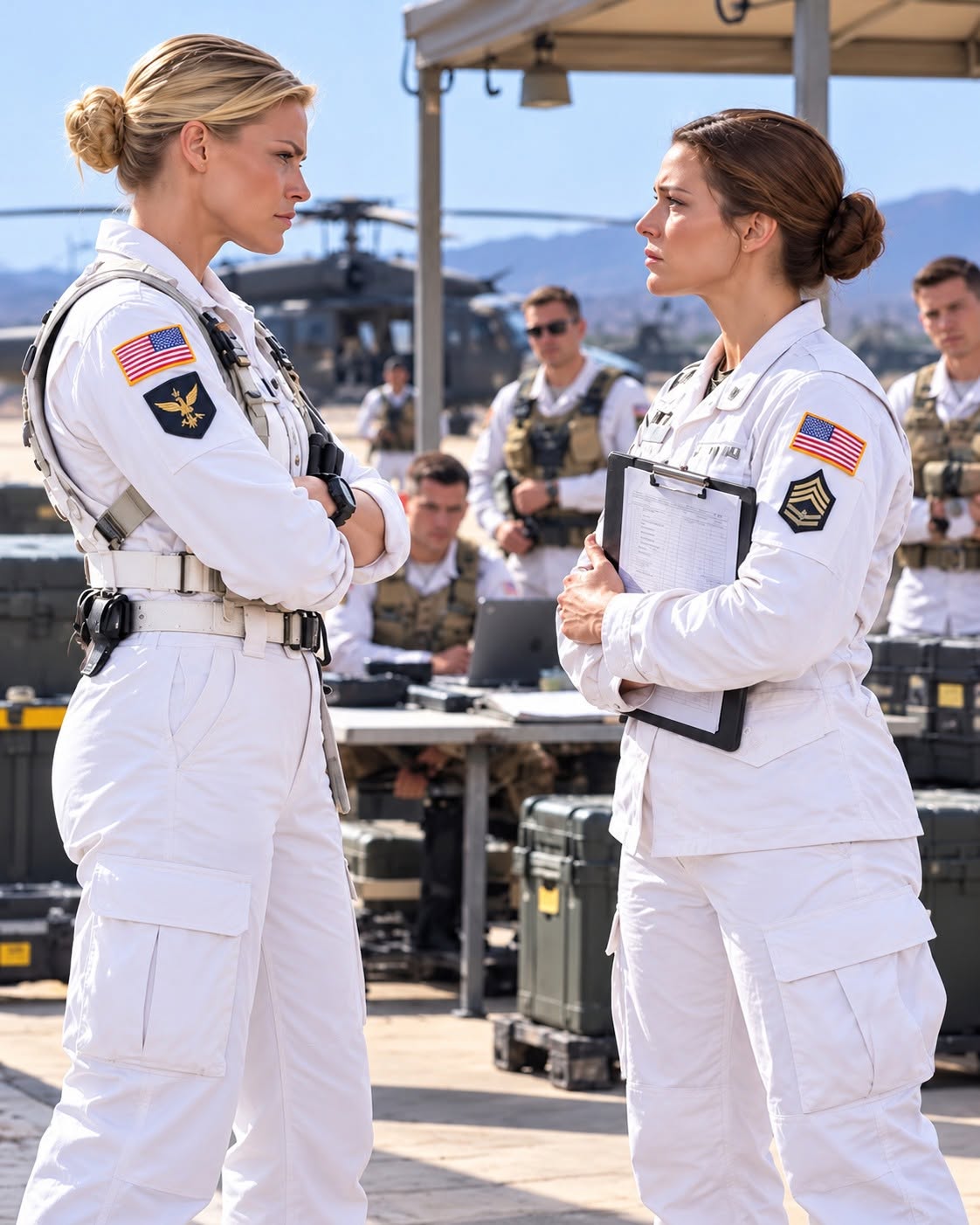
Range Eleven at dawn was a wide, austere expanse of red Georgia clay surrounded by dense walls of loblolly pines. The morning air was thick with the scent of damp earth, burnt CLP lubricant, and the sharp, metallic tang of unspent brass. The sun had not yet cleared the tree line, leaving the firing lanes cast in a cold, slate-gray shadow that made the green silhouette targets at two hundred and three hundred meters blend seamlessly into the berms.
I stood three paces behind the fourth firing point, wearing my body armor and eye protection, holding an electronic scoring tablet and a mechanical chamber gauge.
Down the line, twelve officers—including three majors and nine captains—were laying out their gear on the concrete firing pads. They were checking magazines, securing ear protection, and adjusting the optics on their issued M4A1 carbines.
At Lane Four was Major Lauren Bennett.
Her hands were moving with a hurried, erratic energy that betrayed the cool composure she had worn the day before. She was adjusting the sling on her rifle, pulling the nylon webbing tight, loosening it, and pulling it tight again. When she reached down to open her ammunition pouch, her fingers fumbled with the velcro, dropping a thirty-round magazine onto the red clay.
The young specialist acting as her lane safety moved to pick it up, but Lauren barked at him, “I’ve got it, soldier! Watch your lane!”
I stepped forward, stopping just outside her pad. “Remember to wipe the feed lips before you seat that magazine, Major. The clay in this sector has a high quartz content; if it gets into the locking lugs, you’ll induce a bolt-over-base malfunction on the first burst.”
Lauren’s head snapped up. Her face was flushed beneath the rim of her helmet, her eyes hot with resentment. “I’ve been qualifying on the M4 since before you put on your three stripes, Sergeant. I don't need a maintenance lecture from my little sister.”
“I’m not speaking to you as your sister, ma'am,” I said evenly. “I’m speaking as the range safety non-commissioned officer. Clean the magazine.”
Master Sergeant Reed walked past the rear of the lane, his arms crossed over his chest, his eyes fixing on Lauren until she reluctantly pulled a cleaning rag from her pocket and wiped the brass casings.
From the control tower above, the loud, mechanical blast of the range horn cut through the pines.
*“Shooters, you are now on the clock. Assume the prone unsupported position. Prepare to engage targets from fifty to three hundred meters upon presentation. Watch your lanes.”*
Lauren dropped to the concrete pad. Her movement was stiff, her elbows splaying outward at an awkward angle that failed to create a stable bone-support tripod. I watched her cheek weld—the point where her jaw met the stock of the rifle. It was inconsistent, shifting every time she took a breath.
The targets began to pop up along the distant berm.
*Pop.* Fifty meters.
Lauren fired. The crack of the 5.56 round was sharp, but the green plastic target remained standing. She fired again, rushing the trigger, jerking the weapon to the right. The second round kicked up a puff of red dust six inches wide of the target’s shoulder.
*Pop-pop.* One hundred and fifty meters. Two hundred meters.
Lauren’s firing became frantic. She was slapping the trigger rather than squeezing through the break, fighting the recoil instead of letting the weapon cycle naturally. On my scoring tablet, the digital hits failed to register. At the two-hundred-meter mark, she had dropped five out of eight targets.
Then came the mechanical failure.
At target twelve, Lauren squeezed the trigger, but instead of a shot, a dull, metallic *click* echoed from her receiver. She immediately executed a hasty remedial action—slapping the base of the magazine and racking the charging handle with violent force.
A live cartridge flew out of the ejection port, followed immediately by another hollow *click*.
“Malfunction!” Lauren yelled, her voice pitching high and panicked as she rolled onto her side. “Defective ammunition! The lot is bad!”
“Clear your weapon, Major,” I said, stepping onto the pad and kneeling beside her. “Point the muzzle downrange and set the selector to safe.”
She glared at me, her chest heaving, sweat dripping from the tip of her nose onto the receiver. “The firing pin is worn out, Natalie! Your armory gave me a broken piece of equipment to sabotage my score!”
I didn't answer her. I reached down, took the rifle from her trembling hands, dropped the magazine, and pulled the charging handle to verify the chamber was clear.
The bolt carrier group was locked halfway to the rear, wedged against an unspent casing in a severe double-feed. But it wasn't the ammunition that caught my eye.
It was the trigger assembly.
As I pushed the rear takedown pin through the receiver and hinged the upper assembly forward, the internal fire control group was exposed to the morning light.
The hammer spring was not standard Army issue. It was made of polished chrome-silicon steel, coiled in an unauthorized custom configuration with a shaved disconnector hook—a civilian competition modification designed to drop the trigger pull weight from the mandatory military standard of seven pounds down to an ultra-light two and a half pounds.
A hair trigger.
A dangerous, completely unauthorized modification that violated every safety directive in Army Regulation 750-10.
I looked down at the serial number stamped into the lower receiver: *W-884109.*
The breath locked in my throat, cold and sharp as an iron blade.
I knew that serial number.
Three years ago, when I was a staff sergeant stationed at Fort Bragg, an enlisted weapons repairer in our maintenance company named Specialist Tommy Torres was subjected to an Article 15 hearing, reduced in rank to private first class, and docked two months’ pay. He had been accused of unauthorized weapons tampering after an M4 carbine assigned to an operations officer was discovered during a command inspection to have an illegal, lightened trigger assembly.
The officer who owned that rifle had sworn under oath that she had no knowledge of the modification, claiming that the enlisted armorer must have tampered with the weapon during routine servicing.
That officer was Captain Lauren Bennett.
I looked up from the open receiver into my sister’s wide, terrified eyes. She stared at the chrome spring gleaming in the Georgia sunlight, her face completely drained of color, realizing in an instant that the ghost she had buried three years ago at Fort Bragg was lying open on the concrete pad beneath my hands.
Related Stories