Chapter 1: The Cleared Docket
Colonel Robert Albright, the deputy brigade commander, leaned back in his leather desk chair, his silver oak leaf clusters catching the afternoon fluorescent light. Beside him, Ms. Martha Hayes, the senior civilian human resources director for the installation, closed a thick, tabbed manila folder with a deliberate, echoing thud. The room smelled of floor wax, industrial air conditioning, and fresh toner. Through the venetian blinds, I could see the Georgia heat shimmering over the asphalt parking lot of the building that housed the Maneuver Center of Excellence, but inside the office, the temperature felt barely above freezing.
“Sergeant Bennett,” Colonel Albright said, his voice deep, gravelly, and entirely stripped of small talk. “We have concluded the formal review into the administrative routing of your temporary assignment to this marksmanship mobile training team. The inquiry requested by Major Lauren Bennett regarding alleged command favoritism and irregular selection procedures has been fully resolved.”
I kept my spine straight against the back of the wooden visitor’s chair, my hands resting palms-down on my knees, my boots squared against the floor. “Understood, sir.”
Albright pulled a pair of reading glasses from his breast pocket and tapped the brass frame against the edge of the closed file. “Your nomination for this mission did not originate from Lieutenant Colonel Mercer. It originated three months ago from the Directorate of Marksmanship at the Infantry School. When the new rifle qualification standards were approved by Department of the Army, the schoolhouse submitted an urgent personnel request for four non-commissioned officers possessing master armorer credentials and verified competitive shooting records at the national level.”
Ms. Hayes opened her copy of the packet, turning a single sheet of heavy bond paper toward me across the mahogany desk. “You hold the President’s Hundred Tab, Sergeant Bennett. You took first place in the open-service rifle category at Camp Perry two years running, and you hold advanced mechanical certifications from the Army Marksmanship Unit on every direct-fire platform currently in the inventory. Lieutenant Colonel Mercer’s battalion did not choose you out of friendship; his operations officer merely signed the cross-leveling authorization when the schoolhouse identified you by name as their primary technical candidate.”
“The paperwork is immaculate,” Colonel Albright stated, his gaze locking onto mine with an unblinking, diagnostic intensity. “There was no circumvention of protocol, no nepotism, and no ethical breach. You earned this assignment on the firing line over thirteen years of service, Sergeant. The matter is closed.”
A quiet breath slipped through my lips, but the knot in my stomach did not loosen. In the military, exoneration rarely marks the end of a conflict; it merely changes the terrain.
“Thank you, sir,” I said, keeping my tone measured. “May I return to Range Eleven to assist Master Sergeant Reed with the zeroing bay preparations?”
“Not quite yet, Sergeant Bennett,” Albright said, setting his glasses on the desk. He exchanged a brief, heavy glance with Ms. Hayes before turning back to me. “There is an additional finding you need to be made aware of. When an officer of Major Bennett’s rank submits a formal complaint alleging corruption against a battalion commander and an enlisted soldier, that document does not vanish when the allegations prove unfounded. Under Army Regulation 20-1 and the Uniform Code of Military Justice, an unsubstantiated accusation of this severity triggers an automatic administrative review of the complainant.”
I blinked, the cool air in the room suddenly pressing hard against my collar. “Sir?”
“Major Bennett did not simply send an email asking for clarification,” Albright explained, his voice dropping into a register of quiet, lethal gravity. “She submitted an official memorandum through the brigade executive officer requesting that your assignment orders be revoked for lack of qualification. Attached to that memorandum was an administrative addendum recommending that one of her own company commanders, Captain Miller, be appointed as the evaluation lead, with Major Bennett herself installed as the primary officer-in-charge of the marksmanship symposium.”
The pieces fell into place with the sickening, mechanical click of a bolt locking into battery.
Lauren hadn't just been embarrassed that her younger sister knew more about weapons than she did. She had seen the high-visibility training event—attended by senior leaders from the Infantry School and watched closely by the upcoming Lieutenant Colonel promotion board—and she had tried to orchestrate a bureaucratic hit to seize the spotlight for herself. She had used my name, my reputation, and my career as stepping stones to fix her own personnel file.
“Major Bennett’s actions cross the boundary from poor family judgment into potential abuse of rank and bad-faith reporting under Article 134,” Albright continued, his jaw tightening into iron. “Her complaint has caused unnecessary administrative disruption across two separate brigades. Before we refer this matter to her division commander for potential disciplinary action, the reviewing authority requires an official statement from you regarding whether you wish to file a formal equal opportunity or harassment complaint against Major Bennett.”
The room went dead silent. The offer sat between us on the mahogany table like a cocked service pistol. If I signed a formal complaint, Lauren’s career would be mortally wounded. An enlisted soldier’s documented harassment report against an officer—especially one backed by the deputy brigade commander’s own findings—would place a General Officer Memorandum of Reprimand in her permanent file, effectively ending any chance of her ever wearing silver oak leaves.
I looked at Colonel Albright. “I want to review the official findings before I make that determination, sir.”
“You have twenty-four hours, Sergeant Bennett,” Albright said, nodding once. “Dismissed.”
I stood, came to attention, saluted crisply, and executed a sharp about-face. I walked out of the command suite, pushed open the heavy glass doors of the administrative headquarters, and stepped out onto the covered concrete breezeway.
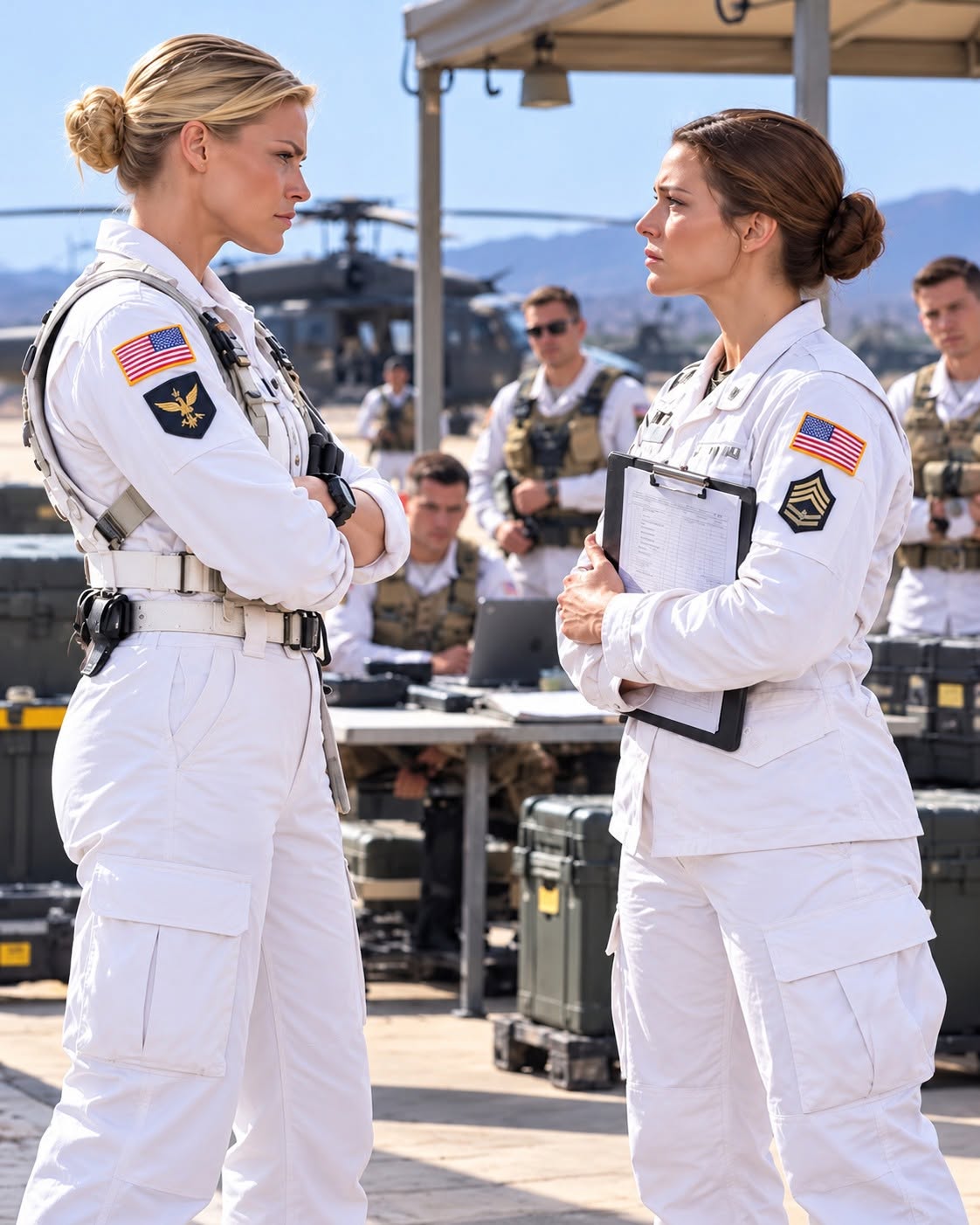
Waiting for me beside the brick support column, her arms crossed over her pristine operational camouflage uniform, her gold major’s rank gleaming in the harsh afternoon sunlight, was my sister.
Related Stories