Chapter 5: The Logbook at Twilight
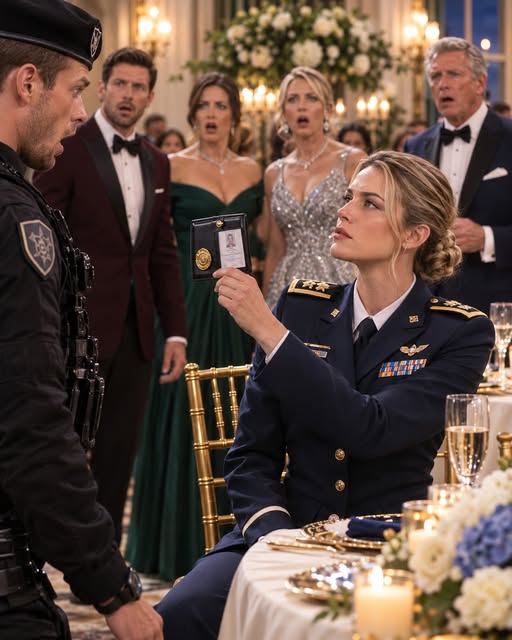
The Master-at-Arms detail led Commander Sean Vance through the corridor in silence, their heavy leather duty gear squeaking softly against the polished floorboards until the elevator doors closed behind them.
The flag conference suite was quiet now, save for the evening breeze coming off the bay, carrying the scent of salt marsh and jet fuel across the balcony.
Admiral Mason Crowe stood by the window, the sun setting behind the Point Loma hills, painting the Pacific in wide, bloody streaks of crimson and gold.
In his right hand, he still held the tarnished shell casing.
“I didn't tell you, Admiral,” I said, stepping up to the window beside him, “because David made me promise.”
Crowe didn't turn around. “Promise what?”
“He knew what you were,” I told him gently. “He knew you were the Deputy Chief of Naval Operations. He knew that if you discovered that Vance and the contractor consortium had used an illegal prototype to ferry equipment through your theater, you would have demanded an open congressional tribunal.”
Crowe’s jaw tightened. “And I would have been right to demand it.”
“And it would have grounded every maritime patrol squadron in the Fifth Fleet for eighteen months during the Middle East transition,” I replied. “Three thousand pilots would have been pulled from flight status for compliance re-audits. David said to me: *‘My father built this fleet with his bare hands. Don’t let them tear his life’s work apart over my grave.’*”
Crowe closed his eyes. A single tear slipped down his weathered cheek, catching the twilight sun, tracking through the deep lines carved by forty years of command.
“He was a better officer than I was,” Crowe choked out.
“He was an exact copy of you, sir,” I said. “He just didn't care about the promotion boards.”
Crowe stood in silence for three long minutes, watching the gray, towering silhouette of an aircraft carrier steaming out past the channel buoys toward the open sea.
Then, slowly, he straightened his posture.
He walked back to the mahogany conference table, pulled out his gold fountain pen from his pocket, and picked up the graduation roster from the Coronado ceremony.
Beside the entry for *WHITAKER, A. // LIEUTENANT COMMANDER*, the space for official call-sign designation remained blank.
Crowe unscrewed the cap of the pen.
In bold, black, permanent ink, with the steady hand of a four-star admiral who had just regained his soul, he wrote nine letters into the ledger:
*NORTHSTAR.*
Beneath the name, he signed his full signature, followed by his four-star fleet authority seal.
“Effective immediately, Commander,” Crowe said, capping the pen and looking at me with deep, unvarnished respect. “The administrative record is corrected. You are reassigned to the Special Warfare Development Group as Chief Tactical Systems Architect.”
“Thank you, Admiral,” I said, bringing my heels together and offering a crisp, parade-ground salute.
Crowe returned the salute—not with ceremonial ease, but with the rigid, solemn precision an officer reserves for someone who has stood in the fire and held the line.
“Go down to the terrace, Commander,” Crowe said softly. “Your boys are waiting for you.”
I turned on my heel and walked out of the flag suite.
I descended the grand marble staircase to the ground floor of the Special Warfare Center.
The banquet hall had cleared out, the dignitaries and Washington liaisons having departed for their private dinners, but standing in formation on the grass terrace overlooking the dark Pacific were the twenty operators.
They weren't wearing their jackets anymore. They had stripped down to their white shirts and ties, their trousers rolled slightly against the wet sand, standing beneath the yellow glow of the perimeter floodlights.
Nathan Cross saw me step onto the lawn.
He raised his right hand, holding a fresh glass of bourbon in the air.
“Commander on deck!” Cross barked.
The twenty operators snapped to attention, their faces breaking into wide, tired, triumphant grins that carried none of the rigid discipline from the auditorium.
I walked down the steps into the cool sand, feeling the ocean wind whip my hair across my face.
“Stand easy, gentlemen,” I called out.
Cross stepped forward, handing me a glass. “Well, ma'am? Did Crowe give you an administrative discharge?”
I held up the white roster sheet bearing the four-star signature and the single word written in permanent ink: *NORTHSTAR.*
A collective roar of laughter and cheers went up from the operators, rolling out across the breaking surf like a cheer from a trench.
Cross clinked his glass against mine, the crystal ringing clear and sharp in the night air.
“Welcome home, Northstar,” Cross said.
I looked out at the dark horizon, where the distant lights of the carrier strike group blinked against the edge of the sky, feeling the weight of the last six years finally lift from my shoulders.
My secure tablet buzzed in my dress jacket pocket.
A low, persistent vibration that signaled an operational alert from the Pentagon’s National Military Command Center.
I set my glass on the stone wall, pulled the tablet from my pocket, and unlocked the illuminated screen under the terrace floodlights.
The screen displayed a high-priority encrypted advisory routed directly from the Joint Special Operations Command in Fort Bragg:
*FLASH ADVISORY // EYES ONLY COMMANDER WHITAKER.*
*SUBJECT: PROJECT NIGHTSHADE AIRFRAME RECOVERY.*
*MESSAGE: AT 19:42 PST, NAVAL INTELLIGENCE INTERCEPTED A CARGO MANIFEST FROM A COMMERCIAL CONTAINER SHIP CLEARED FOR BERTHING AT THE PORT OF LONG BEACH.*
*THE SECONDARY AUTONOMOUS RADAR ARRAY EXTRACTED FROM THE AFGHAN CRASH SITE WAS NOT RECOVERED BY ADMIRAL CROWE'S PRIVATE SALVAGE TEAM.*
*IT WAS LOADED ONTO A DOMESTIC FLATBED TRUCK THIRTY MINUTES AGO UNDER A BILL OF LADING SIGNED BY RETIRED VICE ADMIRAL FRANK WHITAKER—YOUR FATHER-IN-LAW.*
Related Stories