Chapter 1: The Ridge at Shok Valley
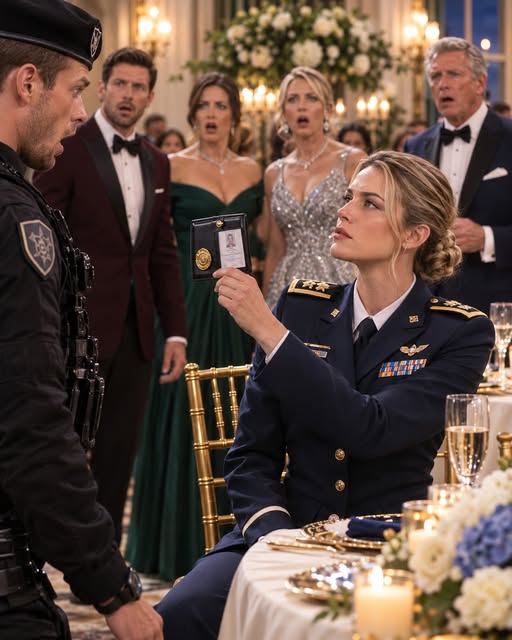
The operator who stepped into the center aisle was Lieutenant Nathan Cross.
Cross stood six-foot-two with shoulders that looked broad enough to carry a mortar baseplate, his ribbons dominated by a Silver Star and two Purple Hearts. His dress whites were so crisp they rustled against the silence as he walked four deliberate paces down the carpet, stopping directly between Admiral Mason Crowe and the podium.
Behind Cross, nineteen other operators in the front row did not blink. Their chins remained level, their hands planted firmly on their thighs.
Crowe’s jaw set into an unyielding, rigid contour. He lowered his ceremonial glass until it rested against the polished edge of the rostrum. The amusement that had painted his features thirty seconds earlier was completely gone, replaced by the dangerous, calculating stillness of a flag officer sensing a mutiny in plain sight.
“Lieutenant Cross,” Crowe said, his voice dropping into a razor-thin baritone that hummed through the overhead speakers. “If you have something to state for the record regarding this command’s administrative protocols, you may do so. Otherwise, return to your seat.”
Cross did not return to his seat. He snapped to attention, his heels meeting with a dry, concussive *clack* that echoed off the wood-paneled walls.
“She earned it on the eastern ridge above the Shok Valley in twenty-eighteen, Admiral,” Cross stated. His voice was completely steady, completely devoid of performance. “During Operation Iron Sieve.”
A collective intake of breath rippled across the second and third rows—where the senior Pentagon liaisons and intelligence attachés sat. Two Marine generals near the aisle turned their heads in unison.
Crowe’s left eyelid twitched.
“Iron Sieve is a sealed Joint Special Operations file, Lieutenant,” Crowe warned, each word clipped like wire. “You are dancing on the edge of a court-martial under Article Ninety-Two.”
“The mission is sealed, sir,” Cross replied, his eyes never leaving Crowe’s forehead. “Her voice on the tactical radio is not.”
Cross reached into the left breast pocket of his uniform jacket.
From the velvet pocket lining, he produced a small, tarnished object suspended from a strip of frayed olive parachute cord. It wasn't an official military medal, and it wasn't a standard issue insignia.
It was a spent twenty-millimeter titanium shell casing, its neck crimped shut and stamped with four jagged strike marks.
“Seven hours pinned beneath a rock ledge with forty wounded, three dry radios, and zero visibility under an incoming snowstorm,” Cross said, holding the shell casing in the palm of his white-gloved hand. “Every strike package out of Bagram refused authorization because of the terrain floor. Every joint terminal controller on the net said the coordinates were impossible.”
Cross turned slightly, his gaze shifting directly toward me.
“One voice broke the squelch on the secondary survival frequency,” Cross continued, the entire room listening so intently that the low rumble of the Pacific surf against the Coronado beach seemed audible through the concrete. “She wasn't sitting in a command bunker with air conditioning. She was flying an unarmed weather-reconnaissance bird below the mountain rim, using her private altimeter to bounce radar vectors off the granite face to guide two A-Ten warthogs into the ravine on thirty feet of clearance.”
He turned back to face Crowe.
“She didn't write an administrative memo to claim the call sign, Admiral,” Cross said. “We carved it into our armor plates with survival knives before the dust cleared.”
Crowe stared at the tarnished casing, his chest rising and falling beneath his four-inch ribbon rack.
“And what, pray tell,” Crowe asked, his voice shaking with a quiet, furious tremor, “did you call her?”
Cross didn't answer right away.
Instead, he took one step back, placed his heels together, and executed a rigid, parade-ground salute directly toward the solitary seat at the end of the front row.
Behind him, with a single, synchronized rustle of heavy wool and starch that sounded like an artillery shell tearing through silk, the remaining nineteen operators in the front row stood up as one man.
They turned toward me.
They snapped their salutes in perfect, concussive unison.
“*Northstar*,” Cross answered, the name ringing off the vaulted ceiling like a cathedral bell. “Because when the entire sky went black, she was the only point that didn't move.”
The auditorium sat stunned into total paralysis.
Crowe stood behind the podium, his hand clenching the ceremonial glass so hard that a hairline fracture spidered across the crystal bowl.
Yet as I looked across the saluting operators at the man who had tried to humiliate me for thirty days, Crowe didn't look defeated.
His eyes narrowed into two slits of cold, venomous comprehension. He looked down at the podium notes, then up at me, and a slow, terrifying smile returned to the corners of his mouth.
“Northstar,” Crowe murmured into the live microphone. “How touching, Commander Whitaker.”
He set the cracked glass down onto the wood.
“It's a pity,” Crowe added, his voice carrying clearly to every corner of the frozen hall, “that the flight recorder from that exact aircraft in Shok Valley was recovered from the Afghan border forty-eight hours ago—and your signature isn't on the navigation log.”
---
Related Stories