Chapter 3: The Cipher in the Locket
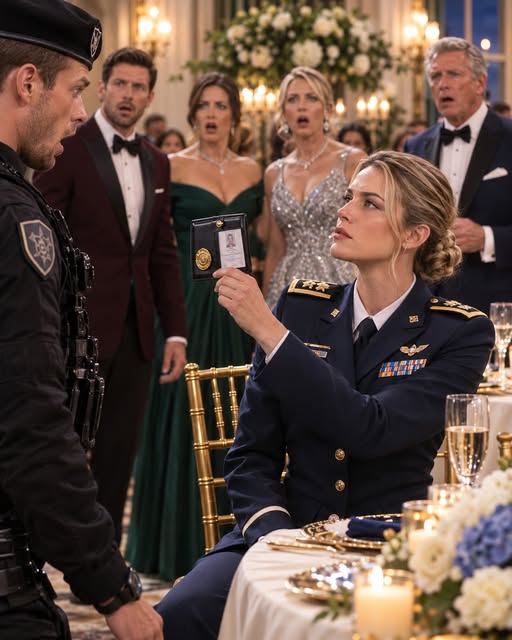
The ticking of the grandfather clock in the corner of the flag suite was loud as an executioner’s tread.
I looked from the scorched orange chassis to the paper beneath my thumb. The black ink was clear, crisp, and bore the official digital verification seal of the Combined Air Operations Center at Al Udeid.
*AUTHORIZED UNMANNED SYSTEM RELAY.*
“David died on that ridge, Aurora,” Crowe said, his voice dropping into a register of ragged, raw exhaustion that stripped away forty years of naval rank. “He was twenty-six years old. He had orders to the fleet replacement squadron in Jacksonville. He was supposed to come home and take command of his own maritime patrol group.”
He leaned closer, his knuckles whitening against the edge of the mahogany table.
“For six years, I believed Mark and David died because their engines flamed out in a mountain squall,” Crowe continued, his eyes bloodshot, glittering with unshed tears. “Then this box arrives on my desk. The telemetry reveals that the aircraft’s electrical distribution system was deliberately overloaded. The secondary bus was severed to keep the radar emitter active while the fuel transfer valves were frozen shut.”
“The fuel transfer valves didn't freeze, Admiral,” I said softly.
Crowe’s face darkened, the grief instantly hardening back into fury. “Do not stand in my office and fabricate excuses! The manifest proves the plane was flying on automated test telemetry! There was no third officer! You weren't in that sky!”
I reached up to the collar of my dress uniform.
I unfastened the top two brass buttons, reached beneath the white silk lining, and pulled out a thin titanium chain hanging against my collarbone.
Suspended from the chain was not a dog tag.
It was an encrypted military flash drive, encased in hardened resin, bearing a tiny blue diode that remained dark.
I laid the drive on the table beside the charred flight recorder.
“Do you know what this is, Admiral?” I asked.
Crowe glanced at the drive with open contempt. “A standard-issue cryptographic key. Every squadron safety officer carries one.”
“Not this one,” I replied. “This is an AN/AYK-Fourteen maintenance key. It was issued exclusively to the flight test division at Patuxent River in twenty-seventeen.”
I tapped the resin casing with my fingernail.
“Your son didn't die because an automated system overloaded the fuel bus, Admiral,” I said, looking directly into his pupils without flinching. “Your son died because the aircraft he was flying was never supposed to be in Afghanistan.”
Crowe went completely still.
“What did you say?”
“Look at the serial number on that orange box, sir,” I continued, my voice steady, cold, and clear as mountain ice. “It ends in Bravo-Nine. That is an experimental prototype chassis from the Defense Advanced Research Projects Agency. It was part of Project Nightshade—an autonomous electronic warfare package designed to operate without pilot intervention inside hostile airspace.”
Crowe’s gaze flicked to Commander Vance, who was standing by the closed door.
Vance’s face had drained of every drop of color. His hand, resting casually near his service belt, suddenly twitched.
“Nightshade was a paper concept,” Crowe stammered, his brow furrowing in genuine bewilderment. “It was cancelled in committee after the preliminary wind-tunnel tests.”
“It wasn't cancelled, Admiral,” I said. “It was deployed. Secretly. Illegally. By a defense contractor seeking field-validation data before the congressional appropriations review in November of twenty-eighteen.”
I stepped around the table until I was standing inches from the flight recorder.
“David didn't volunteer for a weather reconnaissance flight that morning,” I revealed, watching the realization dawn across Crowe’s face like a slow, bleeding cut. “He and Mark were ordered into that cockpit by their wing commander to ferry that airframe from Bagram to an unlisted airstrip in Uzbekistan. When Cross’s team was ambushed in the Shok Valley, David tried to turn back to establish a communications relay.”
“And you?” Crowe choked out, his throat moving convulsively. “Where were you?”
“I was the DARPA liaison officer at the ground control terminal in Jalalabad,” I told him. “I was the engineer who held the override codes to the experimental antenna array. When the plane’s navigation computer locked up over the ridge, David called my private line.”
My voice softened, the memory of that howling wind and the crackling headset breaking through six years of iron silence.
“David knew the plane was losing fuel, Admiral,” I whispered. “He knew the engines would starve if we dumped power to the transmitter. He looked at the satellite display showing twenty Americans bleeding out on that rock face, and he told me: *‘Flip the switch, Aurora. Bring the boys home. We’ll glide her down the valley.’*”
Crowe’s hands began to shake.
He looked down at the flight manifest, his breath rattling against his ribs like dry paper.
“The log,” Crowe whispered, pointing a trembling finger at the blank third line. “Why is your name missing from the manifest?”
“Because if my name was on that manifest, the Pentagon would have had to open a formal board of inquiry into who authorized the illegal deployment of Project Nightshade,” I answered.
I turned my head toward the door, where Commander Sean Vance stood pressed against the wood.
“And the man who signed the secret deployment order that put your son in that doomed prototype,” I added softly, “was the director of special programs for the Atlantic Fleet... Captain Sean Vance.”
---
Related Stories