Chapter 2: The Red Wax on the Manifest
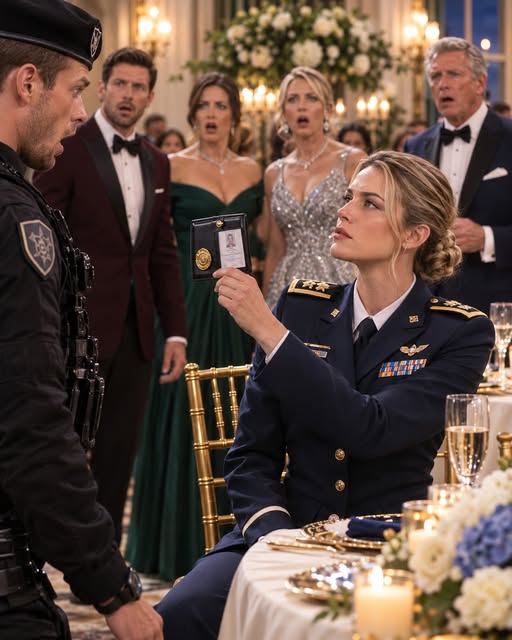
The reception in the Admiral’s Hall outside the main auditorium was supposed to be a celebration of thirty graduating tactical officers, complete with ice sculptures, silver trays of oysters, and polished brass lanterns.
Instead, it felt like an armed perimeter holding its breath.
The junior operators clustered near the stone fireplace, their champagne flutes untouched on the mantle. When senior captains and naval attachés approached them to offer standard congratulations, the young men answered in clipped, monosyllabic phrases, their eyes continually tracking back to the corner alcove where I stood alone with a cup of black coffee.
Cross broke away from the cluster and walked over to me, holding a printed copy of the graduation roster in his hand.
“Ma'am,” Cross said quietly, stopping at parade rest two feet from my shoulder. “Crowe is bluffing about the flight recorder. The entire telemetry packet from that sector was incinerated during the airfield retrograde.”
“Admiral Crowe doesn't bluff about paper, Nathan,” I replied, taking a slow sip of the scalding, bitter coffee. “He doesn't have the imagination for it. If he said an Afghan salvage team recovered a recorder, someone put a box on his desk.”
Cross’s jaw tightened, the skin pulling taut over his cheekbones. “Who?”
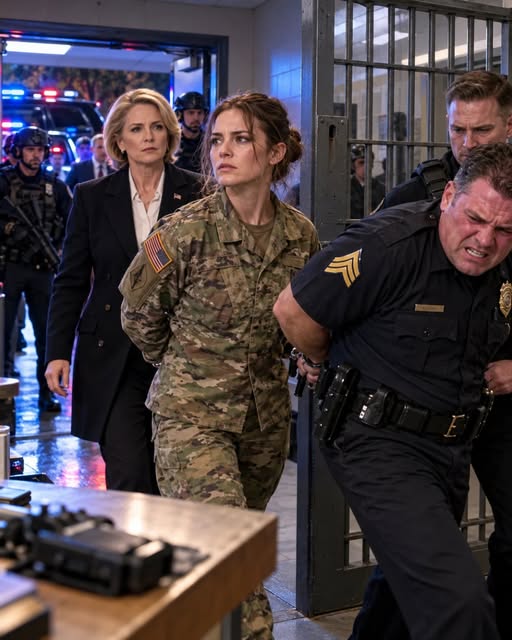
Before I could answer, the double oak doors at the end of the corridor opened with a dull, heavy thud.
Commander Sean Vance—Crowe’s chief of staff, a man whose dress whites always looked as though they had been starched in a courtroom—strode across the terrazzo floor. He did not look at the operators. He did not look at the guests.
He stopped three feet from me and pulled an unsealed crimson folder from beneath his arm.
“Lieutenant Commander Whitaker,” Vance said, keeping his voice carefully calibrated so it didn't travel beyond our alcove. “Admiral Crowe requires your presence in the flag conference suite. Immediately.”
“Is this an administrative debrief or an inquiry, Commander?” I asked.
Vance’s gaze flicked to Cross, then back to my collar insignia. “You are being afforded the opportunity to tender a voluntary transfer request to the inactive reserve before the Judge Advocate General’s representative arrives on site.”
Cross took half a step forward, his fists clenching at his sides. “On what grounds, Commander?”
“Interference with a classified chain of custody, Lieutenant,” Vance snapped, his tone freezing over with instant hostility. “And falsification of an operational after-action report involving the loss of two Navy aircrew members.”
The air in my chest turned to lead.
*Two aircrew members.*
My hands didn't shake. I handed my coffee cup to Cross, took my dress cover from the table, and smoothed the gold braid across the bill.
“Lead the way, Commander,” I said.
The flag conference suite on the third floor smelled of lemon wax, leather, and sea salt blowing through the partially opened balcony windows overlooking the Coronado bridge.
Admiral Mason Crowe stood behind a long mahogany conference table, his uniform jacket removed, wearing his white service shirt with four gold-embroidered stars gleaming on the shoulder boards.
Resting in the center of the dark wood was a battered, scorched rectangular chassis—the orange paint burned away by fire, its serial numbers barely legible beneath a thick crust of dried clay.
A flight data recorder from an RC-12 Guardrail aircraft.
Beside the box lay a typed flight manifest dated October 14, 2018, stamped with red wax: *CLASSIFIED // EYES ONLY USSOCOM.*
Crowe didn't offer a chair. He stood with both palms flat against the wood, leaning forward like a judge waiting to hand down an execution.
“Close the door, Sean,” Crowe said without looking at his aide.
The latch clicked shut.
“You made quite a theater piece down there, Aurora,” Crowe said softly, using my first name for the first time in five years. “Twenty SEALs saluting you like you’re Joan of Arc on the quarterdeck. It makes for excellent naval folklore.”
“I didn't ask for their salute, Admiral,” I replied. “And I didn't ask Cross to speak.”
“No,” Crowe agreed, stepping around the table until he was three feet from me. “You let them do it because you’ve traded on that Shok Valley myth for six years to keep your seat at the tactical table.”
He tapped the scorched orange chassis with his index finger.
“This recorder was pulled out of a dry creek bed twelve miles north of the Pakistani border three weeks ago by a private security firm,” Crowe said, each word landing like a flat hammer on iron. “The telemetry chip was intact. The voice recordings were wiped by the impact fire, but the automated transponder log recorded every crew member logged into the flight deck network.”
He picked up the flight manifest, sliding it across the table until it rested against my knuckles.
“Look at the names, Commander,” Crowe commanded.
I looked down.
The pilot was Lieutenant Commander Mark Whitaker—my husband, who had failed to clear the ridge eighteen hours after the rescue and whose name was carved into the granite memorial wall at Arlington.
The copilot was Lieutenant David Crowe.
Admiral Mason Crowe’s only son.
And the third seat—the navigation and sensor operator console that had relayed the radar coordinates to Cross’s team in the ravine—was signed in faded black ink:
*FLIGHT OFFICER DESIGNATION: VACANT // AUTHORIZED UNMANNED SYSTEM RELAY.*
I lifted my eyes to meet Crowe’s gaze.
“The log says you were never on that plane, Aurora,” Crowe whispered, his voice shaking with thirty years of buried, poisonous grief. “My son died on that mountain because someone rigged a remote link to burn out the fuel pumps to keep the radar alive. And you let those twenty boys believe you were their guardian angel.”
---
Related Stories