Chapter 6: The Brother in Ward Four
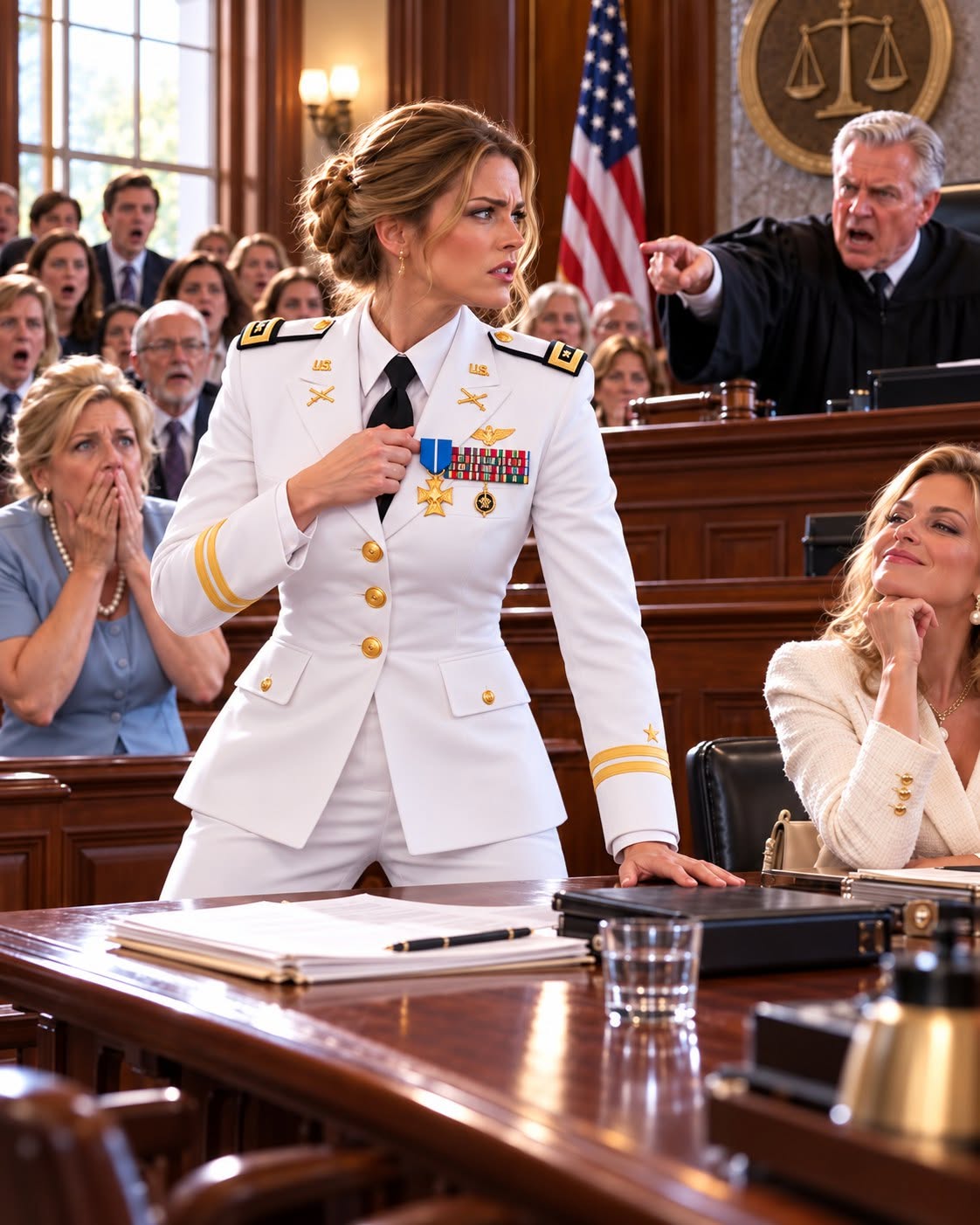
The glare of the midday sun off the courthouse portico felt almost clinical against my face, but the heat did nothing to thaw the sudden chill settling into my chest.
I stood on the top granite step, the encrypted tablet screen in my palm pulsing with a single crimson security banner: ARMY CID // DCIS JOINT SPECIAL INQUIRY — CASE 2026-OM-884.
Beside me, Adrian Cole was still buttoning his trench coat against the brisk autumn wind, his legal briefcase resting against his knee. “Major? What is it? Your commanding officer?”
“Not my commander,” I said, keeping my voice low so the television crews thirty yards away on the sidewalk couldn't catch the tone. “It’s the Defense Criminal Investigative Service.”
Adrian stopped in his tracks, his eyes darting toward the street where the news reporters were interviewing local business owners about Judge Bellamy’s courtroom meltdown. “DCIS? Why would the Pentagon’s criminal division be monitoring an intra-family estate dispute in a county probate court?”
“Because V&D Holdings didn't just file a forged quitclaim deed for fifty acres of pasture,” I replied, turning the screen slightly toward him. “The corporate account Vanessa opened in Richmond was seeded with a seventy-five-thousand-dollar initial deposit two months ago. The routing number traces back to a commercial shell company in Delaware named Pinnacle Rail & Defense Logistics.”
Adrian’s breath caught. He leaned down, squinting at the alphanumeric ledger on the screen. “Pinnacle Rail? They’re the primary commercial railhead contractor for the naval surface warfare annex outside Dahlgren.”
“They’re also the private freight contractor currently under grand jury investigation for subcontracting counterfeit metallurgical components for Navy patrol vessels,” I said, the pieces locking into place with the cold, surgical precision of an artillery diagram. “And our family farm on Route 9 sits squarely against the old Norfolk Southern freight spur. If someone wanted to build an off-the-books commercial transfer siding directly adjacent to a secure federal rail corridor, our north pasture is the only unzoned private parcel left in the county.”
“Major Mercer.”
A gravelly voice broke between us. Master Sergeant Thomas Miller and Gunnery Sergeant Ray Lawson had descended the stairs behind us, their heavy trench coats unbuttoned, their VFW lapel pins gleaming against the gray wool.
Miller stopped two feet away, his jaw set in a hard, disciplined line. “We couldn't help but notice the look on your face, ma'am. If you’re heading down to Richmond to see your brother, you don't need to drive down ninety-five alone.”
I looked at the two retired non-commissioned officers. Men with silver at their temples and calluses across their knuckles, who had seen enough bureaucratic corruption in their lives to know that when an honest soldier is cornered, you don't offer polite prayers—you bring a perimeter.
“Master Sergeant Miller,” I said, offering a crisp, respectful nod. “How long has David been in Ward Four?”
“Three weeks,” Miller replied quietly. “When he found out Vanessa had taken his military records and forged his signature on the corporate registry, he went to the local sheriff’s office to report it. But Marcus Vance had already been to see the county prosecutor. Vance told them David was experiencing acute psychiatric distress from his time in the reserves and that Vanessa was just trying to preserve the family estate while he sought help.”
Miller’s hands curled into tight fists inside his coat pockets.
“The local cops didn't even take a report, Major. They told David to go home and sleep it off. So he took a bottle of bourbon, sat in his truck behind the VFW hall, and drank until his heart nearly stopped. Lawson and I pulled him out of the cab at two in the morning and drove him straight to Hunter Holmes McGuire VA Medical Center in Richmond before the local deputies could throw him in a drunk tank.”
“Let’s go,” I said, turning down the steps toward the parking lot.
The drive south on Interstate 95 was seventy miles of gray asphalt and heavy silence. I rode in the front passenger seat of Miller’s dark blue pickup, while Adrian sat in the back with his laptop open, furiously cross-referencing corporate registration documents from the State Corporation Commission with the federal routing numbers from my dispatch.
When we pulled into the visitors' lot of the Hunter Holmes McGuire VA Medical Center, the afternoon sky was already fading into the dull, bruised purple of dusk.
Ward Four was housed in the west wing of the hospital—a secure, quiet psychiatric and substance rehabilitation unit lined with pale green linoleum and heavy magnetic security doors. The smell of floor stripper, industrial coffee, and damp wool brought back every military hospital ward I had ever walked through in Germany and Walter Reed.
We stopped at the nursing station. Miller flashed his retired service ID and signed the visitor ledger, gesturing toward a small, sunlit dayroom at the end of the hall.
David sat alone at a low wooden table near the corner window, wearing a faded gray veteran’s fleece and dark sweatpants.
My brother looked like a man who had been excavated from a collapsed trench. His cheeks were hollow, his dark brown hair cropped haphazardly, his shoulders hunched inward as if he were trying to make his large, broad frame disappear into the plastic chair. His hands were clasped between his knees, trembling with an irregular, rhythmic tremor that spoke to twenty-one days of brutal chemical withdrawal.
I stopped four feet from the table. “David.”
My brother’s head jerked up.
When his bloodshot eyes locked onto mine—taking in the crisp, dark wool of my service dress jacket, the silver oak leaves on my epaulets, and the scar running along my collarbone—his lips parted, a sharp, ragged gasp tearing from his throat.
He didn't make an excuse. He didn't ask what I was doing there.
David simply buried his face in his hands, his broad shoulders heaving with sudden, violent sobs that echoed off the empty dayroom walls.
“Sarah...” he choked out, his voice cracked and raw. “Sarah, I’m sorry... God, I’m so sorry. I didn't know. I swear to you on our mother’s soul, I didn't know what she was doing until the papers were already signed.”
I stepped forward, pulled out the empty plastic chair beside him, and sat down. I laid my right hand flat against the back of his neck, feeling the cold, damp sweat on his skin, holding him with the same steady, unyielding pressure I had used on wounded Marines in the back of tactical medevac birds.
“Look at me, David,” I commanded softly.
He lifted his head, wiping tears and snot across the sleeve of his fleece with trembling fingers.
“Tell me about Marcus Vance,” I said. “Tell me how Vanessa met him.”
David swallowed hard, his Adam’s apple bobbing in his throat. “It started two months after Mom died, Sarah. I was drinking heavy. I couldn't sleep. The farm was falling apart—the tractor engine blew, the roof on the hay barn caved in, and the property taxes were three months past due. Vanessa told me we needed an estate planner to help us handle the probate.”
He leaned in, his voice dropping into a frantic, terrified whisper.
“She brought Marcus Vance to the house for dinner. Vance said he had private clients who wanted to lease the north pasture for commercial storage. He promised us four hundred thousand dollars up front. All I had to do was sign an administrative release removing the property from Mom and Dad’s revocable trust.”
“And you refused,” I said.
“Of course I refused!” David cried, his eyes wide with a desperate, wild honesty. “That land has been in the Mercer name for three generations! Grandpa built the stone wall along Route 9 with his bare hands! I told Vance that half the deed belonged to you, that you were on active federal deployment, and that nothing could be sold without your written consent.”
David’s knuckles turned white as he grabbed the edge of the table.
“Two days later, Vanessa told me the bank had approved an emergency home equity line to pay the back taxes. She gave me a stack of papers to sign in the kitchen while I was half-blind from migraine medication. I thought I was signing a second mortgage, Sarah. I didn't know... I didn't know it was a quitclaim deed transferring the entire deed to V&D Holdings until I found the corporate filings in her vanity drawer three weeks ago.”
“And when you confronted her?” I asked.
“She laughed at me,” David whispered, a tear tracking down the hollow of his cheek. “She told me that I was a broken loser who had spent ten years working as an enlisted diesel mechanic while you were out winning medals. She said Marcus Vance was a real man who knew how to make things happen. And then she showed me the commercial contract.”
David reached into the pocket of his sweatpants and pulled out a crumpled, folded sheet of blue carbon paper, smoothed it out with his shaking thumb, and slid it across the plastic table.
“Vance didn't just lease the pasture, Sarah,” David said, his voice dropping into a register of sickening horror. “The contract isn't for storage. It’s an exclusive option agreement to construct a four-track rail transfer spur connecting the municipal corridor to Pinnacle Rail.”
He pointed to the signature block at the bottom of the page.
“And the corporate liaison who signed the approval for Pinnacle Rail... is named Julian Bellamy. The son of Judge Warren Bellamy.”
Related Stories