Chapter 12 - The Terminal Echo
The emergency power kicked in, bathing the office in a sickly, crimson glow. The red light cast long, dancing shadows against the walls, making the stacks of paper look like the jagged teeth of a beast. Adrian didn't move, his eyes locked on the terminal as the coordinates scrolled across the screen like a countdown to an execution.
“Terminal 4 is a restricted-access shipping bay, Sarah,” Adrian hissed, his voice strained. “It’s been decommissioned since the late nineties. It’s a ghost facility—part of the old naval depot. If he’s there, he’s not waiting for a cargo flight. He’s waiting for a submarine.”
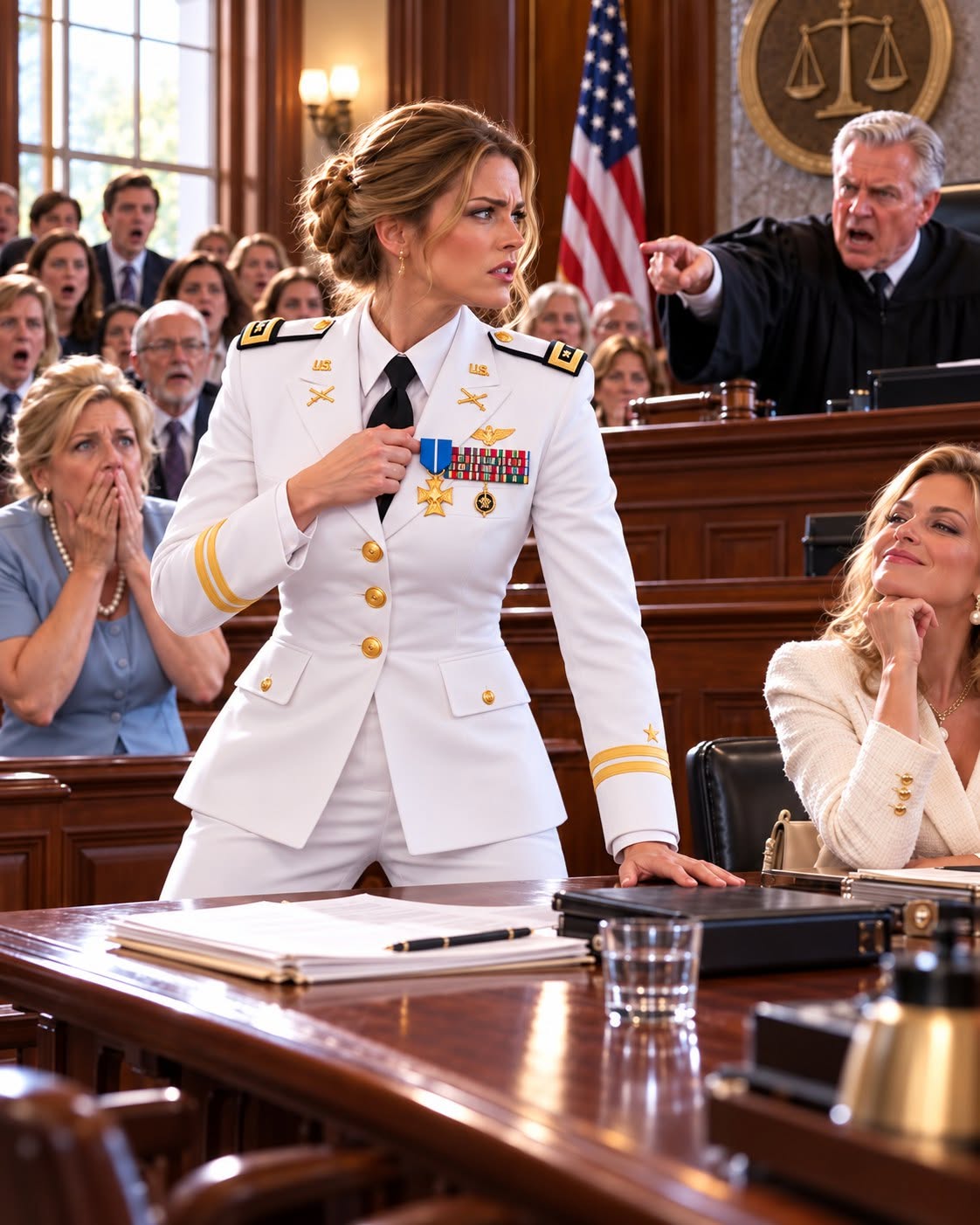
I didn't wait for him to finish. I holstered my weapon and grabbed my jacket, the weight of the Navy Cross in my pocket suddenly feeling like a talisman of a world that had been built on a foundation of shifting, treacherous sands.
“Stay here, Adrian,” I said, moving toward the door. “If I’m not back in an hour, take that evidence to the *Washington Post*. Don't send it to any government address. Don't upload it to a cloud. Physical copies. Trusted courier.”
“Sarah, you’re walking into a kill box!” he shouted, grabbing my arm. “This isn't a probate hearing. This is a ghost from the Cold War. You don't know what you're dealing with.”
I looked at him, my expression hardening into the same cold mask I had worn in the deserts of the Middle East, the same mask that had terrified Vanessa Mercer in her own living room. “I’m dealing with a man who has been using my name and my family’s blood to pay for his secrets for thirty-four years. If he’s there, he’s going to explain why.”
The hallway was empty, the linoleum floors reflecting the red emergency lights like a pool of dried blood. I moved with the silent, predatory grace of a soldier who had spent a lifetime in the shadows. Every door I passed was locked, every office dark. The facility felt like a tomb, a place where secrets were brought to be interred.
I reached the parking garage, the damp night air hitting my face with a relief that was almost painful. My car was a shadow against the concrete pillars. I didn't turn on the headlights as I maneuvered out of the lot, relying on the ambient glow of the shipyard cranes and the distant hum of the harbor traffic.
Terminal 4 was a rusted skeletal structure looming over the black water of the Elizabeth River. The chain-link fence surrounding it was crowned with razor wire that caught the moonlight like silver needles. A single vehicle, a nondescript black sedan, sat idling near the loading ramp, its exhaust plumes vanishing into the freezing mist.
I parked three hundred yards away, beneath the steel scaffolding of a dormant gantry crane. I killed the engine and stepped out, the silence of the waterfront pressing against my ears. The only sound was the rhythmic lapping of the tide against the rotting wooden pilings and the distant, lonely call of a foghorn.
I checked my weapon. Six rounds in the magazine, one in the chamber.
Moving through the shadows of the shipping containers, I reached the side entrance of the terminal. The heavy iron door stood slightly ajar, a sliver of yellow light cutting across the grime-caked concrete. I pressed my back against the rusted metal wall and listened.
Nothing. Not a footstep. Not a breath.
I slipped inside. The interior was a cavernous void, stacked high with rusted pallets, abandoned shipping crates, and the smell of salt and old oil. In the center of the floor, a single spotlight bathed a small, makeshift desk in brilliance.
Sitting there, staring into a laptop screen, was a man.
He wore a dark, tailored suit that looked completely out of place among the industrial decay. His hair was silver, slicked back with military precision, and his posture was so rigid it defied the passage of time. He didn't turn around as I approached, his fingers hovering over the keys with the casual arrogance of a man who owned the very air he breathed.
“You’re late, Major,” the man said. His voice was a rasping, cold wind that seemed to vibrate through the cavernous space.
He turned the chair slowly. His face was a mirror of my own—the same high cheekbones, the same sharp, angular jaw, the same pale, piercing eyes that I saw every morning in the mirror.
Captain Thomas Mercer smiled, but the expression didn't reach his eyes. It was a cold, clinical movement of the muscles.
“I’ve been watching you since you were a cadet, Sarah,” he continued, gesturing toward the empty chair opposite him. “You have your father’s stubbornness. It’s a pity it’s such a fatal flaw.”
I raised my weapon, the muzzle steady, locked on his chest. “The *Valiant* was supposed to have gone down in the North Atlantic, Uncle. You left my father to mourn a ghost for three decades. You let our family property be torn apart by vultures while you played spy with stolen defense money.”
Thomas chuckled, a dry, hollow sound that echoed off the high ceiling. He reached into his jacket, and I tensed, my finger tightening on the trigger. He pulled out a small, tarnished silver coin and rolled it across his knuckles.
“The *Valiant* didn't sink, Sarah,” he said, his voice dropping into a dangerous, hypnotic tone. “It was repurposed. By people who understood that the real war never ended; it just moved into the shadows. We needed funding. We needed a front. Your family’s land, your father’s grit—it was all just collateral for a much larger mission.”
“A mission that involves poisoning our cattle and forging my brother’s signature?” I demanded, stepping forward into the light. “You destroyed our life for your 'mission'?”
“I secured the future,” he snapped, his voice suddenly sharp, commanding. He stood up, his height dwarfing mine, his gaze intense. “And now, you’re going to decide if you want to be a part of it, or if you want to be the next name on the list of people who disappeared in the North Atlantic.”
He reached out and tapped the laptop screen. A map appeared, glowing with dozens of red icons—each one marking a facility, a firm, or an office under his control.
“You’re a decorated officer, Sarah,” he said, his voice dripping with seductive intent. “You know the chain of command is a lie. Why fight the system when you can lead it?”
I looked at the map, then at the man who had stolen my father’s life. I knew then that there was no negotiation. There was only the truth, and for the first time in my career, I realized the truth was the most dangerous weapon of all.
“I’m not a soldier in your war,” I said, my voice steady, ice-cold. “I’m the woman who’s going to end it.”
Thomas reached into his coat again, his hand moving with lightning speed toward the inner pocket, and for a split second, the world seemed to hold its breath.
Related Stories