Chapter 1: The Heavy Door
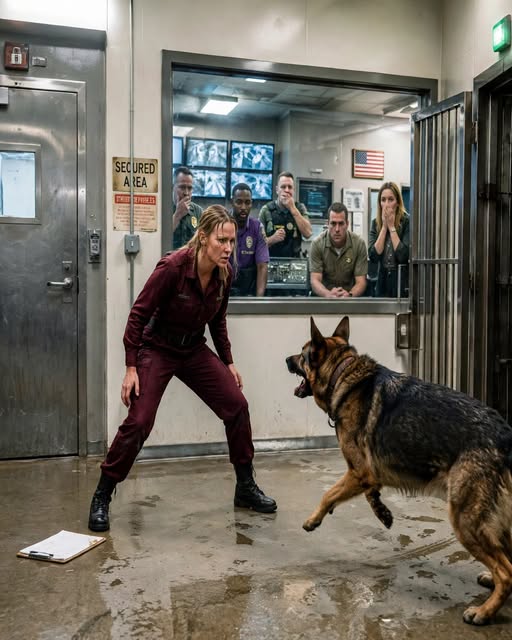
The metal door of Isolation Block C didn’t just close; it swallowed the world.
With a deafening pneumatic hiss and the solid, vibrating clack of twin electromagnetic bolts sliding home, the security seal locked me inside. The sound echoed down the damp, concrete corridor like a gunshot. Through the thick, wire-reinforced observation glass of the control room window, I saw my father’s silhouette. Warren Mercer didn’t flinch. He didn’t tap on the glass. He simply turned his back, his broad shoulders vanishing into the shadows of the command console as Commander Rusk handed him a fresh cup of coffee.
Tyler was laughing about something. I couldn’t hear it through the soundproof glass, but I saw the smug tilt of his head, the casual way he tossed a set of master keys into his palm and caught them again.
My phone buzzed in my palm once, twice.
A delivery notification. Not from him.
Twelve words. Sent into the void.
I shoved the device deep into the pocket of my tactical jacket, taking a slow, steadying breath that tasted of ozone, damp concrete, and old disinfectant. The air inside Block C was colder than the rest of the facility, chilled by an industrial HVAC system that hummed with a low, aggressive vibration. Red emergency lights pulsed faintly along the floorboards, casting long, bruised shadows across the rows of reinforced steel-mesh holding cells.
""Inventory,"" I muttered to myself, adjusting the heavy metal clipboard in my grip. ""Right. Let's find some missing tactical vests.""
It was a lie, of course. Everybody in that control room knew it. There were no tactical vests missing from Isolation Block C. Tactical gear was stored in Armory Block A, three hundred yards away across the secure tarmac.
This wasn't an inventory check. It was a burial.
Commander Rusk and my brother Tyler wanted me out of the way while they scrubbed whatever digital trails or physical evidence remained of their little side operation—the one involving falsified behavioral evaluations on elite working dogs slated for illegal transfer or quiet disposal. And my father, the legendary Navy SEAL instructor who had spent my entire life preaching honor, duty, and moral courage, had signed the execution order with a stroke of a pen.
I forced my boots to move forward, the rubber soles squeaking against the wet floor.
The isolation block contained twelve cells. Eleven of them were pitch black and silent, their heavy steel shutters locked tight. Only the last cell at the very end of the corridor—Cell 12—had a dim, yellow security bulb flickering overhead, casting a sickly glow against the reinforced bars.
As I approached, a low, guttural vibration rolled through the concrete floor.
It wasn't a growl. Not yet. It was something deeper, heavier—like the tectonic shift of earth before an earthquake.
""Easy, boy,"" I whispered instinctively, stopping ten feet short of the yellow exclusion line painted on the floor.
From the darkness of Cell 12, a pair of eyes caught the dim light. They weren't the wild, crazed eyes of a rabid beast, the kind Commander Rusk had described in his forged incident reports. They were an intelligent, startlingly pale amber, heavy with exhaustion, pain, and a terrifying, razor-sharp alertness.
Atlas.
A six-year-old Belgian Malinois. Fully trained tactical tracker, explosive detection specialist, and former combat veteran of three tours in the Hindu Kush. According to his official military service record, he had saved eleven lives before a mortar blast killed his original handler during a night raid in 2024.
According to Commander Rusk’s forged paperwork, Atlas was a ""defective, hyper-aggressive anomaly"" that needed to be put down immediately for the safety of the facility.
I stepped one inch past the yellow line.
The darkness inside the cell erupted.
Related Stories