Chapter 2: The Flash of Metal
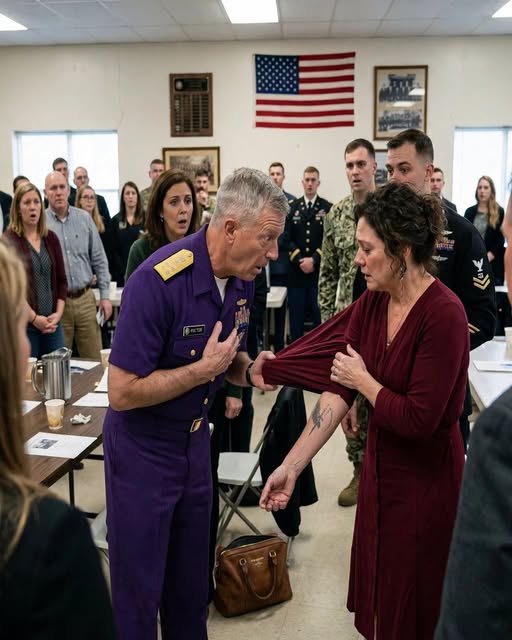
The brass band struck up a sharp, martial march, and the atmosphere on the parade field transformed instantly.
Five hundred newly minted officers—young men and women standing with spine-stiffening precision—poured out from the barracks corridors, falling into immaculate, razor-straight rows. The sunlight glinted off hundreds of polished belt buckles and brass insignia, creating a blinding sea of green and gold.
In the front row of the bleachers, Franklin stood up, pulling a high-end digital camera with an oversized telephoto lens from its canvas case. He adjusted the settings with theatrical flair, making sure the parents sitting next to him noticed his professional-grade equipment.
I scanned the rows of green uniforms, my heart skipping a beat as I finally spotted Caleb.
He was standing in the third platoon, second file from the left. His shoulders were broad, his head held high, his youthful face sharpened by months of brutal physical and mental conditioning. He looked so much like me around the eyes—that deep, watchful stillness that came from spending your life calculating exits and assessing threats before you even entered a room.
A wave of fierce, protective pride surged through my chest, burning hot behind my ribs. That's my boy, I thought. He made it.
Then, the loudspeaker crackled to life.
""Ladies and gentlemen, please rise for the arrival of the reviewing party and the presentation of the colors.""
The crowd stood as one. I stood with them, keeping to the shadows of the light tower, my hands clasped loosely in front of me.
A black sedan rolled slowly to a halt near the review stand. The rear door opened, and a crisp, immaculately pressed service cap emerged first, followed by a tall, lean officer with silver hair at his temples and three rows of campaign ribbons that looked like a colorful tapestry of modern military history.
Lieutenant Colonel Daniel Mercer.
Battalion Commander. A combat-tested veteran of multiple overseas deployments, known across the installation as a commander who didn't suffer fools, politicians, or desk-jockeys. He walked with the easy, measured stride of a man who had commanded infantry in places where hesitation meant dying.
As Mercer approached the reviewing dais, he paused to exchange salutes with the cadet battalion commander.
Then, his gaze swept automatically across the gathered crowd in the bleachers, conducting a quick, habitual assessment of the perimeter, as any good combat commander would do.
His eyes scanned the front rows where Franklin Hayes was waving frantically with his camera. Mercer didn't react to Franklin at all; his eyes flicked past the wealthy retirees and proud parents with polite indifference.
Then Mercer’s gaze climbed higher.
Past the middle rows.
All the way to the top.
Right to the dark, shadowy corner of the back bleachers where I stood alone.
His head jerked slightly.
The polite, ceremonial expression vanished from his face in a microsecond, replaced by an absolute, terrifying rigidity.
I saw the exact moment his eyes locked onto mine.
I saw the exact moment he noticed my left hand, resting on the aluminum guardrail, where the sleeve had ridden up just a fraction of an inch in the heat.
Related Stories