Chapter 1: The Back Row
The Georgia heat shimmering off the asphalt at Fort Mason felt less like weather and more like a physical weight, pressing down on shoulders already heavy with twenty years of quiet endurance.
I kept my navy dress long-sleeved, thick enough to block the sun, but more importantly, thick enough to keep the past locked beneath layers of cotton. The navy fabric was simple, unpretentious, chosen specifically to blend into the background. I didn't want to draw eyes. I didn't want Franklin, my ex-husband, catching sight of me before the ceremony and starting an argument in front of the reviewing stand.
Franklin always needed an audience for his grievances. Over the course of our bitter divorce and the years of custody battles that followed, he had perfected the art of the aggrieved veteran—a man performing the role of a wronged father so convincingly that he had almost started believing his own scripts.
I wove through the throngs of families, keeping my head down, clutching a small canvas tote bag containing a spare tube of lipstick, some breath mints, and a pair of sunglasses.
The bleachers were already packed. Along the edges of the parade field, families clustered around tripod cameras and coolers. I spotted the signs for the graduating battalion’s seating blocks and quietly slipped toward the very last row of the aluminum bleachers, seeking out the furthest corner where the shadow of a stadium light tower offered a brief, merciful respite from the blinding glare.
I sat down, crossing my ankles, resting my hands neatly in my lap.
From here, Caleb would just be one face among hundreds in crisp green service uniforms. That was fine. That was safe. He would cross the stage, receive his commission, look out into the crowd, and find me. We had agreed on a silent signal: a small wave with two fingers. Just enough to let him know I was there, keeping watch from the edge of the world as I had done since the day he was born.
Ten minutes later, the volume of the crowd shifted.
A collective ripple of murmurs moved through the front rows, accompanied by the sharp, authoritative click of polished dress shoes on concrete.
I didn't need to look up to know who had arrived.
""Franklin! Over here, son! We saved you seats right in the center!""
The booming, self-important voice belonged to Grandpa Dale, Franklin’s father, a man who still wore a Korean War veteran cap that looked three sizes too large for his head. Dale had spent decades treating Franklin’s four-year administrative stint like a Congressional Medal of Honor pedigree.
I looked sideways through the crossbars of the bleachers.
There they were.
Franklin Hayes marched down the middle aisle with the practiced, exaggerated posture of a man who still imagined a camera crew was filming his daily routine. He wore a tailored blazer, his old unit lapel pin gleaming proudly on the left breast. His silver-flecked hair was cut short, his jaw squared, carrying that familiar air of permanent authority that had driven me out of our home before Caleb was even four years old.
Walking beside him was Marissa, his second wife—a woman whose entire personality seemed constructed out of country club memberships and passive-aggressive remarks about my ""alternative lifestyle"" of working with greasy wrenches in a dusty Savannah garage. And right behind them was Grandpa Dale, chest puffed out like an aging peacock.
They moved toward the reserved seating section near the front, right where the battalion commander and distinguished guests were stationed. Franklin shook hands with a couple of men in uniform along the way, performing the hearty, back-slapping greeting of a man who desperately wanted everyone within fifty yards to know he belonged to the club.
I turned my face away, staring out across the sun-baked grass of the parade field. Just keep your head down, I told myself. Twenty minutes until formation. Then the ceremony. Then you hug your son, and you go back to Savannah.
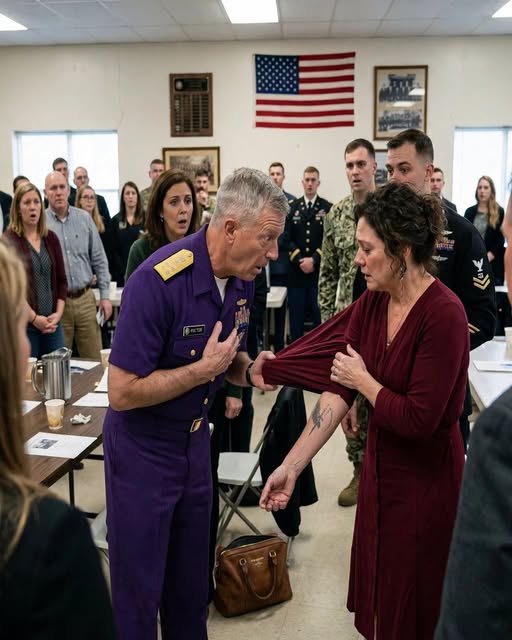
My fingers brushed against my left wrist, feeling the smooth cloth of the sleeve pressing down over the jagged lines and the dark ink of the winged blade hidden beneath.
Twenty years.
I had buried Unit Raven so deep that even the Department of Defense archives listed most of our records under permanent administrative seals, locked away behind layers of national security classifications that ordinary soldiers didn't even know existed. We were ghosts who had survived a war the government preferred to pretend never happened.
And I intended to stay a ghost.
Related Stories