Chapter 1: The Cedar Chest on the Porch
The thirty-minute drive from my shop to the lake cabin felt shorter than it should have, mostly because my foot was heavy on the gas and my mind was replaying Teresa’s warning about the dumpster.
Seventeen years.
I hadn’t set foot on Grandpa’s property since the day I walked out of my parents' house with an eight-dollar bill and a school backpack. Even when Grandpa passed away and the lawyers read the will giving me half the title, I’d stayed away. I didn’t need their memories; I had my own lake, my own dock, and the quiet dignity of a life I built with my own hands at the machine shop.
When I turned down the narrow gravel drive shaded by towering pines, the first thing I saw was the dumpster.
It sat right beside the gravel turnabout, bright yellow and half-filled with splintered particle board, torn-up linoleum, and empty cans of primer. My stomach tightened. Brooke and Trevor weren’t just planning to build a new house eventually; they were already gutting the place. They were erasing Grandpa.
I killed the engine, got out of my truck, and walked past the dumpster toward the wraparound wooden porch.
There they were. Two heavy cardboard boxes, their flaps tucked closed but sagging slightly from dampness, resting right against the screen door.
I rushed up the wooden steps, my boots thudding loudly on the old boards, and dropped to my knees. My fingers fumbled with the brittle cardboard flaps of the first box. I pulled them open.
Inside sat Grandma’s photo albums, wrapped carelessly in plastic grocery bags that had already begun to stick to the leatherette covers.
I let out a sharp breath, my hands trembling slightly as I lifted the top album out. It was the wedding album from 1952—the one with the black-and-white photos of Grandpa in his Navy dress whites and Grandma smiling under a wide-brimmed straw hat. The bottom of the plastic bag had a tear in it, and the corner of the cover was damp.
They had left Grandma’s memories outside on a rainy porch like trash waiting for the haul-away crew.
""Can I help you?""
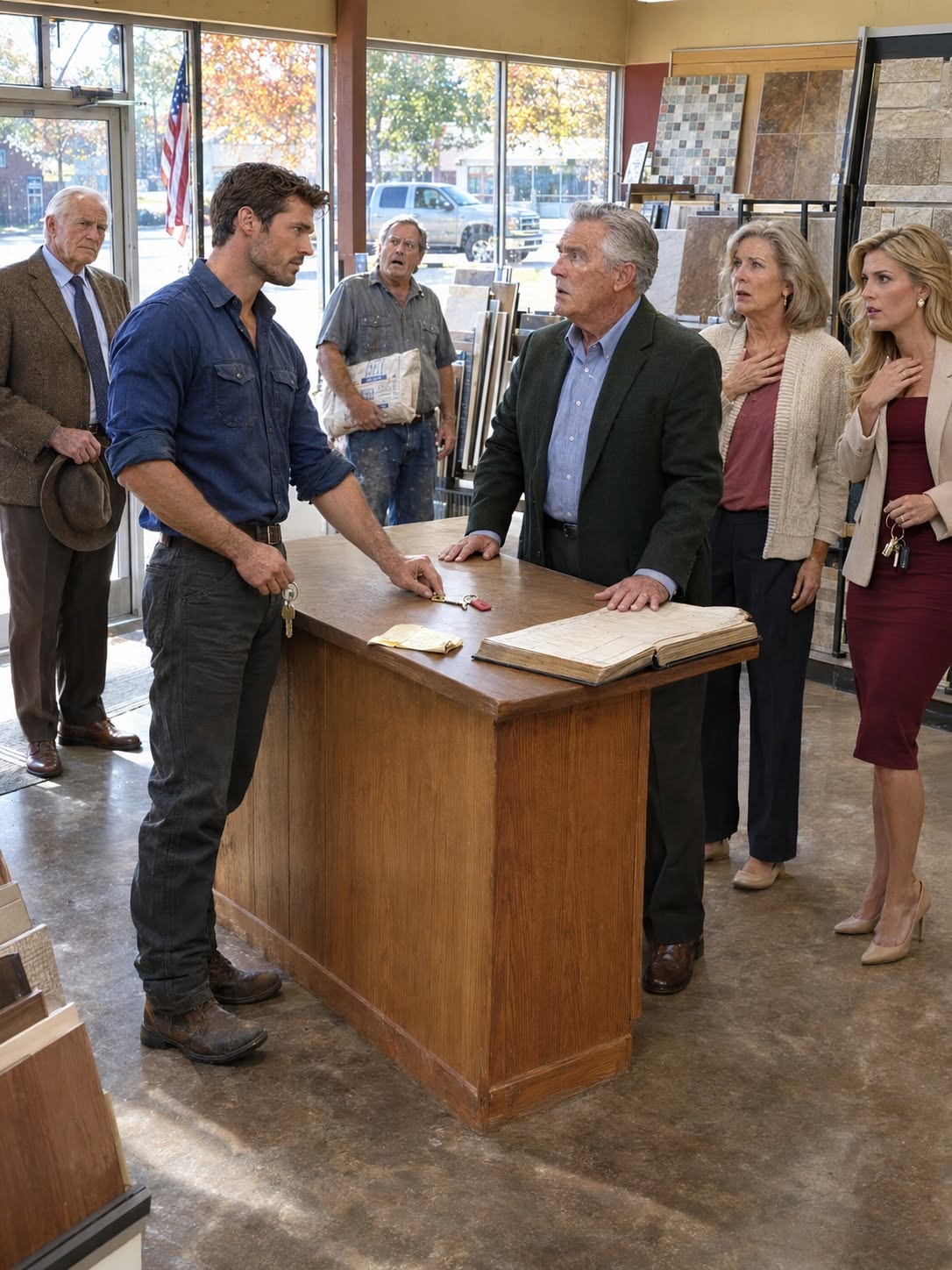
A voice snapped from the edge of the clearing. I looked up to see Trevor standing by his idling pickup truck, a silver key ring dangling from his fingers and a pair of designer sunglasses pushed up onto his forehead. He looked like he owned the county, dressed in golf khakis and a clean flannel shirt that had probably never seen a drop of grease or engine oil.
I stood up slowly, holding the photo album against my chest.
""What are these doing out here, Trevor?"" My voice was dangerously quiet.
Trevor crossed his arms, leaning against the door of his truck. He offered a practiced, patronizing smile—the kind bankers use right before they deny a small-business loan.
""Nolan. Didn't know you knew how to find this place anymore. Brooke and I are clearing out the junk to prep for the contractor. Your mom said you threw a fit about those old books yesterday, so we saved them for you. Thought you’d want to come pick up your little sentimental project.""
I looked down at the damp cardboard box, then back at Trevor.
""Grandpa left these to me specifically,"" I said, stepping off the porch. ""By name. He asked Dad to bring them to my shop. Dad brought them here instead, and you treated them like packing material.""
Trevor uncrossed his arms, his smile fading into a thin, annoyed line.
""Look, Nolan, let's not make a big production out of this. Brooke and I are closing on our house sale next month, and the bank loan for the new build is contingent on clearing this lot. Your half of the title is a legal technicality we're trying to resolve without getting courts involved. Just take your boxes, sign the quitclaim deed Brooke brings you, and go back to your little shop.""
He thought he was talking to the eighteen-year-old kid who had walked out with an eight-dollar bill. He didn't realize that the man standing in front of him owned a machine shop free and clear, held twelve acres of prime land, and had spent seventeen years learning how to build things that held under extreme pressure.
""I'm not signing, Trevor,"" I said, my voice steady.
Trevor rolled his eyes, letting out an exaggerated sigh. ""You're cutting off your nose to spite your face. Brooke is your sister. We offered to buy you out for fair market value of the raw land—before we put fifty thousand dollars of landscaping and foundation work into it.""
""You offered me zero dollars,"" I corrected him. ""You sent a deed signing appointment to my phone without asking me a single question, and then your aunt told me you've already promised the boathouse to three different people.""
Trevor flinched—just a fraction of an inch. His eyes flicked away toward the lake before he caught himself.
""That was a scheduling misunderstanding,"" he muttered.
""No, Trevor. That's called fraud,"" I said, walking past him toward my truck. I placed Grandma's albums carefully onto the passenger seat, making sure they were safe from harm. Then I turned back to face him. ""Tell Brooke that if a single shingle on this cabin is touched, or if I find one more piece of Grandpa's property in that dumpster, I'm filing an immediate partition lawsuit. The judge will order a public auction of the entire property, and you and your bank can try explaining to your buyers why you sold a house you don't legally control.""
Trevor's face hardened, the banker charm completely vanishing.
""You wouldn't dare,"" he hissed, taking a step forward. ""You're just bitter because your daddy kicked you out when you were a punk eighteen-year-old.""
I didn't flinch. I just looked him dead in the eye.
""Try me.""
---
Related Stories