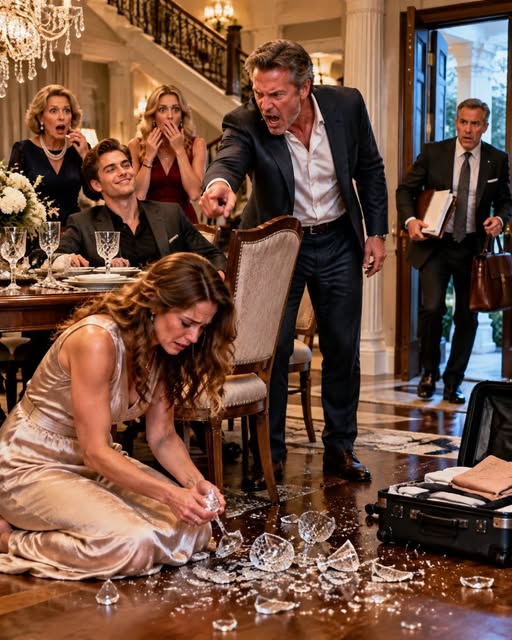
Chapter 5: The Midpoint Shift
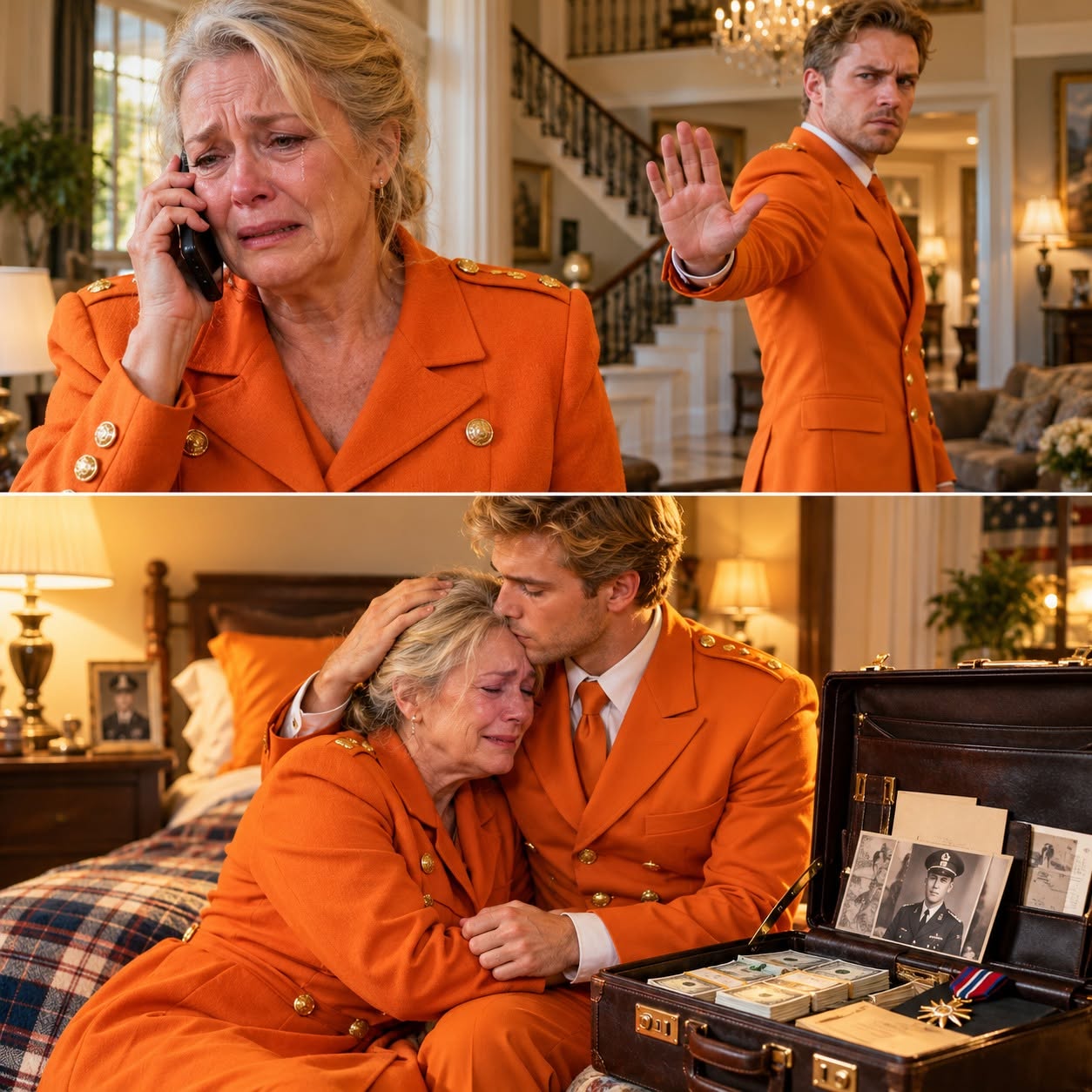
The silence that followed Frank Harrison’s voice was broken only by the sound of Brooke’s weeping—not the jagged, terrified sobs of a cornered woman, but the long, shuddering release of someone who had just realized that the hand holding her underwater had finally been pried away.
I reached out, pressed the red icon on my phone, and ended the call.
The kitchen was still.
Grant stood by the counter for five long seconds, his eyes moving from the closed phone to the floorboards. The swagger, the expensive posture, the polished veneer of corporate success—all of it had peeled away, revealing the raw, parasitic desperation beneath.
He didn't look at Brooke. He didn't look at Tessa.
He looked at me.
“You think you won,” Grant whispered. His voice was cracked, venomous, stripped of every shred of familial warmth. “You think you and Dad were so righteous, sitting in that little house with your coupons, judging everyone who actually wanted something better than an oil-stained garage.”
He reached for the door handle, his hand shaking so violently the brass rattled against the latch.
“Keep your money, Mom,” Grant spat, turning the deadbolt. “Keep your letters. Keep your little mechanic. But when you’re sitting alone in that house in Westlake, remember that you’re the one who tore this family apart to prove a point.”
He slammed the door behind him.
His footsteps echoed down the stairwell—fast, heavy, frantic—until the ground-floor exit banged shut, and his luxury sedan roared out of the alleyway into the dark.
Inside the kitchen, nobody moved.
Brooke was still sitting at the table, her head resting on her folded arms, her tears soaking into the paper containing Russell’s final words.
I walked over to her chair, pulled Russell’s old trench coat from my shoulders, and draped it gently over her back. She reached up blindly, catching my wrist, her fingers curling around mine with the desperate, fragile grip of a drowning child.
“I’m sorry, Mom,” Brooke wept into the wool. “I’m so sorry... I was so scared...”
“I know, sweetheart,” I whispered, smoothing the hair back from her damp forehead. “I know you were.”
I looked across the table at Owen.
My youngest son was leaning against the kitchen counter, his arms folded over his chest, his eyes fixed on the commercial contract that was still sitting beside the salt shaker—the offer to purchase the repair shop on 5th Street.
“Owen,” I said softly.
He looked up. The anger was gone from his face, replaced by that quiet, enduring gentleness that had always made him look so much like his father.
“You don't have to take the building, Owen,” I told him, every word coming from the deepest, most honest corner of my heart. “I was wrong. I was terrified of being alone after Russell died, and I turned my fear into a test that none of you deserved. You gave me your bed because you loved me, and I treated your kindness like an invoice.”
Owen looked at the floor for a long moment, then looked over at Tessa, who was standing quietly by the stove.
She met his gaze, giving him a small, almost imperceptible nod—the silent understanding of two people who had carried each other through seven years of lean winters and broken transmissions.
Owen stepped forward, stopping at the edge of the folding table.
He picked up the four-hundred-and-twenty-thousand-dollar contract, held it for three seconds, and then neatly folded it in half, sliding it back inside Russell’s leather briefcase.
“We’ll talk about the shop later, Mom,” Owen said, his voice steady, warm, and entirely his own. “Right now, you’re tired. Brooke needs a place to sleep tonight, and the girls are going to wake up in three hours wanting to know where their mother is.”
He looked toward the hallway where his two little boys were sleeping in the back bedroom.
“Brooke can take our bed tonight,” Owen said, turning to his sister with a faint, reassuring smile. “Tessa and I can manage the couch one more night. We’re used to the spring.”
Brooke lifted her head, looking at her younger brother with a mixture of shock and sheer, unadulterated gratitude.
For the first time in ten years, my children weren't negotiating.
They weren't calculating shares, comparing houses, or checking their watches. They were standing together in a crowded kitchen above a laundromat, holding the pieces of a fractured family in their bare hands.
I felt a knot in my chest loosen—a tight, painful ache that had been sitting behind my ribs since the day Russell took his last breath.
*We’re going to be all right,* I thought, looking around the room. *The line held.*
Then, three sharp, concussive knocks rattled the front door of the apartment.
Tessa jumped, her hand flying to her throat. Brooke stiffened, her eyes darting toward the entryway.
“Is that Grant?” Brooke whispered, terror flashing across her face. “Did he come back?”
“Grant doesn't knock,” Owen said, his jaw tightening as he stepped toward the entryway.
He looked through the brass peephole, frowned, and slowly pulled the door open.
Standing in the dimly lit hallway was not Grant.
It was a courier wearing the dark uniform of a commercial process service, holding a heavy, yellow electronic clipboard and a thick, red-bordered manila docket stamped with the gold seal of the *Commonwealth of Virginia Department of Environmental Quality*.
The courier looked at the paper slip in his hand, then looked into the apartment.
“Elaine Carter?” the man asked, his voice brisk, clinical, and completely indifferent to the holiday.
“I’m Elaine Carter,” I said, stepping past Owen into the doorway.
The courier handed me the red-bordered docket, extending a digital pen. “Sign on the line, ma'am. Expedited personal service re-routed from your Westlake address.”
I signed my name with a trembling hand.
The courier took the clipboard, nodded once, and vanished down the stairs into the cold night.
I turned back into the warm light of the kitchen, tearing open the red seal on the docket.
Owen, Brooke, and Tessa gathered around my shoulders as I pulled out the top document.
It was an emergency administrative stop-order, dated November twenty-fourth.
My eyes tracked down to the primary declaration paragraph:
*NOTICE OF ENVIRONMENTAL LIEN AND ASSET FREEZE.*
*RE: CARTER FREIGHT LOGISTICS TERMINAL // PROPERTY PARCEL #804.*
*TO THE TRUSTEES OF THE RUSSELL CARTER ESTATE:*
*BE ADVISED THAT AN INDUSTRIAL GROUNDWATER AUDIT CONDUCTED AT THE RICHMOND TERMINAL ON NOVEMBER 18TH HAS IDENTIFIED SEVERE TRICHLOROETHYLENE CONTAMINATION ORIGINATING FROM UNDERGROUND STORAGE TANKS DECOMMISSIONED IN 1994.*
*UNDER THE PROVISIONS OF THE VIRGINIA COMPREHENSIVE ENVIRONMENTAL CLEANUP ACT, THE BUYER HAS FORMALLY VOIDED THE 2024 ASSET PURCHASE AGREEMENT DUE TO FRAUDULENT CONCEALMENT OF LATENT ENVIRONMENTAL DEFECTS.*
*AN IMMEDIATE PRELIMINARY LIEN HAS BEEN ENTERED AGAINST ALL PROCEEDS DERIVED FROM THE SALE.*
*THE ENTIRE THREE POINT EIGHT MILLION DOLLARS HELD AT FIRST COMMONWEALTH BANK HAS BEEN PLACED UNDER AN EMERGENCY STATE ESCROW FREEZE.*
*TOTAL ESTIMATED REMEDIATION LIABILITY: $6,200,000.00.*
I stared at the figures, the paper slipping from my numb fingers, fluttering down onto the table beside Russell’s empty briefcase.
The money was gone.
All of it.
And beneath the state seal, listed as the primary registered corporate complainant who had triggered the environmental audit and voided the sale...
was not the Richmond buyer.
It was *Vance Freight Logistics*—the commercial logistics firm owned by Grant’s brother-in-law, Paige’s brother, Julian Vance.
Related Stories