Chapter 7: The Ghost in the Data
The fluorescent lights of the Fort Bragg SCIF—the Sensitive Compartmented Information Facility—hummed with a low, predatory vibration. It was a space designed for secrets, thick with sound-deadening foam and shielded walls. I sat at my workstation, the cream-colored letter from Dr. Grant’s estate tucked securely inside my locked personal desk drawer.
For three hours, I had been running authorized queries on the medical records database, pretending to audit the compliance protocols of the local base clinics. But I wasn't looking for standard patient files. I was looking for patterns—specifically, the digital footprint of the "third party" Dr. Grant had hinted at.
The man in the photograph, the shadow in the window of Room 314, had been holding a tablet that functioned as a localized data-scrubber. If he had been siphoning genetic markers back in 2011, the architecture of that intrusion had to be buried somewhere. I wasn't looking for a person anymore; I was looking for a ghost in the code.
Captain, you’re still here?
I jumped, my hand instinctively moving to cover my screen. Major Sterling, my direct supervisor, stood behind me. He was a man of few words and even fewer expressions, his face carved from granite and exhaustion.
I’m just finishing a deep dive on the protocol updates, Major, I said, my voice steady despite the adrenaline spiking in my system. I wanted to make sure our intake security was air-tight.
Sterling leaned in, his eyes scanning the data streams flickering across my monitors. He didn't seem suspicious, just tired. You’re thorough, Morgan. Too thorough. You keep digging, you’re going to find things that weren’t meant to be unearthed. The military isn't always about the front lines; sometimes, the most dangerous battles are fought in the archives.
He looked at me then, really looked at me, with a strange, lingering intensity. Remember, you’re an intelligence liaison now. You serve the mission. If the mission dictates that some files remain closed, you leave them closed.
Is that a command, sir? I asked, meeting his gaze.
It’s advice, he replied, turning to walk away. The world is a lot bigger than your personal history, Hannah. Don’t let your curiosity burn down the house you just finished building.
I watched him walk out of the SCIF, his silhouette fading into the dim corridor. His words weren't a warning; they were a confirmation. He knew. Or, at the very least, he knew that the rabbit hole I was currently falling into had a bottom that was far more dangerous than I had imagined.
Once I was certain he was gone, I returned to my terminal. I bypassed the standard login, using a secure bridge I’d established months ago while training. I didn't search for "Barrett" or "St. Anne’s." I searched for the specific cryptographic signature I’d seen on the tablet in the photograph—a distinct, non-standard compression algorithm that had appeared in only a handful of classified research files between 2010 and 2012.
The results came back in a terrifying cascade. It wasn't just my files. Hundreds of patients, all children, all with rare or treatment-resistant diagnoses, had their genetic profiles cross-referenced against a private database owned by a shell corporation—a subsidiary of a defense contractor I recognized immediately.
My throat tightened. This was the same company that provided the diagnostic systems for the VA hospitals today. They hadn't just been stealing data; they had been building a predictive model based on the physiological responses of dying children. They were calculating the resilience of human biology under extreme stress.
I felt a wave of nausea, but I forced it down. I was an officer. I had a duty. But the target wasn't just a corporate entity anymore. The metadata trail led directly to a military routing server at the Pentagon.
My screen flickered. A command prompt appeared in the center of the display, blinking with an rhythmic, mocking pace: *Access Denied: Tier-1 Clearance Required.*
I tried to override, but the system locked me out. Not just from that file, but from my entire account. A red banner splashed across the screen: *Unauthorized Access Detected. Security Protocol 4-Beta Initiated.*
The room went silent. The SCIF’s alarm didn't ring—it didn't need to. I knew that code. It meant the internal security audit team was already being notified.
I stood up, my chair clattering against the floor. I had exactly three minutes before the floor security team reached the SCIF. I reached into my pocket, grabbed a small, hardened encrypted drive, and plugged it into the console. I needed to copy the logs, not for my own vindication, but to ensure that if I were removed, the truth wouldn't vanish with me.
The progress bar crawled: 20 percent. 40 percent. 60 percent.
The heavy steel door at the far end of the room groaned as an electronic lock began to cycle.
I pulled the drive at 95 percent. It wasn't perfect, but it would have to be enough. I shoved it into my boot, straightened my uniform, and walked toward the exit just as the door swung open. Two military police officers stood there, their expressions grim.
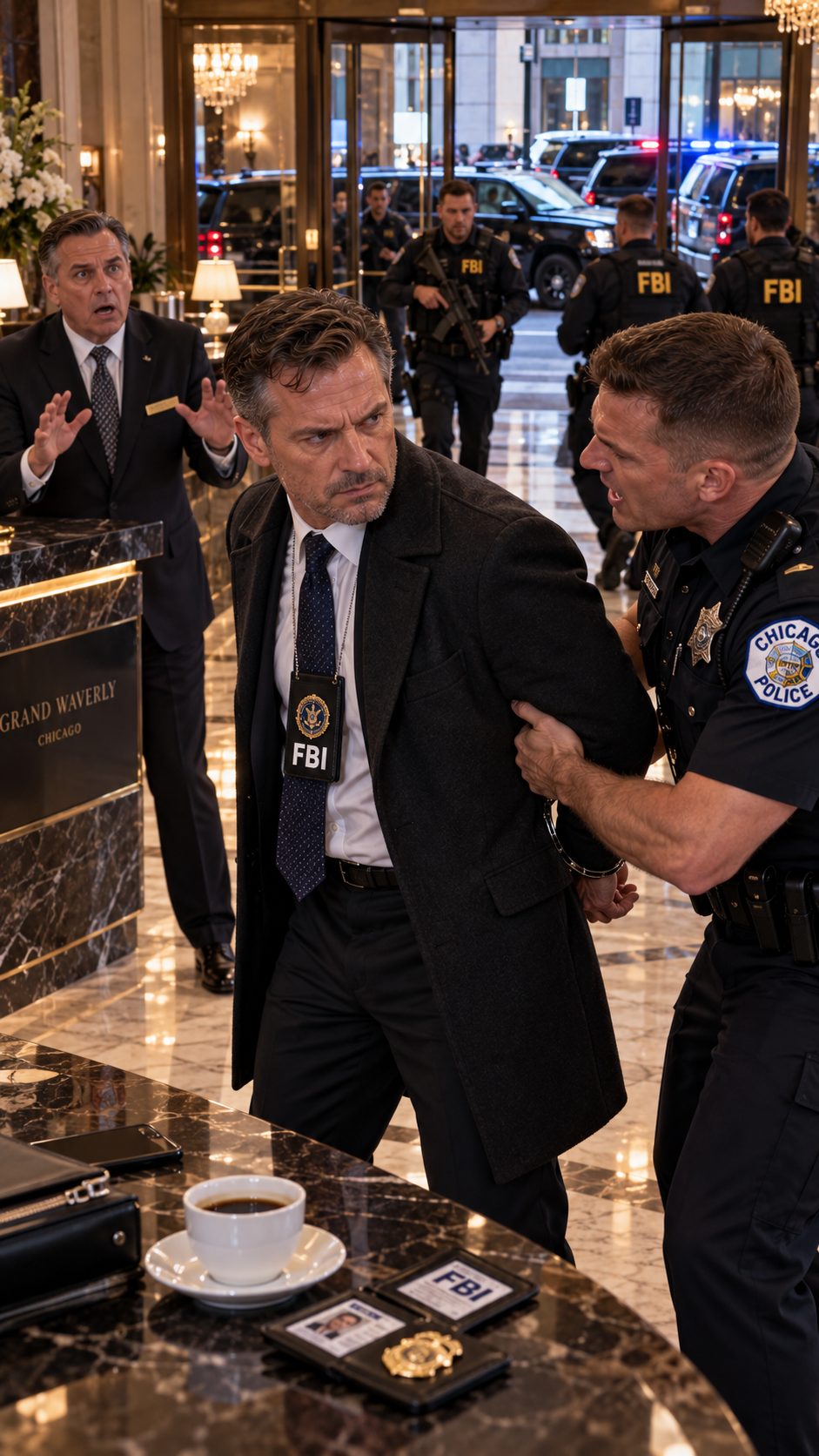
Captain Morgan, one said, his hand hovering near his sidearm. You are to accompany us to the command office. Now.
I looked at them, then at the empty, humming screens behind me. The game had changed. I wasn't the one holding the leash anymore; I was being pulled into the teeth of the machine.
I straightened my shoulders and nodded. I’m ready.
As they escorted me down the hallway, I felt the sharp edge of the drive pressing against my ankle, a tiny, cold reminder of the war I had just declared on the most powerful institution in the world. I had wanted the truth, and I had found it. Now, I just had to survive it.
Related Stories