Story Loom
"""""""My parents left me at thirteen after deciding my cancer treatment wasn't worth risking my older sister's future. Fifteen years later, they attended my military graduation expecting to claim my success, still convinced I was the “average daughter” they had decided not to save. Then the commanding general announced I had finished first in my class at one of America’s most prestigious officer-training institutions, and addressed me by a surname they had never given me. The graduation hall shone with polished brass and ceremonial decorations while hundreds of officer candidates sat in formation. My commission folder lay across my lap. Three rows behind me sat Linda and Richard Barrett, my biological parents, beside my older sister, Allison. “That’s our Hannah,” Linda said proudly to another parent. Then she lowered her voice. “After everything, she owes us this moment.” My grip tightened around the folder. Fifteen years earlier, I was thirteen in Room 314 at St. Anne’s Medical Center when Dr. Michael Grant told us I had acute lymphoblastic leukemia. He explained that treatment also gave me a strong chance of surviving. I remember looking toward my mother, waiting for her hand. She didn't. “What will it cost?” my father asked. When Dr. Grant said treatment could take years and cost a fortune, Richard leaned back in his chair. “So we’re expected to ruin everything we’ve worked for just because Hannah got sick?” My parents had set aside $180,000 for Allison’s education. At sixteen, she was preparing for elite universities, and my parents already valued her future above mine. “We’re not destroying Allison’s future because of this,” Richard said. Then he stared straight at me. “Allison has promise. She’s headed somewhere. You’ve always been average, Hannah.” Something deep inside me went utterly still. “We’re not giving up a promising future for an average one.” “But I’m your daughter too,” I whispered. Dr. Grant told them to leave and called social services. They walked out without embracing me. I was terrified of cancer. But nothing hurt more than understanding that my own parents had assigned a price to my survival and decided I wasn't worth the cost. That evening, Rachel Morgan entered my hospital room. She was thirty-four, a night nurse with dark curls, worn sneakers, and none of the fake cheer adults sometimes put on for sick children. “I heard about what happened,” she said softly. “I’m so sorry.” I broke down crying. Rachel remained. She stayed through chemotherapy, nausea, hair loss, sleepless nights, fresh blankets, crackers, medicine, awful jokes, and endless games with an old deck of cards. Twenty-eight days after my diagnosis, a social worker told me I would soon enter foster care. Rachel stood next to my bed. “I want to take her in.” The social worker stared at her. Rachel was already state-approved, a registered nurse, and knew precisely what my treatment required. But she didn't make the choice for me. She turned to me. “Only if Hannah wants to come home with me.” For weeks, no one had asked what I wanted. “Yes,” I whispered. “Please.” Eventually, Rachel became my legal mother. She gave me a place to call home. She gave me her surname. And years later, when I said I wanted to become a military officer, she offered something my biological parents never had. The conviction that I could truly become more than anyone had ever expected. Now, fifteen years later, Rachel was also in the graduation auditorium. But she wasn't seated with the Barrett family. She sat in the seat I had personally reserved. The commanding general stepped up to the microphone. “We will now honor the graduate who earned the highest overall standing in this year’s class.” Behind me, Linda fell silent. “This officer candidate distinguished herself through outstanding academics, leadership, physical performance, and service.” My heartbeat remained steady. “Graduating at the top of her class and earning this year’s highest academy honors…” The general smiled. “Officer Candidate Hannah Morgan.” Morgan. Not Barrett. Rachel’s name. My mother’s name. Applause thundered through the auditorium. I rose to my feet. For the first time that day, I turned around. Linda’s proud smile had vanished. Richard’s face was pale. Allison lowered her phone slowly. They had come into that auditorium expecting recognition as the parents who raised the woman finishing first in her class. Instead, hundreds had watched me stand carrying the name of the woman who chose me when they decided I wasn't worth saving. Looking at their faces, I remembered Linda’s whisper. “She owes us this moment.” They still didn't know what awaited them before the ceremony was over."" ""From the story I provide, continue the story and write exactly five complete chapters: Chapter 1, Chapter 2, Chapter 3, Chapter 4, and Chapter 5. Treat my provided story as the established opening/background. Do not rewrite, summarize, repeat, or restart it. Continue naturally from the exact point where it ends. Before writing, silently identify: the core story promise that made the opening compelling; the protagonist’s central emotional conflict; the most important relationship or relationships; the story’s existing genre and tone; the main unanswered questions already created. Do not output this analysis. LENGTH AND STYLE: Each chapter: approximately 1,200–1,500 words. Write in natural, immersive American English for a U.S. audience. Style: addictive commercial serialized fiction—emotional, suspenseful, cinematic, conversational, and easy to read on mobile. Use natural dialogue and short to medium paragraphs. Keep the pacing strong without rushing major emotional moments. Avoid filler, repetition, excessive description, generic AI phrasing, and unnecessary recap. CONTINUITY: Keep all established characters, relationships, personalities, occupations, settings, timeline, history, and factual details consistent. Do not contradict established facts unless the contradiction is intentionally revealed as a lie, misunderstanding, manipulation, or hidden truth. CORE STORY PROMISE: The continuation must remain faithful to the kind of story the reader originally chose to read. Do not suddenly transform a family drama into an espionage thriller, a marriage betrayal story into a crime conspiracy, or a workplace conflict into an action story unless those elements were already strongly supported by the provided story. New developments should primarily grow from: existing relationships; established conflicts; past choices; secrets; misunderstandings; emotional wounds; believable consequences. Prefer deepening the existing story over increasing its physical scale. A more powerful twist is not necessarily a more dangerous twist. Personal betrayal, hidden motives, family history, emotional truth, financial consequences, social consequences, legal consequences, or relationship changes may be more effective than violence, weapons, kidnapping, government conspiracies, or life-threatening danger. STORY ENGINE: Every chapter must meaningfully move the story forward. Do not stretch the same conflict across several chapters by repeating: humiliation; arguments; accusations; suffering; revenge; suspicion; or the same emotional point in different words. Each chapter should: answer or partially answer an existing question; introduce meaningful new information or consequences; keep the protagonist active and emotionally central; deepen or change the reader’s understanding of the conflict; create a natural reason to continue. When one important question is answered, open another question that grows naturally from what has already been established. Do not reveal the full truth too early. Do not mechanically use the same kind of twist, reveal, confrontation, or cliffhanger in every chapter. The chapter trajectory below describes narrative PURPOSE, not mandatory plot events. CHAPTER TRAJECTORY: Chapter 1 — Expand the Promise Continue directly from the provided ending. Give the reader meaningful payoff from the opening premise, but do not complete the main emotional arc. Introduce a new question or complication that remains closely connected to the original conflict. Chapter 2 — Deepen the Conflict Develop the unresolved issue from Chapter 1. Reveal something new about a character, relationship, motive, consequence, or past event. Force the protagonist to make a meaningful choice or response. Chapter 3 — Change the Meaning Challenge an important assumption held by the protagonist or reader. Something previously understood should now appear more complicated, incomplete, or emotionally different. The story should deepen rather than simply become louder or more dangerous. Chapter 4 — Reveal a Deeper Layer Connect the visible conflict to a deeper issue that naturally belongs to this story. Earlier behavior, relationships, or events should begin to take on new meaning. Prefer revelations involving existing characters and established history over unrelated new plotlines. Chapter 5 — Midpoint Shift Create a major emotional or narrative turning point. The protagonist should learn, lose, realize, decide, or discover something that changes the direction of the story. Do not resolve the main conflict. End with an unresolved development that naturally creates the problem, goal, or question for Chapter 6. RETENTION RULES: Keep introducing meaningful new information. Do not repeat the same type of scene across consecutive chapters. Do not delay obvious answers simply to manufacture suspense. Keep the protagonist active rather than passive. Use backstory only when it changes the meaning of the present. Prefer existing characters over introducing random new ones. Do not escalate into violence, crime, conspiracy, or extreme danger unless the established story naturally supports it. Preserve emotional continuity with the original premise. Each cliffhanger should change what the reader wants to know next. CLIFFHANGERS: End every chapter with a genuine unresolved story turn. Prefer: a new realization; contradictory information; an emotional betrayal; a consequential decision; a hidden motive; an unexpected connection; a meaningful discovery; a relationship shift; or a consequence of an earlier choice. Avoid repeatedly using: a phone ringing; someone knocking; a mysterious person arriving; a vague message; “everything was about to change”; or random danger with no connection to the core story. FORMAT: Chapter 1: [Title] Chapter 2: [Title] Chapter 3: [Title] Chapter 4: [Title] Chapter 5: [Title] IMPORTANT: Chapter 5 is NOT the ending. Do not resolve the main conflict. Write only Chapters 1–5. After the final sentence of Chapter 5, stop immediately. Do not add notes, explanations, outlines, summaries, or commentary outside the story. """/Chapter 1 / 10

Chapter 1: The Weight of a Name
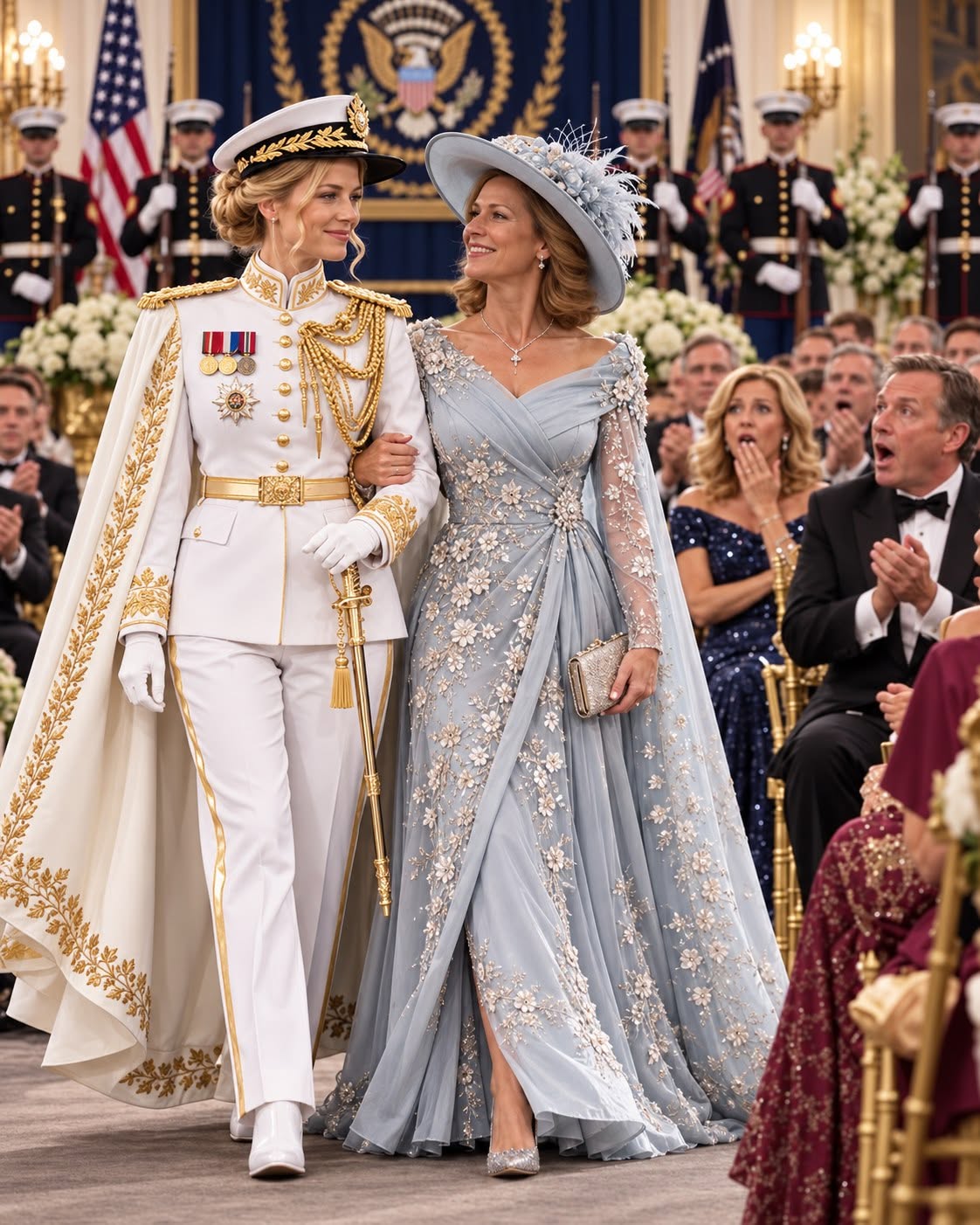
The applause rose like a physical wave, echoing off the mahogany-trimmed walls of the grand auditorium and washing over the sea of dark uniforms. Across the aisle, hundreds of cadets stood at attention, their white-gloved hands clapping in synchronized rhythm. But I wasn't looking at them. My eyes were fixed three rows back, locked onto the small, isolated pocket of space where the Barrett family sat.

Linda’s mouth was slightly open, her fingers frozen around her program. Richard had gripped the armrest of his seat so hard his knuckles had turned bone-white. Beside them, Allison—twenty-eight now, with the polished, expensive look of someone whose life had been heavily subsidized—was staring at me with a mix of shock and utter incomprehension.

They had spent fifteen years forgetting I existed. They had built their entire domestic universe around the comfortable lie that discarding an ""average"" sick child was a pragmatic sacrifice for a brilliant future. And now, the auditorium full of military brass, congressional representatives, and foreign attachés was applauding my name. Not theirs.

""Officer Candidate Morgan,"" the Commandant’s voice boomed through the PA system, instructing me to step forward to receive the academy's highest leadership plaque.

I broke eye contact with the gallery and marched up the riser steps, my boots striking the polished wooden floor with crisp, exact precision. Every movement was disciplined, rehearsed, and absolute. When I reached the podium, General Vance—a man whose hawk-like gaze had broken tougher candidates than me—offered a rare, genuine smile as he handed over the heavy mahogany-and-bronze plaque.

""An exceptional tour, Morgan,"" he murmured quietly as we shook hands for the official photograph. ""Your mother must be immensely proud.""

""She is, General,"" I replied, my voice steady. ""She's sitting right over there.""

I didn't mean Linda. I meant the woman in the third row from the front, aisle seat, wearing a modest navy blazer that had seen several seasons of wear. Rachel Morgan—the night nurse who had walked into Room 314 when I was bald, vomiting, and completely abandoned, and had never left. When I glanced down toward her, Rachel’s eyes were shining with unshed tears, her hands pressed together in quiet pride. She didn't need to shout or wave; the silent communion between us carried the weight of a thousand saved tomorrows.

When the ceremony concluded and the thunderous final march signaled the dismissal, the graduates flooded the courtyard into a chaotic sea of tossing white caps and weeping families.

I stood near the stone monument at the edge of the quad, holding my commission folder, when a breathless voice cut through the noise.

""Hannah!""

I turned slowly.

Linda, Richard, and Allison were hurrying across the grass, pushing past a cluster of younger cadets. Linda’s face was flushed, her posture vibrating with a strange, frantic urgency that completely ignored the reality of the last decade and a half.

""Hannah, my God,"" Linda breathed, stopping just a few feet away, her hands reaching out instinctively as if she intended to pull me into an embrace. ""First in your class? An officer? Why didn't you tell us? Why didn't you use your real last name on the registry?""

I didn't step back, but I didn't lean in either. I just looked at her hands hovering empty in the air.

""My name is Hannah Morgan,"" I said, my tone flat and cold. ""You gave up any right to use the other one fifteen years ago in Room 314.""

Richard’s face tightened, a dark flush rising up his neck. The old authority he used to wield over our suburban dining table flared briefly in his eyes before reality forced it down. ""Don't be dramatic, Hannah. We were under unimaginable pressure. Doctors bills, economic uncertainty... we made a brutal choice as parents to protect the family unit. But look at you now! You survived. You overcame it. And as your family, we have every right to celebrate this with you.""

""Family,"" I repeated, the word tasting like ash. ""Is that what you call people you abandon when their blood counts drop?""

Allison stepped forward, her expensive handbag clutched tightly against her hip. Her tone carried the sharp, defensive edge of someone whose spotlight had just been permanently stolen. ""Stop acting like a martyr, Hannah. Mom and Dad gave up a lot so I could finish my degrees. You’re in the military now; you’re an officer—surely you understand duty. You can't just cut your biological parents out of your life over something that happened when we were kids.""

""Something that happened?"" I asked, a dangerous calm settling over me. ""You didn't miss a birthday party, Allison. You watched them walk out of a cancer ward because my survival cost more than your college fund.""

Before Allison could snap a retort, footsteps crunched on the gravel behind me.

""Excuse me,"" a calm, professional voice said.

We all turned. A tall man in a dark charcoal suit, carrying a heavy leather portfolio, was approaching us. He wore a quiet, unobtrusive badge identifying him as an officer of the court.

Richard frowned, stepping defensively in front of Linda. ""Who are you? What do you want?""

The man didn't look at Richard. He looked directly at me, gave a respectful nod, and then shifted his gaze to the Barretts.

""My name is Marcus Vance,"" the man said smoothly. ""I represent the estate and medical trust of the late Dr. Michael Grant.""

The color drained entirely from Richard’s face. Linda gasped, her hand flying to her mouth.

""Dr. Grant passed away last year,"" Marcus continued, opening his portfolio to a thick sheaf of legal papers. ""Before his passing, he deposited a sealed file regarding a minor patient at St. Anne’s Medical Center in 2011—specifically, a case where parental abandonment and malicious financial withholding nearly compromised a minor's mandated life-saving treatment.""

I stood silently, watching my biological parents freeze. The ceremony was over, the cheers had faded, and the real accounting was about to begin.

---

Related Stories