Chapter 6: The Unmarked Envelope
The transition from the sterile, high-pressure environment of the academy to the operational reality of Fort Bragg was a sensory adjustment. The intelligence liaison office was a windowless, humming labyrinth of servers and low-voiced analysts, a world where information was the only currency that mattered.
Three weeks into my assignment, the desk was littered with encrypted reports and logistical charts. My team was efficient, but I was the new variable. Every time I walked into the secure briefing room, the air would tighten just a fraction as my subordinates waited to see if the "star cadet" could actually function in the messy, gray-scale reality of active duty.
I was finishing a report on regional communication bottlenecks when an administrative aide—a young private who looked nervous to even be in my presence—knocked softly on the door frame.
Captain Morgan? This was left at the front security gate, the courier said it was hand-delivered. It didn't go through the standard scanning process, but I’ve logged it now.
He placed a thick, cream-colored envelope on my desk. It had no return address, just my name written in a precise, familiar script. My breath hitched, just for a second. It wasn't my parents’ handwriting. It was sharper, more angular.
Thank you, Private. That’s all.
He retreated, leaving me alone with the paper. I knew that handwriting. It belonged to Dr. Michael Grant—or rather, the office that had managed his estate. Marcus Vance had told me everything was finalized, the accounts settled, the past locked away. Why would there be more?
I waited until the room was empty and the shift change was underway before I used my letter opener. Inside was not a legal document, but a single, heavy photograph and a folded piece of stationery.
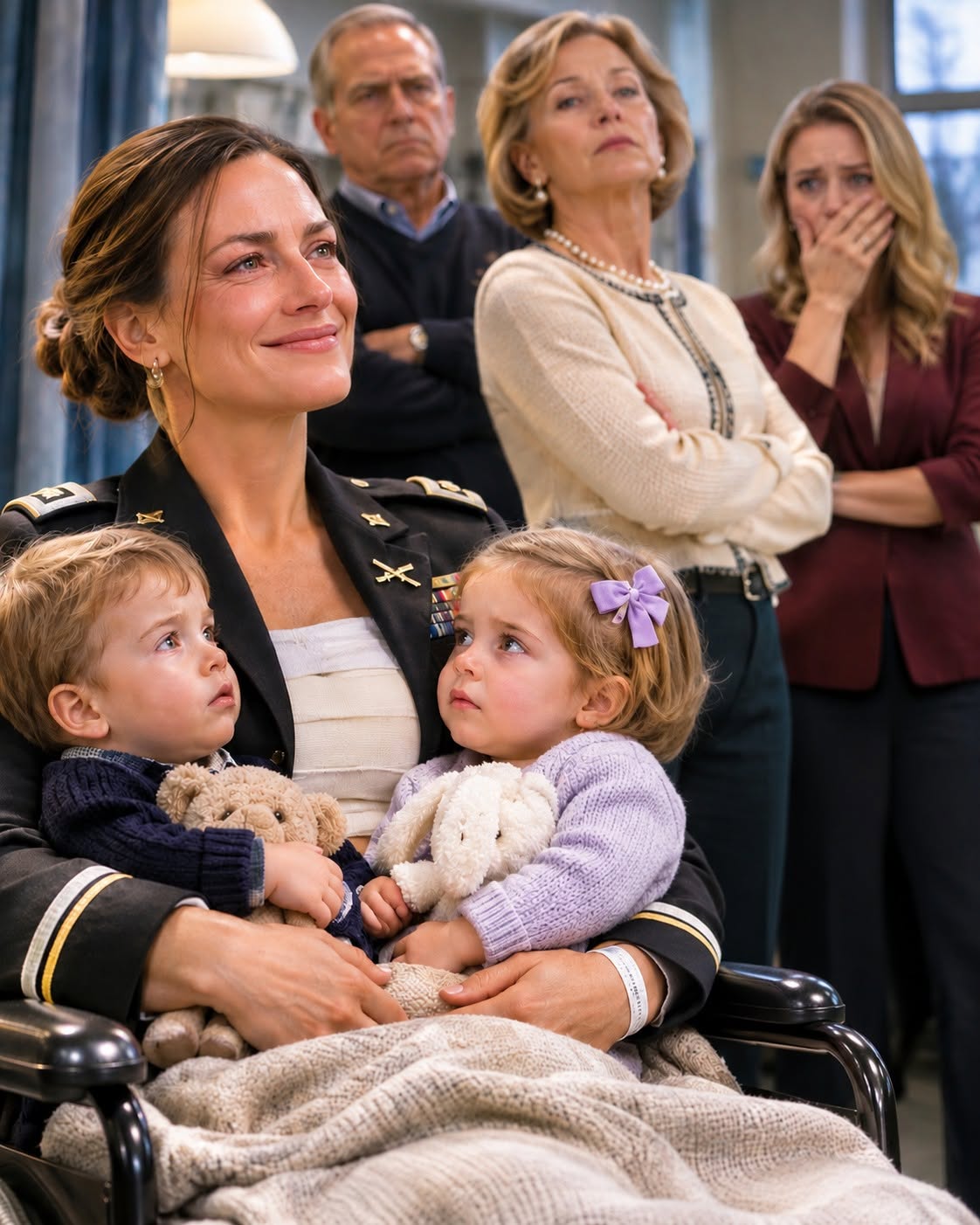
The photograph showed a younger version of me, back in the hospital. I was sitting in a wheelchair by the window of Room 314, staring out at the parking lot with an expression of such profound, hollow exhaustion that it made my chest ache to look at it. But I wasn't alone. In the reflection of the glass, I could see Rachel. She was standing in the doorway, her hands clasped tightly together, watching me with a look of agony that she had never once let me see.
I turned the note over. It was a letter, dated three days after Dr. Grant’s death, written by the man himself.
Hannah, if you are reading this, it means the settlement was reached and you have reclaimed your agency. You fought harder than any patient I have ever treated. But you are a woman of secrets, and I suspect you believe the story of your 'abandonment' is complete. It is not. The Barretts were not the only ones hiding assets in 2011. There was an entity—a third party—that was funneling intelligence-grade medical data from the pediatric wards to a private security firm. I believe your father was merely a pawn in a much larger game involving the procurement of genetic markers for corporate bio-defense.
My blood ran cold. I dropped the letter onto the desk, my heart hammering against my ribs. Bio-defense. That wasn't just corporate negligence; that was a matter of national security.
I looked at the photograph again. The reflection in the window wasn't just showing Rachel. In the bottom corner, obscured by the blinds, was a man in a nondescript gray suit, holding a tablet, looking directly at the chart that should have been kept confidential.
I had spent my life believing I was a victim of greedy, self-absorbed parents. I was beginning to suspect I had been a lab rat in a much darker experiment.
The desk phone rang, a sharp, jarring sound in the quiet room. I ignored it, my eyes glued to the photograph. Whoever had sent this wanted me to keep digging. And in the world of intelligence, a lead like this wasn't just a threat—it was a dossier that could bring down people far more powerful than Richard and Linda Barrett.
I folded the letter carefully and tucked it into my inner pocket. The past wasn't finished with me. It was only just beginning to show its true face. I stood up, grabbing my coat, and walked out into the corridor, my mind racing with the realization that my new career in intelligence was about to be tested in a way I had never anticipated.
I wasn't just an officer anymore. I was a target.
Related Stories