Chapter 4: The Twelve-Year-Old Ghost
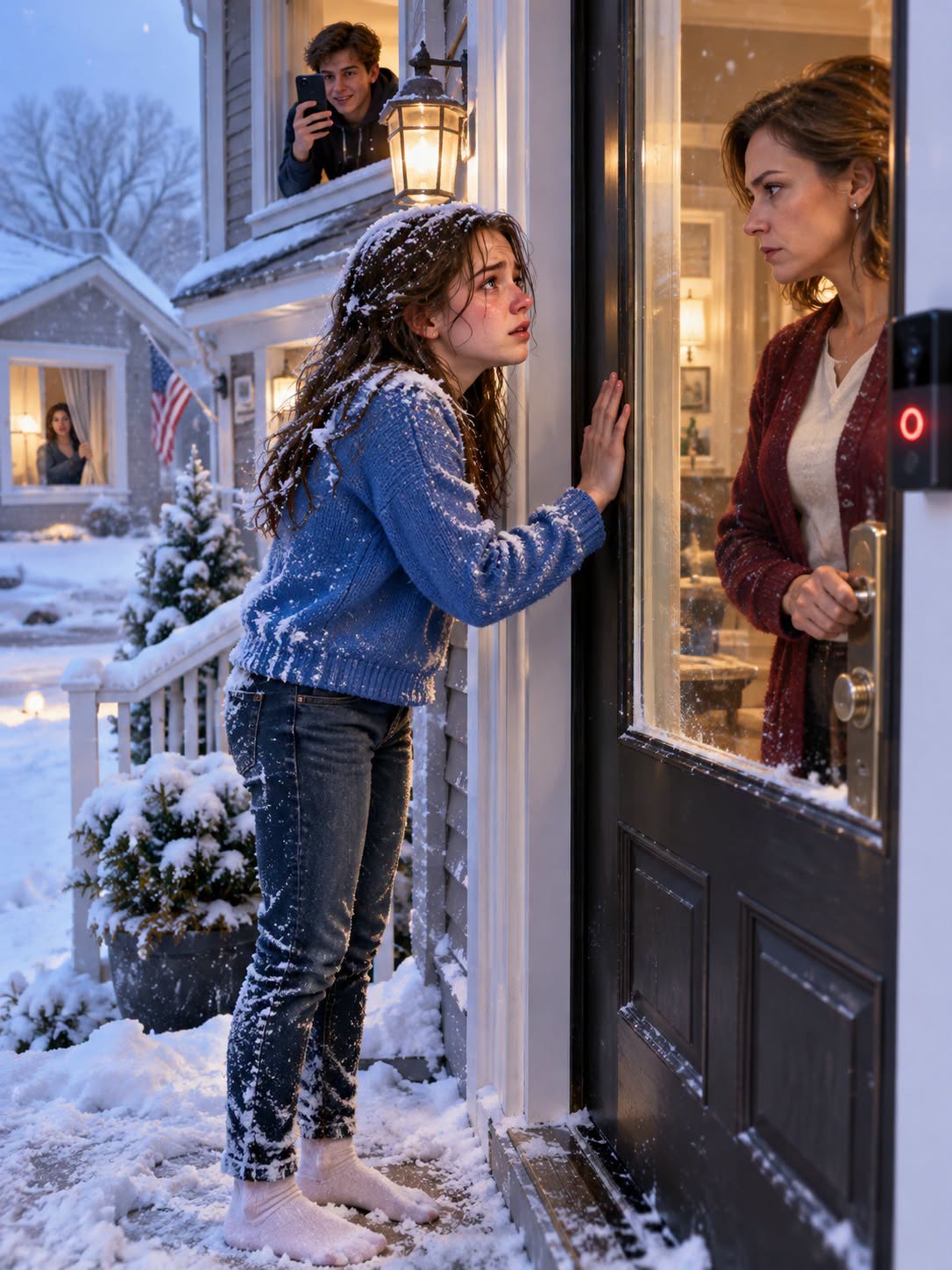
The master house on Oak Street looked entirely unchanged from the outside. The snow had melted away, replaced by the damp, grey slush of an early spring thaw, but the brick façade radiated the same cold, oppressive authority it always had.
Inside, however, the fortress was crumbling.
Sergeant Ruiz had secured an emergency search warrant signed by a judge who had listened to the Whitaker audio recording twice before greenlighting the raid. At 6:00 a.m., two unmarked police cruisers pulled into the driveway, their headlights cutting through the dawn mist.
I stood on the sidewalk across the street, wrapped in my heavy woolen coat, watching as officers in tactical vests escorted my mother out the front door.
Clara Lane didn't look frantic. She didn't scream or thrash. As she was guided down the front steps in a charcoal trench coat, her wrists cuffed neatly behind her back, she turned her head with chilling composure and locked her eyes directly onto mine across the street.
Her expression was not one of remorse or fear. It was an expression of pure, venomous disappointment—as if she were looking at an ungrateful employee who had mismanaged a minor quarterly report.
She was placed in the back of the cruiser without uttering a single word.
Once the property was secured and the primary investigators began bagging files, Sergeant Ruiz motioned me across the street.
“We’re executing the deep search now,” Ruiz said, meeting me on the front porch where sixteen years ago I had begged for my life. “The tech unit is sweeping the electronics, and the asset team is going through the physical filing cabinets.”
“What about the study?” I asked, stepping over the threshold. “The grandfather clock.”
Ruiz nodded, leading me down the familiar, sterile hallway toward my mother’s private office.
The heavy oak grandfather clock ticked with a slow, solemn rhythm that felt entirely out of place amid the chaos of police radios and latex-gloved investigators lifting boxes of documents. Two officers had already slid the massive wooden housing away from the wall.
Set into the baseboards behind it was a heavy, digital keypad floor safe.
“Did you find the combination?” Ruiz asked the lead investigator.
“Not yet, Sergeant,” the officer replied. “We tried her birthdate, Mason’s birthdate, and several standard corporate passcodes. It’s locked tight.”
I stepped forward, kneeling down on the cold hardwood floor in front of the keypad. I stared at the small plastic buttons, remembering what Mason had told me in the hallway of my apartment.
*Dad’s birthday.*
Daniel Lane. March 14, 1961.
I reached out with a gloved hand and punched in the digits: 0-3-1-4-6-1.
A sharp, electronic beep echoed from the mechanism. The heavy steel handle clicked into the unlocked position.
I pulled the steel door open.
Inside, illuminated by the beam of a detective’s flashlight, sat stacks of organized manila folders, leather-bound checkbooks, and a single, weathered blue ledger labeled with my name in my mother’s neat, cursive handwriting.
I reached inside, my fingers brushing the cool paper, and pulled the ledger out into the light.
When I flipped it open, the first page wasn't financial notes or medical charts. It was a handwritten timeline detailing every single psychological evaluation, manufactured emergency room visit, and fabricated behavioral incident from the time I was ten years old until the day I turned eighteen.
She hadn't just raised me. She had curated me like an inventory in a warehouse, designed to protect her reputation and secure her legal control over the family trust.
And tucked inside the back cover was a folded, yellowed piece of lined paper bearing a child’s clumsy handwriting—the medical release form from the emergency room visit when I was twelve years old, bearing a nurse’s handwritten margin note that my mother had desperately tried to scrub from the official hospital archive:
*“Patient exhibits acute signs of prolonged isolation and environmental trauma. Mother refuses social work intervention. Recommend immediate mandatory reporting.”*
I traced the words with my thumb, the paper rough and fragile beneath my skin.
The ghost of the twelve-year-old girl locked in the root cellar finally had a witness.
---
Related Stories