Chapter 1: The Voice Behind the Snow
The digital clock on my laptop read 2:14 a.m. The room was pitch black except for the cold, blue luminescence casting long, skeletal shadows across my walls.
I sat frozen on my edge of the bed, headphones pressed so tightly against my ears that the plastic dug into my temples. I had played the clip three times, and every single loop tore another layer away from the fragile reality I had constructed over the past two decades.
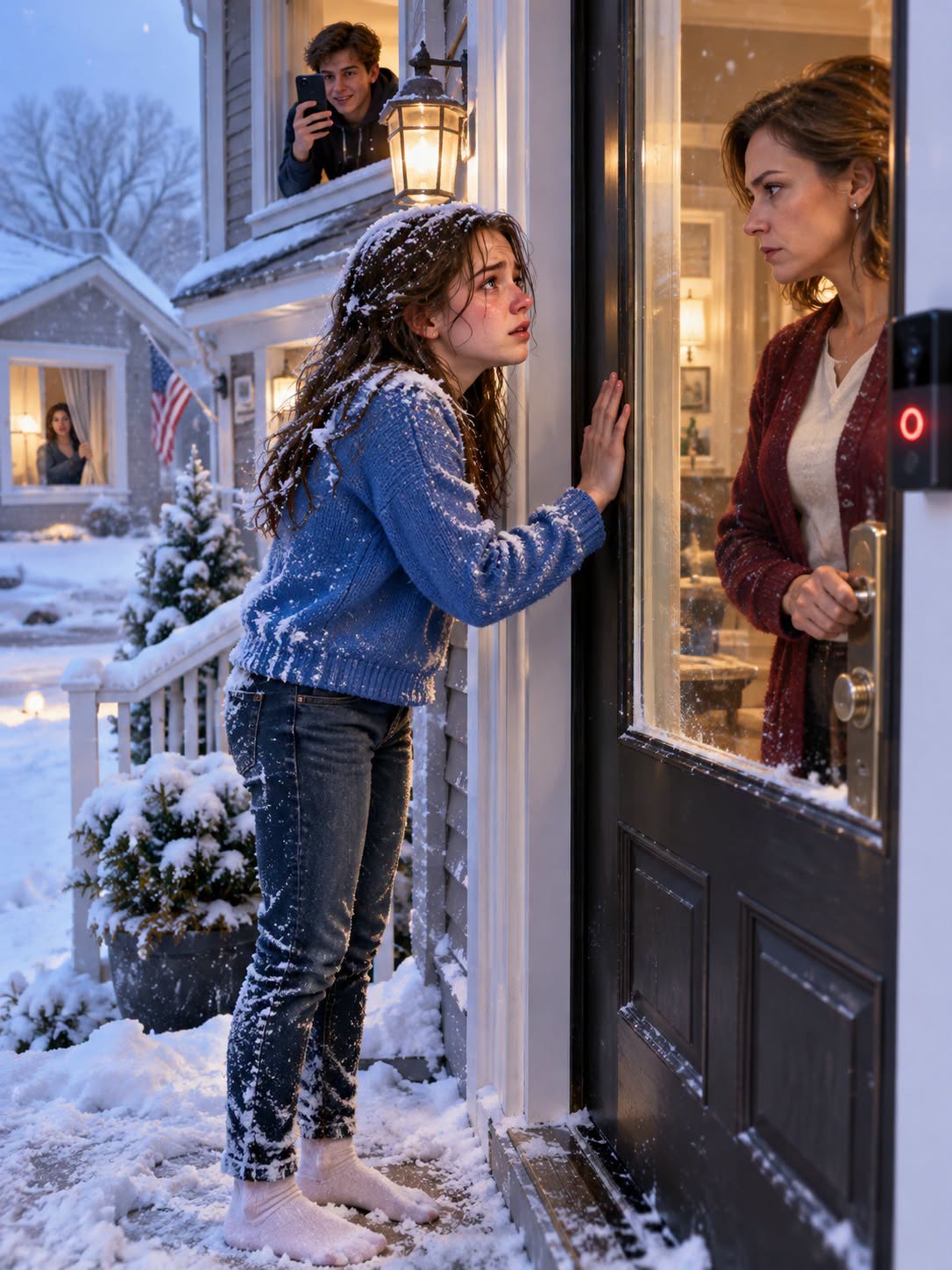
In the video, my sixteen-year-old self was a ghost in a shroud of white, shrinking against the icy railing of the Whitaker porch, my fists hammering against a door that would not open. The wind screamed through the microphone, a violent, metallic roar that rattled the speaker cones.
Then came the audio layer underneath the tempest.
It was faint at first, bleeding through a second-story window that must have been cracked open just an inch to let the sub-zero air circulate into the master bedroom. It was my mother's voice.
*“She’s out there,”* Clara said.
There was a pause, punctuated by the faint, rhythmic clicking of a TV remote or a pen tapping against a desk. Then a second voice murmured something in response—low, muffled, but undeniably male. Mason. My brother had been in the room with her.
*“Give it another twenty minutes,”* Clara instructed, her tone as calm and clinical as a grade-school teacher outlining a lesson plan. *“So the skin temperature drops enough for the intake photo to look properly dramatic. Then I’ll call the hospital and the police, claim she bolted during a manic episode. The school email from Abbott already establishes her volatility. It’s airtight. Once she’s in the psychiatric hold, the probate court will expedite the guardianship extension without her signature. Everything stays mine.”*
The audio stopped.
I pulled the headphones off as if my skin had caught fire. My chest heaved in shallow, jagged gasps.
It hadn't been a sudden, blinding flash of maternal rage. It hadn't been a punishment born of exhaustion or a harsh disciplinary lapse. It was an execution blueprint. She had calculated the exact time required to induce hypothermic trauma, synchronized it with a fabricated psychiatric narrative, and used my terror to secure legal dominion over my life before I could turn eighteen.
The cold realization settled deep into my bones, replacing the lingering trauma of that night with something much sharper, much heavier: absolute, unadulterated fury.
She hadn't just tried to freeze me out of her house. She had tried to freeze me out of existence.
I didn't sleep for the rest of the night. Instead, I opened my evidence ledger—the spiral notebook that had grown thick with printed emails, medical charts, and screenshots—and turned to a fresh page. At the top, in heavy, black ink, I wrote a single word: *Premeditation.*
By 8:00 a.m., I had exported the raw video file from Mrs. Whitaker’s USB drive, backed it up to three separate encrypted cloud vaults, and saved a master copy onto a flash drive that I slipped into the zippered pocket of my jacket.
I didn't call a lawyer first. I called the one person in law enforcement who had looked at me and refused to repeat my mother's script.
---
Related Stories