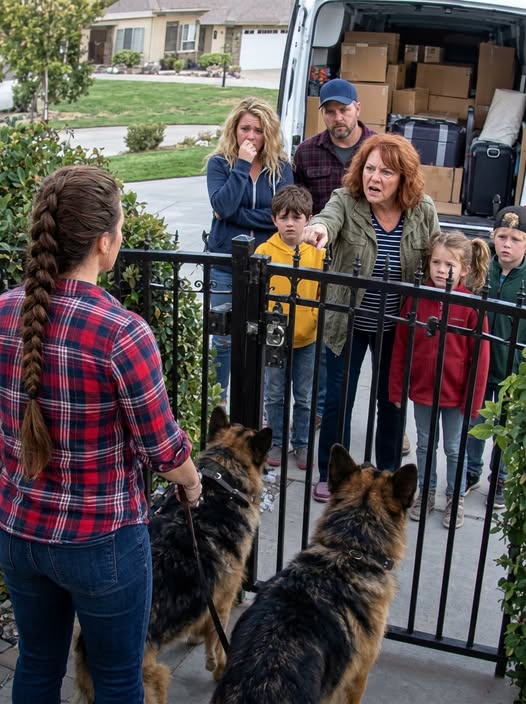
Chapter 2: The House on Maple Street
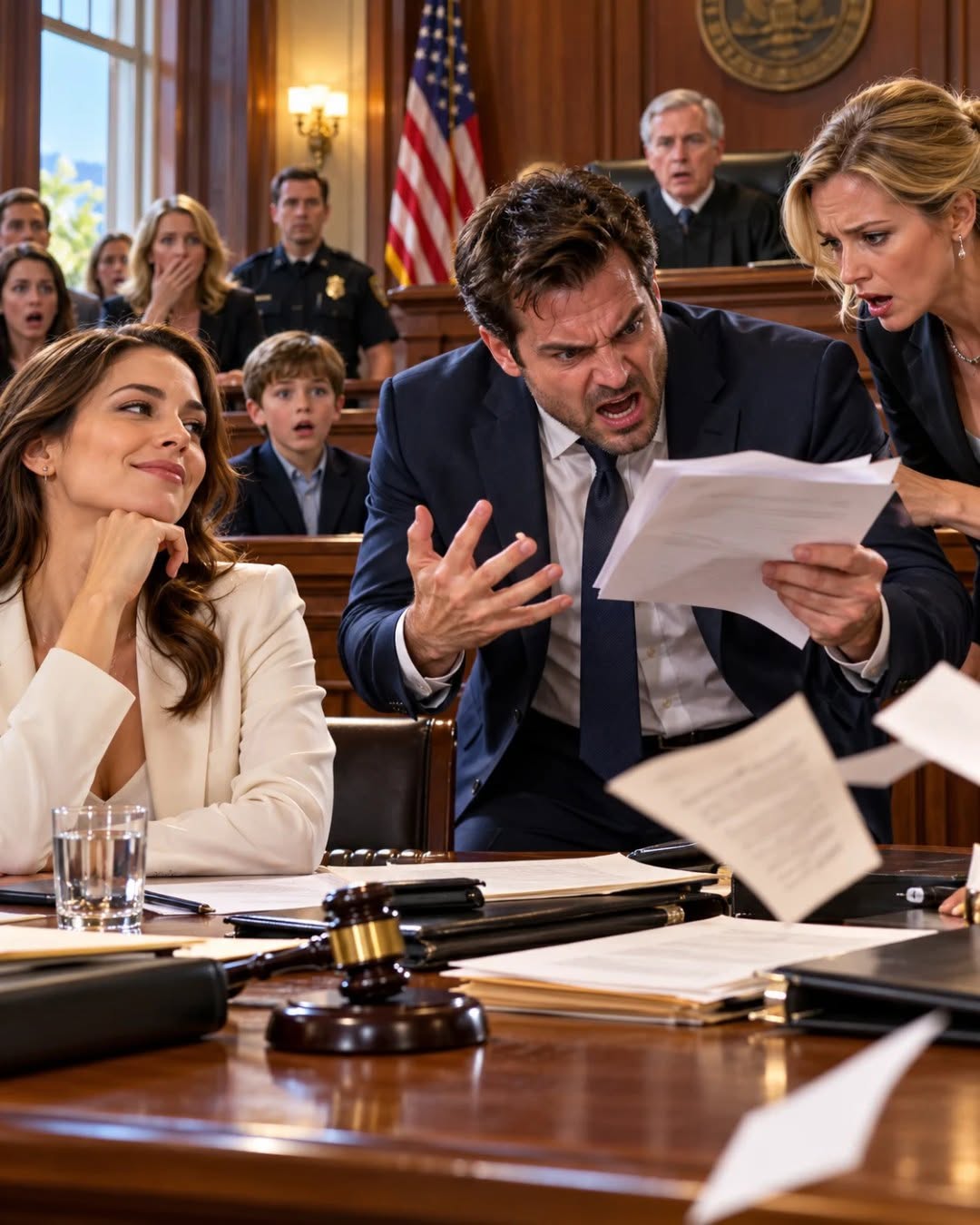
The afternoon air outside the courthouse was crisp and smelled of early autumn leaves.
Sarah Miller caught up with me on the third granite landing, her heels clicking rapidly against the stone. She stopped beside me, leaning against the cold iron railing, and let out a long, incredulous laugh that turned to mist in the breeze.
“I have practiced matrimonial law in this state for twenty-four years, Laura,” Sarah said, shaking her head as she tucked her case folder beneath her arm. “I have seen vindictive husbands hide assets in shell corporations. I have seen wives set fire to luxury sedans. But I have never seen someone hand their spouse the exact blade he asked for and watch him fall on it with a smile.”
“I didn't hand him a blade, Sarah,” I said, looking out over the midday traffic on Washington Street. “Mark has been digging that hole for three years. He just assumed I would jump into it with him when the ground gave way.”
“He’s going to retaliate,” she warned, her smile fading into sharp, professional caution. “When the shock wears off, he’s going to realize he’s facing personal bankruptcy before Thanksgiving. He’s going to file emergency motions to vacate. He’ll claim procedural fraud. He’ll claim you manipulated the financial disclosures.”
“Let him file,” I replied calmly. “Judge Harrison put the finding on the record: Mark swore under oath that he had full knowledge of his debts. If he tries to argue he didn't know about his own forged secondary mortgage or his own company’s unpaid payroll taxes, he will be admitting to commercial fraud in open court.”
I looked at my watch. It was twelve-forty.
“I need to pick up Tommy from school,” I said, turning to her. “Send me your final invoice on Friday, Sarah. And thank you. For trusting me when everyone thought I was losing my mind.”
Sarah reached out, squeezing my arm firmly. “Take care of your boy, Laura. And keep your security system armed.”
Twenty minutes later, I pulled my eight-year-old station wagon into the quiet, tree-lined cul-de-sac on Maple Street, three miles north of the expansive, glass-and-steel mansion Mark had fought so hard to keep.
Here, tucked behind two ancient red oaks, sat a modest, single-story brick Craftsman bungalow I had quietly purchased five months ago under an independent family trust. The front porch had a painted wooden swing; the front lawn was covered in fallen golden leaves. It had no cathedral ceilings, no heated driveway, and no designer skylight for Mark to boast about over cocktails.
It was warm. It was solid. And it belonged entirely to my son and me.
Inside, the living room smelled of fresh paint and cedar. My drafting table sat beneath the wide bay window overlooking the garden, surrounded by architectural schematics, fabric swatches, and material samples for the municipal medical center project I was completing for the city.
What Mark had dismissed as my “little hobby” was an architectural design consultancy that had generated seven hundred and fifty thousand dollars in net revenue over the last three fiscal years.
Because Mark had spent our marriage convinced that only corporate finance constituted real work, he had never bothered to ask about my client retainers. He had never opened the tax returns our accountant prepared. He had simply looked at me drawing at the kitchen island after Tommy went to bed and assumed I was making pocket money for groceries.
I had placed every dollar of my business earnings into *The Thomas Davis Irrevocable Legacy Trust*, naming Tommy as the sole beneficiary and myself as the fiduciary trustee.
Because Mark had explicitly demanded only the house, the cars, and the joint checking accounts—and had signed away all rights to any independent business entities, separate intellectual property, or trust assets—he had permanently forfeited any legal claim to the only real wealth our marriage had produced.
At two-fifteen, I parked in the pickup line outside St. Jude’s Elementary.
When the dismissal bell rang, Tommy burst through the double doors, his oversized canvas backpack bobbing against his shoulders. The moment he spotted my car, his face split into a wide, gap-toothed grin that erased every trace of exhaustion from my bones.
“Mom!” he shouted, sprinting across the crosswalk and throwing his thin arms around my waist as I opened the passenger door.
I caught him, lifting him slightly, burying my face in the crook of his neck, breathing in the scent of pencil shavings, sidewalk chalk, and clean laundry.
“Hey, buddy,” I whispered, holding him tighter than usual. “How was third-grade math?”
“Easy,” he said, climbing into the front seat and tossing his backpack onto the floorboards. He looked up at me, his dark brown eyes—so much like my father’s—searching my face with an intuition that was far too sharp for an eight-year-old. “Mom... did you finish the court thing?”
I paused, resting my hand on the steering wheel, looking at the boy who had spent the last three months watching his father walk past his bedroom door without saying goodnight.
“It’s all finished, Tommy,” I said softly. “From now on, it’s just you and me. And our new house has a backyard with an oak tree that’s practically begging for a treehouse.”
His eyes lit up with pure, uncomplicated joy. “A real one? With a rope ladder?”
“With a rope ladder and a trapdoor,” I promised, pulling into traffic.
We spent the afternoon unpacking his books, hanging his drawings on the corkboard in his new bedroom, and eating takeout pizza on the living room floor while an old Disney movie played on the television. For the first time in three years, the house felt light. There was no heavy tread on the stairs, no sudden criticism about the cleanliness of the counter, no icy silence hanging over the dinner table.
By eight o'clock, Tommy was fast asleep beneath his blue quilt, his favorite stuffed dog tucked under his arm, his breathing deep and even.
I walked down the hallway to my study, carrying a mug of peppermint tea. I sat down at my drafting board, opened my laptop, and began reviewing the revised blueprints for the Westside Pediatric Clinic.
Then my phone buzzed on the desk.
It was an unlisted number with a local area code.
I hesitated, then swiped the screen and brought the phone to my ear.
“Laura.”
Mark’s voice was hoarse, ragged, and slurred with alcohol. In the background, I could hear the faint, echoing acoustics of the empty living room on the ridge.
“You think you’re so smart,” he hissed, his words dragging against his teeth. “You think you played me.”
“Do not call this number again, Mark,” I said, keeping my tone completely neutral. “All communication must go through Sarah’s office.”
“The bank called, Laura!” he shouted, the sound cracking into high-pitched hysteria. “The bridge lender... they filed the notice of default at four o'clock! They’re demanding eight hundred and forty thousand dollars by Friday morning, or they’re freezing my personal accounts!”
“That sounds like a conversation between you and your accountant,” I replied.
“You listen to me, you cold-hearted bitch!” Mark roared. “Chloe left! She took her bags and walked out the second she saw the foreclosure notice! She called me a fraud! But you aren't walking away from this clean! I know what you did with the design firm! I know about the municipal clinic contract!”
My hand tightened around the phone. “My business is separate property, Mark. You signed the waiver under oath.”
“We’ll see what the judge says when I tell him about the offshore account,” Mark whispered, his voice suddenly dropping into a low, venomous chuckle that made the hair on the back of my neck stand up. “We’ll see how pure you look when Arthur Vance finds out whose signature is on the shell corporation that routed the consulting kickbacks two years ago.”
The line went dead.
I sat in the quiet study, staring at the darkened screen of my phone, the warmth of the room evaporating into a cold, suffocating silence.
Related Stories