Chapter 1: The Signature
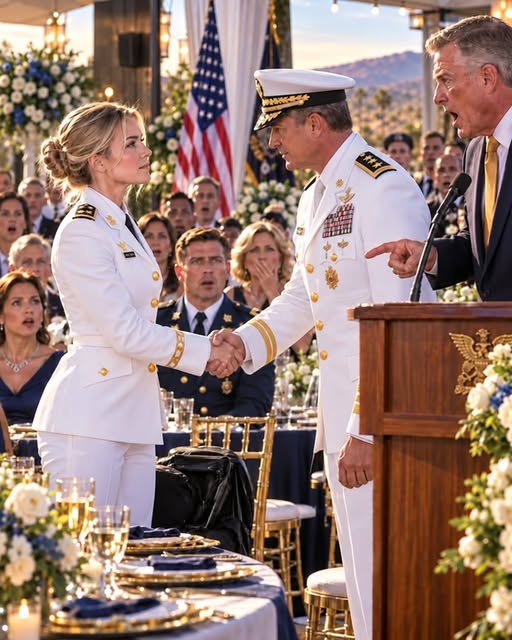
Colonel Marcus Vance did not blink.
The afternoon sun beat down on the red-tile roof of the Fort Huachuca pavilion, but under the shade of the canvas, the air turned instantly cold. The lightweight folding chair beneath my father shifted slightly as Marshall Kincaid tried to regain his footing on solid ground.
“Colonel Vance,” my father said, forcing a tight, dry laugh that sounded like dry leaves scraping across concrete. “I think there’s been some confusion. This is a private family gathering. My daughter—well, whatever she calls herself now—she’s out of her depth. I was simply addressing the retired community regarding operational standards.”
Vance didn’t look at my father. His eyes remained fixed on me, steady and hard, before drifting back to the retired officer who had spent the last ten minutes trying to turn me into a ghost.
“Operational standards, Colonel Kincaid?” Vance’s voice carried effortlessly across the silent pavilion, sharp enough to cut glass. “Strange words coming from a man who apparently doesn’t recognize the architect of the Joint Data-Link Resilience Protocol that kept three battalions from going dark in the Aras Valley.”
A murmur rippled through the rows of tables. Several active-duty officers leaning against the wooden support posts straightened up.
Garrett shifted in his seat, the gold oak leaf on his collar catching the dying Arizona light. He looked at me, then up at Vance, his brow furrowing in genuine confusion. “Sir, what does that have to do with my unit?”
Vance turned his gaze slowly toward my younger brother. “Major Kincaid, in October of last year, when your task force’s satellite uplink was severed by a localized grid failure during the push through Sector Four, who restored your encrypted comms channel within ninety seconds?”
Garrett blinked. “That was... that was automated failover architecture. HQ mainframe.”
“Negative,” Vance said flatly. “The automated failover failed. A civilian contractor-director sitting at a terminal in a secure facility over seven thousand miles away had to manually punch through an unmapped routing table to keep your tactical map from flatlining. If she hadn't signed off on that override with her personal cryptographic key, your command element would have been blind in a hot zone.”
Vance paused, letting the silence settle like lead.
“That key belongs to Adelaide Kincaid. Your sister.”
My father’s face drained of its ruddy color, leaving behind a sickly, grayish pallor. He gripped the edges of the podium so hard his knuckles turned white. “She’s a civilian contractor. She doesn't hold a command rank. She was discharged—she left under administrative review—she’s nothing!”
“She resigned her commission as a Captain five years ago, Colonel, because the bureaucracy of your generation couldn't stomach an officer who understood asymmetric digital warfare better than she understood polishing brass,” Vance said, his voice dropping into a dangerous, measured cadence. “And she didn't leave under a cloud. Her personnel file is stamped with a Presidential Unit Citation and a Top-Secret clearance level that makes your old retirement review look like a Boy Scout merit badge.”
I finally stood up.
My charcoal blazer was unbuttoned. I smoothed the fabric down over my hips, stepped out from behind the back table, and walked slowly down the center aisle of the pavilion. Every eye in the place followed me. My mother shrank back into her chair, pressing her water glass to her lips like a shield.
Garrett stared at me as if he were looking at a stranger wearing a mask.
“Dad,” I said softly, my voice carrying into the microphone he had left live on the podium. “You forgot the best part.”
---
Related Stories