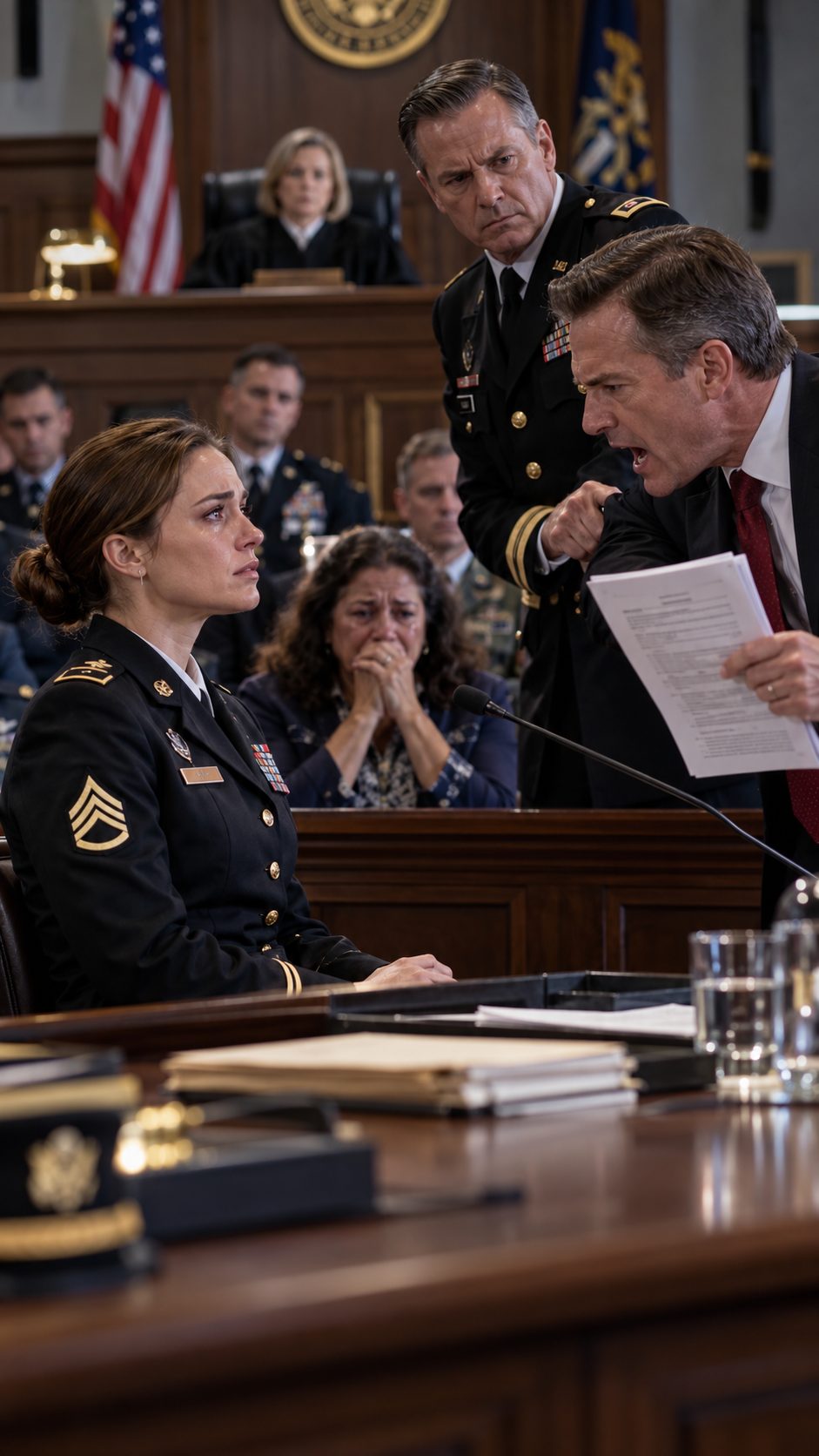
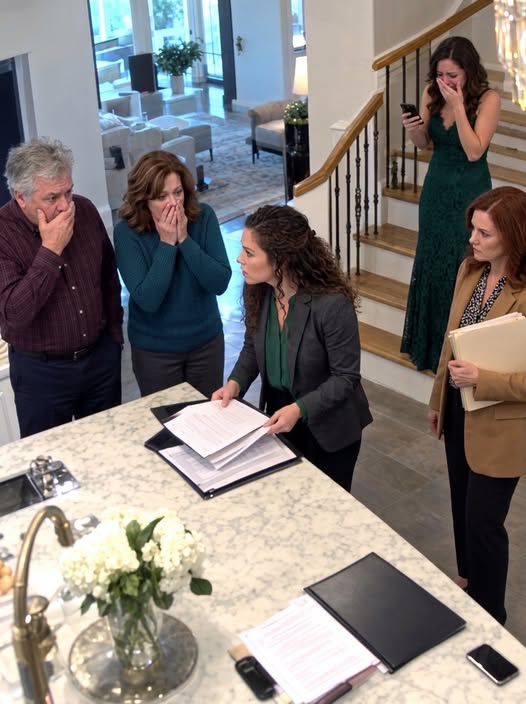
Chapter 1: The Bronze Star on the Oak Table
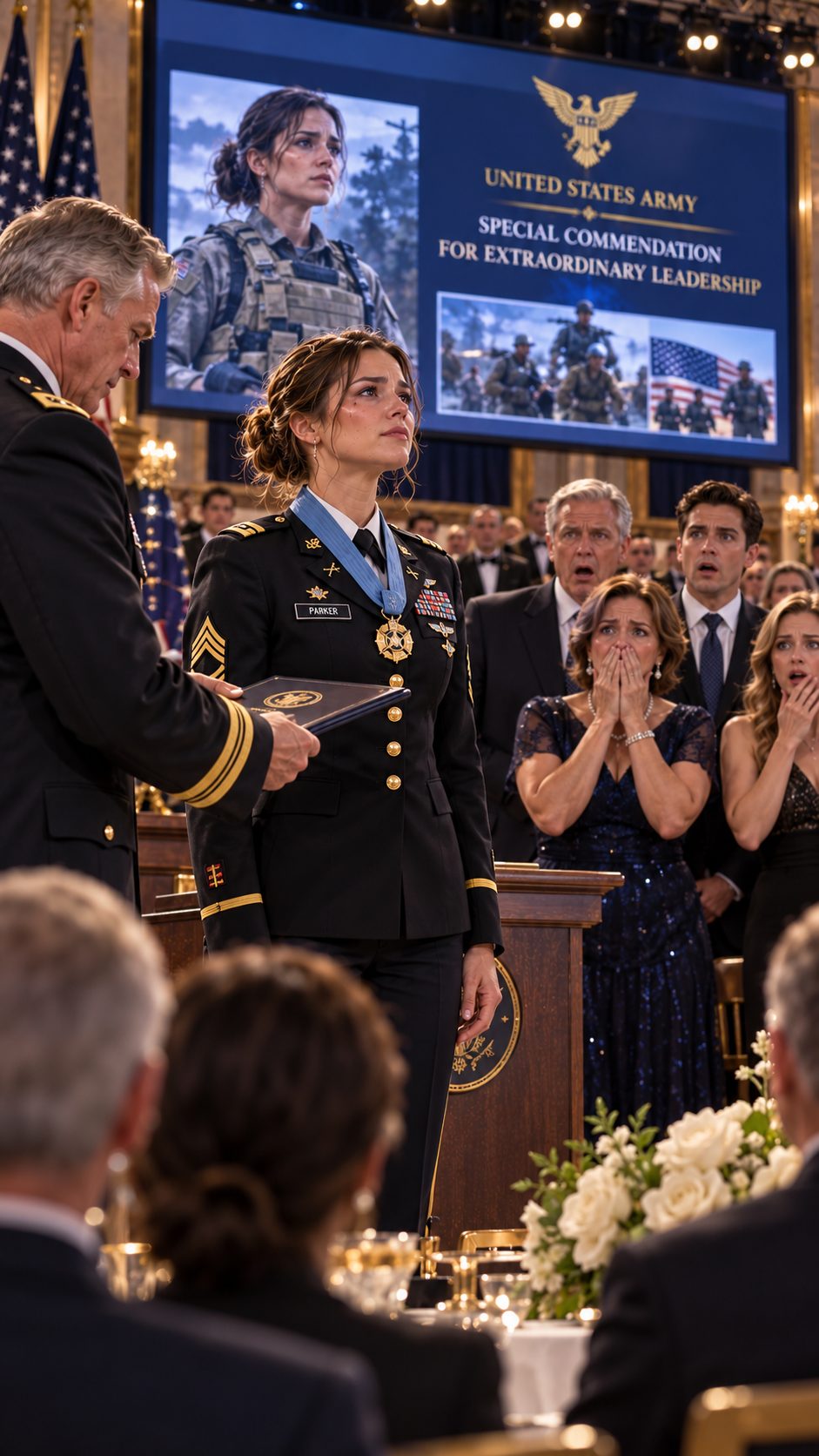
The silence in the grand ballroom was so thick that the distant whistle of wind against the floor-to-ceiling windows overlooking the Potomac sounded like an intake of breath.
General Thomas Vance stood behind the oak lectern, his silver four-star shoulder boards catching the low amber spotlights. He laid his right palm flat against the document resting inside the sealed manila folder, his jaw squared with the granite stillness that had commanded divisions across three theaters.
""Staff Sergeant Maya Parker,"" General Vance’s voice cut through the sound system, deep, resonant, and carrying the unvarnished weight of authority. ""Step forward.""
Every head in the room pivoted.
At table three, directly in the front row reserved for the honored veteran’s immediate family, my father, Richard Parker, half-rose from his chair. His hand twitched toward his silk tie, his mouth parted in a jagged line of confusion. Beside him, Daniel’s face looked as though it had been struck by an open palm; the smug smirk that had defined his profile for thirty years had simply melted away, replaced by an ashen, slack disbelief.
Ashley clutched her champagne flute so tightly her french-tipped nails drained of color. My mother, Eleanor, sat frozen, her pearls dangling against her collarbone, staring at the stage as if an apparition had materialized behind the brass insignia.
I didn't rush. I didn't hesitate.
My dress blues were sharp, every crease measured to regulation. My low-quarter shoes clicked in clean, measured cadences against the hardwood floor as I walked down the center aisle, passing retired admirals, sitting congressional representatives, and corporate donors who had spent the last hour ignoring me.
I stopped two paces from the lectern, snapped my heels together, and brought my right hand up to the brim of my service cap in a crisp, textbook salute.
""Staff Sergeant Parker reporting, sir.""
General Vance returned the salute with slow, deliberate precision. He didn't drop his hand immediately; his eyes held mine, filled with an unspoken, deeply personal respect that went far beyond ceremonial protocol.
""By order of the President of the United States,"" General Vance announced, turning to face the room, ""the Soldier’s Medal for heroism not involving actual conflict with an enemy, alongside the Department of Defense Distinguished Civilian Rescue Ribbon, is hereby awarded to Staff Sergeant Maya Parker, United States Army Special Operations Command.""
The room inhaled sharply.
A civilian aide stepped out from behind the velvet drape carrying a polished mahogany case. Inside, gleaming against black crushed velvet, sat the bronze octagonal medal, suspended from its white-striped blue ribbon.
""On October fourteenth,"" General Vance read from the official citation, his words echoing off the vaulted cedar ceiling, ""during an unclassified regional flood evacuation in the mountainous terrain of the Lower Caucasus, Sergeant Parker single-handedly secured a civilian transit vehicle stranded above an active landslide. Operating under zero visibility and severed communications, she extracted seven trapped personnel—including four senior American technical advisors—carrying an incapacitated nineteen-year-old contractor over three miles of washed-out terrain on foot.""
Whispers rippled through the congressional rows like wind through dry pine.
""Among those technical advisors,"" General Vance continued, his eyes shifting from the paper directly toward table three, ""was a chief engineer whose recovery ensured the integrity of our nation’s allied communication grid.""
Vance stepped around the podium, lifted the ribbon, and draped it around my neck. The cool bronze settled against my breast pocket, resting directly above the ribbons Ashley had called excessive twenty minutes earlier.
Then Vance leaned in slightly. His voice dropped so only I could hear.
""Your grandfather told me you’d make a fine soldier, Maya,"" he whispered. ""He was wrong. You're an extraordinary one.""
The room erupted.
It wasn't polite, country-club clapping. It was the thunderous, floor-shaking standing ovation of combat veterans, cabinet officials, and foreign dignitaries rising to their feet in unison. Behind me, sitting in his wheelchair beside the stage, Grandfather Harold Parker—ninety years old, wearing his Korean War ribbons pinned over his civilian blazer—wiped a single, stubborn tear from his weathered cheek with the back of a shaking, liver-spotted hand.
He wasn't looking at the general. He was looking straight at me, his chin lifted, his eyes burning with fierce, unmistakable pride.
I turned to face the assembly, snapping to attention to acknowledge the applause.
Directly in my line of sight sat Daniel.
He hadn't stood up. He sat alone at table three while everyone around him cheered, staring down at his pristine leather shoes as if the polished wood beneath them had turned to ice.
Beside him, my father had stood, but his applause was jerky, awkward, like a mechanical toy running out of spring. His eyes flickered nervously toward Senator Hayes, who sat two tables over, leaning across the linen cloth to shake a colonel's hand while pointing at me.
Then General Vance raised his hand, signaling the room back to order.
The applause died down to absolute stillness.
""There is one final matter,"" General Vance said, returning to the lectern. He picked up a second, thinner blue document that had been resting beneath the medal citation. ""A matter of personal and financial reconciliation directly tied to this command’s investigation into defense supply logistics in the Caucasus sector.""
My father’s shoulders went rigid.
""The technical advisory firm responsible for the compromised vehicle transport on October fourteenth,"" Vance continued smoothly, his voice dropping into a razor-sharp, clinical register, ""was Parker Global Logistics, an infrastructure contractor based in Tysons Corner, Virginia.""
The breath went out of Daniel in an audible, choked gasp.
""And under the federal whistleblower protections formally initiated by Sergeant Parker upon her return to Fort Meade,"" Vance said, his gray eyes pinning my brother to his seat, ""the Department of Defense has initiated an administrative freeze on all pending federal municipal grants linked to that firm, pending an immediate inquiry into gross executive negligence.""
---
Related Stories