Chapter 4: The Gatekeeper
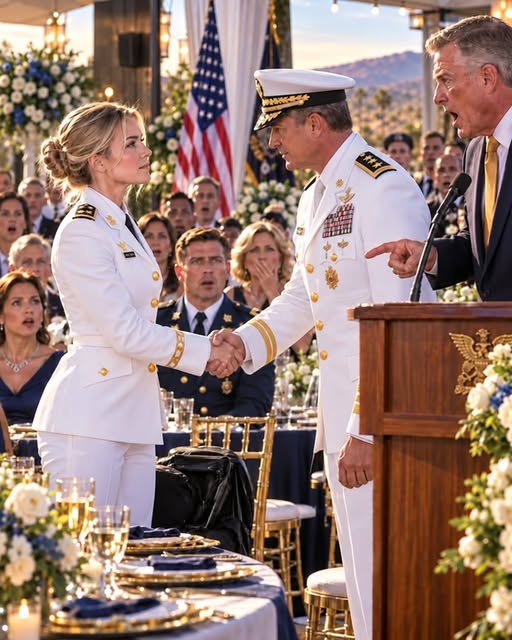
The sun dipped below the rugged outline of the Whetstone Mountains, bleeding a violent shade of purple and orange across the Arizona sky.
Inside the base administration building, away from the dust and the ghost-town atmosphere of the pavilion, Colonel Vance’s office smelled of old paper, leather, and high-grade coffee.
I sat across from his metal desk while he signed off on the final chain-of-custody transfer for the audio logs and interference reports.
“Your father built his entire identity around the illusion of being the gatekeeper,” Vance said without looking up from his pen. He didn't wear his cover inside, revealing a head of iron-gray hair cropped close to the scalp. “Men like Marshall Kincaid joined the service when leadership was about volume, presence, and how loudly you could yell down a parade ground. They never grasped that the real army—the real defense apparatus of this country—moved into the digital ether twenty years ago.”
“He wasn't just a gatekeeper, Colonel,” I said quietly, resting my briefcase on my knees. “He was a bottleneck. And bottlenecks are dangerous when you’re trying to move data at the speed of modern conflict.”
Vance set his pen down, folded his hands over the stack of files, and looked at me with a sharp, assessing glint in his eye. “The Inspector General’s office is going to push for a formal administrative censure. It’s going to strip him of his retired honorary titles on this installation. It won't put him in a cell, but it will ensure his name is permanently flagged in the command database as someone who compromised internal operational security for personal vanity.”
“He brought it on himself the moment he decided my career was a threat to his household hierarchy,” I replied.
“And you, Director Kincaid?” Vance asked, his tone softening slightly. “Now that the record is clear—now that the brass knows exactly whose signature authorized the network grid that kept Major Kincaid’s task force alive—are you still intent on staying behind a civilian contractor’s desk?”
I smiled faintly, standing up and buttoning my blazer.
“My desk isn't behind anything, Colonel,” I said, picking up my case. “It’s right at the center of the grid. And right now, there’s a routing anomaly in the Pacific that needs my attention.”
Vance gave a sharp, respectful nod—not the polite nod of a superior officer humoring a subordinate, but the deep, professional acknowledgment of one operator to another.
“Safe travels, Director,” he said.
I walked out of the administration building into the cool desert night. The stars over Fort Huachuca were blindingly bright, millions of tiny, silent points of light connected by invisible lines of data, satellite orbits, and operational signals stretching across oceans.
My father’s generation thought the sky belonged to flags and medals.
They were wrong. The sky belonged to whoever kept the lights on.
---
Related Stories