Chapter 1: The Ghost in the Left Seat
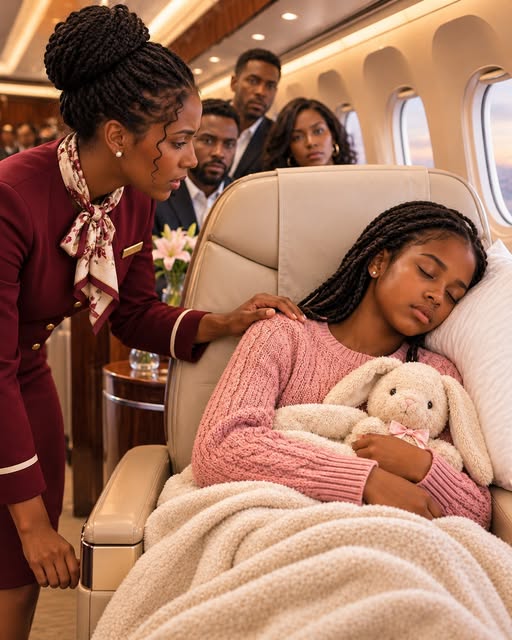
The armored cockpit door slid open into a bath of amber warning lights.
The low, intermittent chime of the master caution was chiming—not the frantic klaxon of a nose-dive, but the hollow, methodical pulse of a primary hydraulic line hemorrhaging pressure.
Sitting in the left seat was not a stranger.
His back was broad, his dark brown hair cropped with military precision, dusted with the same silver along the temples that had begun appearing during his final deployment to Incirlik. He wore the four gold stripes of a commercial captain on his epaulets, but across the back of his neck ran the distinct, three-inch jagged scar from an emergency ejection over the Nevada testing range six years ago.
""Laura,"" the man whispered again.
He turned his head slowly.
My breath stopped in my throat. The cabin behind me, the two hundred and ninety passengers, the flight attendant named Elena whose hand rested on my shoulder—everything evaporated into a ringing, deafening vacuum.
""Dad?""
The word tore out of my chest, fragile and sharp as broken glass.
His face was drawn, lined with deep exhaustion, his skin pale beneath the greenish glow of the primary flight displays. But the hazel eyes were his. The square jaw was his. The small cleft in his chin that I had touched a thousand times while he read me bedtime stories about Chuck Yeager and the sound barrier—it was all his.
Nine months ago, two officers from the Air Force Casualty Affairs office had knocked on our door in Colorado Springs. They had handed my mother a folded flag, an oak presentation box containing a posthumous Distinguished Flying Cross, and a sealed accident report stating that Major David Vance had been lost during a classified nighttime navigation sortie over the Utah salt flats. The crash had been total. There had been no casket to view. Only an empty granite headstone in the military cemetery.
Two weeks after the funeral, my mother had sent me to stay with my aunt in Madrid, unable to look at my face without weeping because everyone said I had David’s eyes.
""You're dead,"" I choked out, stumbling back an inch into the narrow galley entryway. ""We buried you. Mom cried until she couldn't speak. I... I wore black shoes to your service.""
""Laura, listen to me,"" he said, his voice cracking with an agonizing mixture of tenderness and terror. ""I never died. I had to disappear. But right now, we have six minutes before the primary flight computer locks the elevators.""
Beside him, in the first officer’s seat, sat a younger man whose head was tilted against the side window, unconscious, an emergency oxygen mask strapped across his pale face. A trickle of dried blood was smeared along his temple.
""Marcus took the brunt of the electrical discharge when the avionics bus shorted twenty minutes ago,"" David said, pointing to the jump seat between them. ""Sit down, Laura. Strap in. Now.""
I didn't move. My sneakers felt glued to the floorboards.
The grief that had sat like a lead anvil on my chest for nearly a year suddenly collided with a violent, white-hot rush of betrayal. He had let us weep. He had let me sleep with his old flight jacket tucked under my pillow because it still smelled faintly of leather and jet fuel. He had let my mother sell our home, sell his tools, sell the flight simulator he had built for me in the garage with his own hands.
""Why?"" I demanded, my hands balling into fists inside the pockets of my green sweater. ""Why did you leave us?""
The aircraft shuddered violently.
A sharp, aerodynamic vibration rattled through the floor—the unmistakable buzz of high-speed buffet.
David’s hands clamped onto the control yoke, his knuckles whitening as he fought the natural pitch-up tendency of the heavy twin-engine jet. On the center console, the main system display was flashing in bright yellow:
*FLT CTL: ELEV SERVO FAULT — HYD SYS 1 & 2 DISAGREE.*
""Laura, look at the screen,"" he said, not shouting, but using the razor-sharp command voice he had used whenever a simulator scenario went critical. ""Read the fault. Tell me what you see.""
My eyes darted involuntarily to the glass display. My training—the hundreds of hours he had drilled into my twelve-year-old brain between math homework and soccer practice—took over before my anger could stop it.
""Dual servo lockout,"" I whispered, my voice trembling. ""The fly-by-wire computer thinks the elevator surfaces are diverging. It’s trying to protect the airframe by centering the horizontal stabilizer.""
""And what happens if the flight computer forces alternate law over the Atlantic?"" he pressed, his eyes locked on the synthetic horizon as the artificial attitude indicator tilted five degrees to the left.
""We lose secondary pitch trim,"" I answered, stepping into the cockpit without realizing my feet were moving. ""The trim tabs freeze at cruising angle. When we try to descend into thicker air, the nose will pitch down into an unrecoverable dive.""
David reached out with one calloused hand, catching my wrist. His grip was warm, real, and trembling with an adrenaline he couldn't hide.
""The commercial software on this jet was modified six months ago,"" David said, his voice dropping into a low, urgent murmur that the flight attendant behind us couldn't hear over the cockpit fans. ""The emergency override protocol isn't commercial. The airline bought the fly-by-wire architecture from a defense contractor out of Dallas. It uses the exact same digital flight control architecture as the Block 50 F-16.""
He looked up at me, his eyes filled with desperate, pleading intensity.
""The override code isn't in the airline quick-reference handbook, Laura. It was encrypted using the tactical telemetry keys from my old squadron.""
He pointed to the scratchpad keyboard between our seats.
""The password to unlock direct manual control... it’s the tail number of the aircraft we built together in the garage. And I can't enter it from the captain's station because the primary data bus on my side is fried.""
---
Related Stories