Chapter 2: The Clearinghouse Lie
The grandfather clock in the front hall chimed eight times, each chime vibrating through the floorboards like an echo in an empty church.
The kitchen went so quiet that the faint hum of the electric wall clock sounded like a drill.
Marlene did not move her feet, but her chin dropped an inch. Her hand drifted to the gold chain around her neck, her fingers twisting the metal link.
""It was an administrative dispute with the regional bank, Arthur,"" she said, her voice dropping into that rapid, defensive pitch people use when their story begins to fray at the seams. ""They flagged an external transfer from an out-of-state military federal credit union as unverified secondary income. They put a thirty-day compliance hold on it.""
""A compliance hold?"" I repeated, stepping around the table until I was within arm's reach of her. ""My direct deposits go through the Defense Finance and Accounting Service. DFAS accounts clear domestic automated clearinghouse lines within six hours. There is no thirty-day hold on an active-duty officer's verified wire.""
I pulled my phone from my back pocket.
With two swipes, I brought up my banking history, filtered by the calendar year, and turned the screen flat under the kitchen pendant light.
On May 14, at 09:14 EST, a wire transfer of $20,000 had cleared from my primary savings to an account ending in 4108—the joint account my father and mother had opened in 1994 at First Carolina Trust.
The status showed a green circle with a white checkmark: *COMPLETED / FUNDS SETTLED.*
""Look at the screen, Dad,"" I commanded.
Dad didn't just look. He reached for his reading glasses from his shirt pocket, his fingers shaking so badly he dropped the tortoiseshell frames onto the table before retrieving them. He pressed them to his face and leaned over the glass.
""Account forty-one-oh-eight,"" Dad read aloud, his voice cracked and thin. ""That was our household ledger. Claire... I haven't seen a monthly statement for forty-one-oh-eight since last November. Marlene said the bank switched entirely to paperless notifications to avoid the monthly maintenance fees.""
""The money cleared,"" I said, looking straight at my stepmother. ""It cleared in under four hours. So where did the twenty thousand go, Marlene?""
Marlene took a deep, shuddering breath, her posture stiffening again as she pulled her dignity around herself like a cheap coat.
""Your father's medical treatments cost thirty-two thousand dollars after insurance deductibles, Claire,"" she stated, looking me in the eye without blinking. ""Your little twenty-thousand check didn't even cover the hospital facility fees. I had to pay the anesthesiology bill, the physical therapy copays, and the six weeks of daily home-health visits from my own family's resources.""
""Show me the receipts,"" I said.
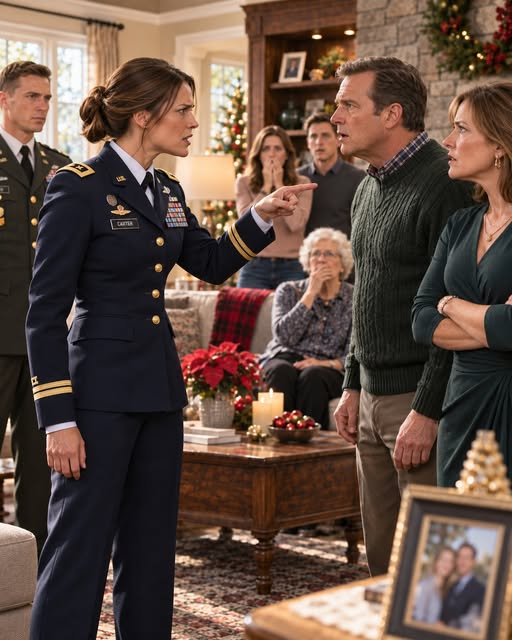
""I don't have to show you anything in my own kitchen!"" she flared, her voice rising to a shrill bark that made the family dog whimper in the hallway. ""You aren't in uniform here, young lady! You don't get to issue orders to me under this roof! You disappeared for fifteen years, left your father alone with his grief and his bad hips, and you think you can parachute in for two weeks and demand an audit of every penny spent keeping him alive?""
""Show her the receipts, Marlene,"" Dad said.
It wasn't loud.
It was the first time in fifteen years I had heard my father use that particular tone—the voice he used to use when I was a ten-year-old girl caught climbing onto the garage roof. It wasn't angry. It was the tone of a man who had suddenly stepped onto rotten floorboards and was waiting to see how deep the drop was.
Marlene turned toward him, her mouth agape. ""Arthur? You're taking her side?""
""I’m not taking a side,"" Dad replied, his hands flat against the table. ""I’m asking where my daughter's twenty thousand dollars went if my sister-in-law is still holding a forty-thousand-dollar promissory note against my truck.""
Marlene’s eyes darted from Dad to me, then to the closed hallway door.
""The file box is in the den,"" she said, her voice dropping into a sullen, venomous mutter. ""If your military daughter wants to spend her leave playing auditor instead of visiting her family, she can choke on the paperwork.""
She turned on her heel and strode out of the kitchen, her hard-soled slippers slapping furiously against the hardwood hall floor before a door slammed shut on the second floor.
Dad didn't move. He stood looking at the green checkmark on my phone screen, his shoulders curved inward like a willow tree under ice.
""Claire,"" he murmured, his voice trembling. ""I swear to God Almighty... I thought you were too busy to help.""
""I was never too busy for you, Dad,"" I said, setting a hand on his shoulder. His cotton shirt felt thin under my palm; his collarbones were sharper than they had been when I saw him at Christmas. ""Never.""
""She told me you were deployed to an operational blackout zone,"" he whispered. ""She said she called your rear-detachment office at Fort Bragg, and the sergeant on duty told her personal communications were restricted until autumn.""
My jaw locked so tight my molars ground together.
Rear detachment never restricted emergency Red Cross notifications. And my unit wasn't in a blackout zone in May; we were conducting scheduled training at Fort Stewart.
""Come on, Dad,"" I said, taking his arm. ""Let's go look at the boxes in the garage.""
We walked through the laundry room into the dim, concrete space of the two-car garage.
Sitting on an old workbench beside Dad’s circular saw was my olive-drab steel footlocker.
The brass padlock had not been pried or warped by humidity.
A neat, clean four-inch cut ran straight through the hardened steel shackle—the unmistakable signature of an angle grinder with a diamond cutoff wheel.
Beside the trunk sat three brown accordion folders.
I flipped the first one open under the bare overhead bulb.
Inside were not medical receipts.
Inside were six years of my military tax returns, three certified copies of my mother’s death certificate, and an application for a residential equity loan dated forty-eight hours ago, listing Arthur Donovan and Marlene Donovan as primary applicants.
Tucked into the back of the folder was a handwritten document bearing my father's uneven signature, dated two weeks before my arrival.
It was an irrevocable durable power of attorney, granting Marlene Donovan complete fiduciary authority over all domestic assets—including any secondary trusts established under the estate of my late mother, Helen Donovan.
---
Related Stories