Chapter 1: The Paper Trail
The coffee maker gave a low, dying hiss as the last drops trickled into the pot.
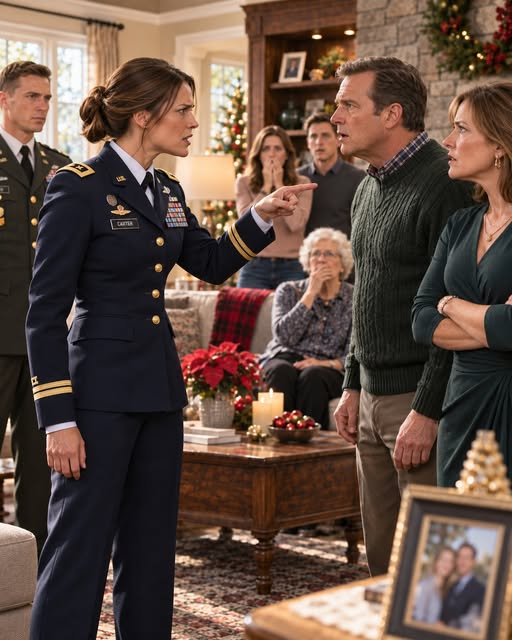
Neither of them moved. My father stood framed in the kitchen doorway, one hand resting on the molded doorframe, his faded flannel sleeve pulled up to the forearm. He looked older under the fluorescent kitchen tubes than he had in the warm afternoon glare outside Charlotte. The lines bracketed around his mouth were deep, etched by fifteen years of quiet concessions.
Marlene didn't drop her gaze, but her smile vanished. Her cup remained suspended halfway between the laminate counter and her chin.
""You're making a scene out of common sense, Claire,"" Marlene said. Her voice had dropped the singsong edge, tightening into the practiced, defensive cadence of a woman who disliked being addressed like a suspect. ""Your father is sixty-eight years old. He worked thirty years at the distribution plant. He has arthritis in both knees, and his pension barely tracks inflation.""
""Marlene,"" Dad murmured, his tone cracked and warning.
""No, Arthur, let's have it out,"" she continued, setting the mug down hard enough that a splash of black liquid broke over the rim and pooled on the counter. ""Claire comes home twice a year in an immaculate uniform with a trunk full of medals and a wall around her bank accounts. She treats this house like a bed-and-breakfast. Meanwhile, you're looking at a secondary roof replacement before winter, and her savings account has enough accumulated combat differential to clear your entire second mortgage three times over.""
I didn't blink. I didn't raise my hands. I kept both palms flat on the oak table, right beside my phone.
""Combat differential,"" I repeated slowly.
The phrase hung in the air like cordite smoke.
It wasn't a civilian term. Civilians said *hazard pay* or *danger bonus*. Marlene had never spent a day in the armed services, yet she used the exact administrative heading printed on an Army Leave and Earnings Statement.
""Where did you see that term, Marlene?"" I asked, my voice falling to a level, low baritone that had silenced battalion conference rooms from Fort Bragg to Grafenwöhr.
Dad stepped fully into the kitchen, his posture shrinking inward as he moved between us. ""Claire, sweetheart, don't interrogate her. We had to file my state taxes last March. The accountant asked about combined household dependents and estate contingencies. I... I had some old storage boxes from the attic brought down.""
""You brought down my trunk,"" I said.
It wasn't a question.
When I deployed to the Syrian border three years ago as a task-force operations officer, I left a locked olive-drab footlocker in the storage loft above the garage. It contained uniforms I had outgrown, childhood sketchbooks, my mother’s handwritten recipe cards, and my personnel archive folders dating back to my commissioning at Fort Jackson.
""The padlock was brass, Dad,"" I said, looking straight into his eyes. ""Keyed with a five-pin tumbler. Did you cut it, or did you give her the bolt cutters?""
Dad swallowed. His gaze slid toward the linoleum floor.
""The latch was loose, Claire,"" Marlene interjected smoothly, crossing her arms over her chest. ""The wood warped from the humidity in the eaves. Nobody broke into your precious vault. But since your father's name is on the deed to this house, anything stored beneath this roof falls under his stewardship.""
""That footlocker is federal property registered to an active-duty officer,"" I said, standing up.
I am not a tall woman, but fifteen years of daily physical standards and field commands give a person a certain physical economy. I didn't loom over her. I simply stood straight, shoulders back, chin level.
Marlene took half a step backward, bumping her hip against the sink edge.
""You read my financial profiles,"" I said. ""You saw the balances. You saw the survivor benefit elections. And you assumed that because I don't have a husband or a mortgage, that money is surplus capital waiting to be redistributed.""
""We're your family!"" Marlene snapped, her face flushing crimson beneath her salon highlights. ""Who else are you going to leave it to? Some stranger? You think the Army is going to bury you with a chest of gold like an Egyptian pharaoh?""
""Marlene, stop!"" Dad shouted. His hands were trembling, his knuckles mottled white as he reached for her wrist. ""That's enough. Walk into the other room.""
""No, Arthur, you listen to me,"" she said, shaking his grip off with bitter familiarity. ""Your daughter is sitting on four hundred thousand dollars in guaranteed liquid paper, and she let you borrow forty thousand from my sister's credit union last spring to cover your spinal decompression therapy!""
I turned my head toward my father so fast my neck popped.
""What credit union?"" I asked.
Dad didn't speak. He closed his eyes, his breath hitching in his chest like an old pump losing its prime.
""Ask him,"" Marlene scoffed, her lip curling with triumphant malice. ""Ask your precious father where his copay money came from while you were running tactical exercises in Poland.""
I looked at my father’s gray face, at the tremor in his fingers, at the way his shoulder leaned against the refrigerator for support.
""Dad,"" I said, the quiet in my chest cracking open. ""I sent you twenty thousand dollars in May. Directly to your checking account. You told me on the phone that the outpatient clinic took care of the whole bill.""
Dad didn't look at me. He looked at Marlene, his eyes wide with a sudden, suffocating panic that had nothing to do with me.
""Marlene,"" Dad whispered, his voice turning into dry dust. ""You told me that transfer was rejected by the clearinghouse.""
---
Related Stories