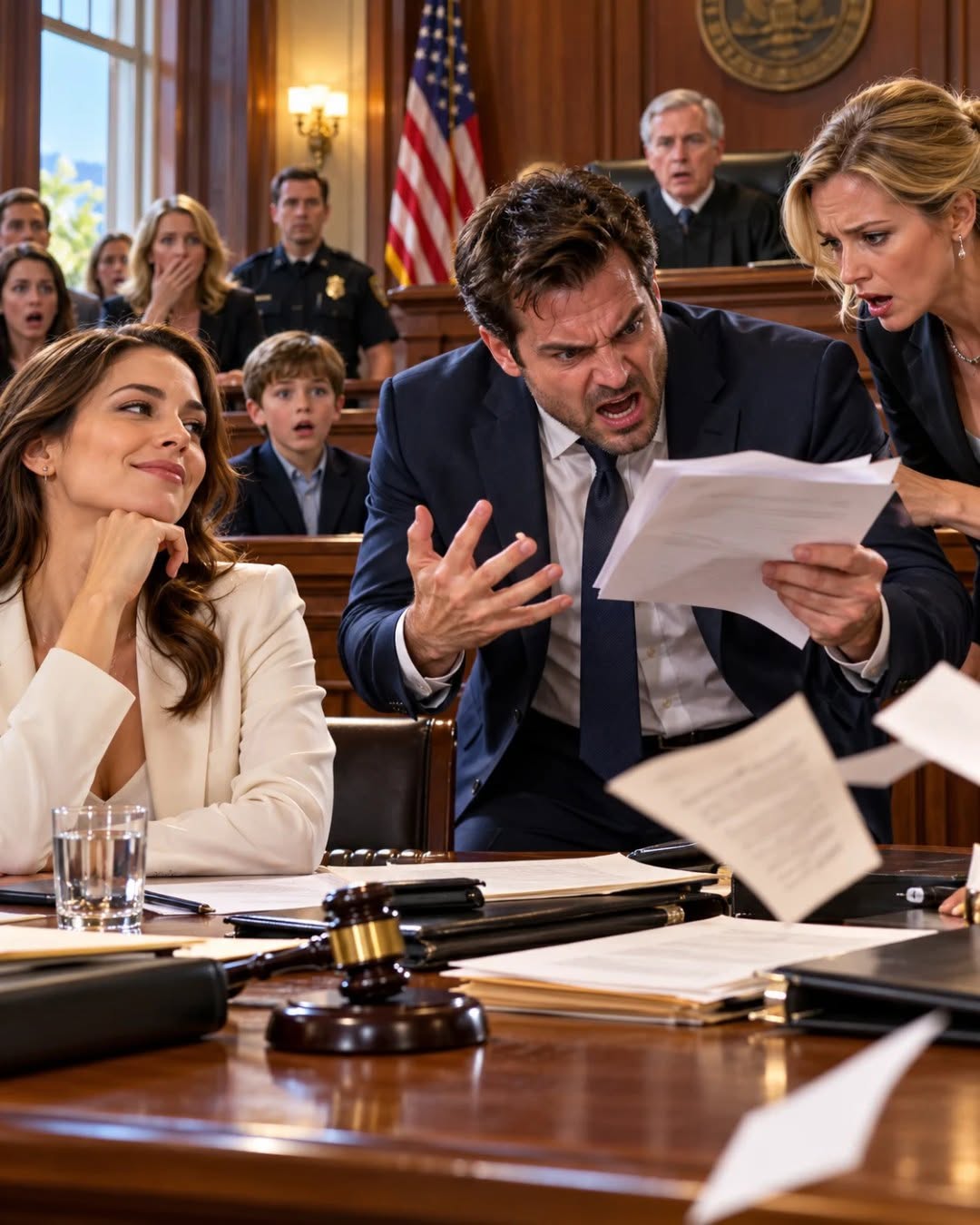
Chapter 3: The Shadow Ledger
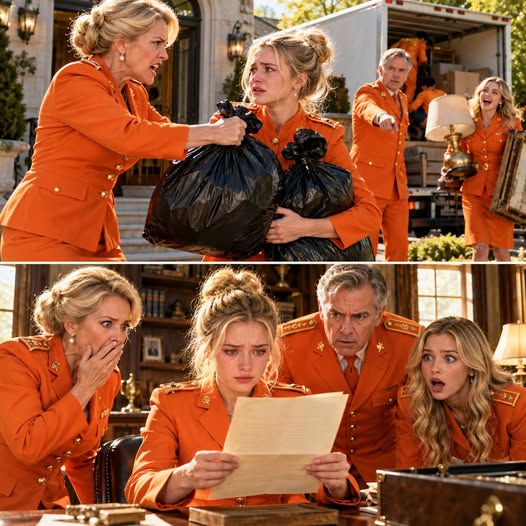
The smell of rain and wet asphalt blew in through the open front door, cutting through the heavy scent of funeral lilies.
Dad’s head snapped up.
The shame that had bent his spine moments earlier vanished, instantly replaced by the sharp, desperate cunning of a man whose financial throat was being squeezed.
“You can’t touch that loan,” Dad snarled, stepping between Evelyn and the table. “That was a private commercial agreement between my company and a secondary mezzanine lender in Columbus. It has nothing to do with Samuel’s estate.”
“It has everything to do with this estate, Richard,” Evelyn replied calmly. She adjusted her glasses, her finger tracing a highlighted paragraph on the second document. “On November twelfth, you filed a fraudulent affidavit of heirship with the Delaware County Recorder, swearing under penalty of perjury that Samuel Miller was deceased, that you were the sole surviving heir, and that the title to this parcel had vested in your name by operation of law.”
She looked up, meeting his eyes over the rims of her frames.
“Your father was still alive in Room 314 at Riverside Methodist when you recorded that document, Richard. He was breathing through an oxygen mask while your notary stamped a forged quitclaim deed.”
Mom stopped crying. Her hands dropped from her face, her eyes wide, staring at Dad in pure, unadulterated terror. “Richard? What did you do? You told me you just got an advance on the inheritance!”
“Shut up, Diane!” Dad shouted, rounding on her with a fury that made her cringe against the cabinet. “I had six hundred thousand dollars in commercial paper maturing on the first of the month! The bank was threatening to seize our equipment yards in Toledo! I did what I had to do to keep the roof over our heads!”
“Over *your* head, Dad,” Tessa said.
My sister walked into the dining room, her voice shaking with an anger I had never heard from her before. She wasn't looking at me with disgust anymore; she was looking at our parents as though she had just discovered they were strangers wearing familiar skin.
“You bought a Porsche in September,” Tessa said, her voice rising, cracking with betrayal. “You paid fifty thousand dollars for a VIP table at the country club gala last month! You told me business was booming! You told me you were giving me the master bedroom in this house because Grandpa wanted me to have a country retreat!”
“Tessa, sweetheart, please,” Mom pleaded, reaching for her younger daughter’s arm. “Your father was trying to protect our family’s image—”
“Don't touch me!” Tessa screamed, ripping her sleeve away from Mom’s grasp.
Tessa backed away, her chest heaving, tears finally spilling over her cheeks, smearing her expensive eyeliner. She turned toward me, her eyes darting between my faded flannel shirt and the heavy legal files on the table.
“He told me she stole from him,” Tessa whispered, pointing a trembling hand at me. “He told me Paige was an ungrateful parasite who manipulated an old man into giving her an allowance while he was working eighty hours a week to support us.”
“Your father never gave this house a single dollar, Tessa,” Evelyn stated quietly.
Evelyn reached into her portfolio one more time and pulled out a thick, cloth-bound ledger with marbled black-and-white covers—the exact kind of ledger Grandpa used to keep beside his chair in the study, tracking tomato yields and tractor parts with a blunt carpenter’s pencil.
She opened the ledger to the first page, turning it toward me.
“Look at this, Paige,” Evelyn said softly.
I walked around the table, my boots silent on the floorboards, and looked down at the ruled lines.
The entries were written in Grandpa’s unmistakable hand—neat, disciplined, and dated from January 2008 all the way to October 2024.
*JAN 15, 2008 — CASHIER’S CHECK #4012 — FIRST MERIT BANK: $1,450.00 (RICHARD LEASE DEFAULT)*
*FEB 15, 2008 — CASHIER’S CHECK #4098 — FIRST MERIT BANK: $1,450.00 (RICHARD LEASE DEFAULT)*
*MAR 15, 2008 — CASHIER’S CHECK #4182 — FIRST MERIT BANK: $1,450.00 (RICHARD LEASE DEFAULT)*
The dates stretched across seventeen years.
Every single month, like clockwork, Grandpa had purchased a cashier’s check and mailed it to a commercial collection agency in Cleveland.
“What is this?” I breathed, my fingers tracing the faded graphite on the page.
“When your father launched his first construction venture in 2006,” Evelyn explained, her voice heavy with forty years of sorrow, “he forged Samuel’s signature as a personal guarantor on a three-hundred-thousand-dollar commercial credit facility. When the venture collapsed, Richard walked away, leaving your grandfather legally liable for the entire balance.”
The air left my lungs in a sharp, burning hiss.
I remembered the winter when I was ten years old.
I remembered waking up to find ice on the inside of my bedroom windows because the fuel oil tank in the basement was nearly dry. I remembered Grandpa sitting at the kitchen table with an old wool sweater pulled tight over his chest, stirring a pot of navy bean soup, telling me that cold air built strong lungs and that a roaring fire in the woodstove was all two people needed.
He hadn't been poor.
Grandpa had spent seventeen years paying off his son’s forged debts so that the bank wouldn't put an execution lien on the house.
He had mended his own boots with shoe goo and dental floss. He had stretched his railroad pension until the edges were transparent. He had planted two acres of potatoes, squash, and green beans every single spring, canning them in glass jars in the cellar, so that we would never have to buy vegetables at the supermarket.
He had lived like a pauper in the home he built with his own two hands, all to ensure that when he finally closed his eyes for the last time, the house he left to me would have a clean, unbroken title.
“He paid off the entire note three months before he was diagnosed with pulmonary fibrosis, Paige,” Evelyn whispered, her eyes shining behind her lenses. “Every single dime. Three hundred and forty-two thousand dollars in principal and interest. He saved this home for you twice.”
I closed the marbled ledger, resting my palms flat against the rough cloth binding.
I looked at Dad.
The man who had stood on the porch twenty minutes ago, snapping his fingers in my face, handing me two black garbage bags, telling me that my life belonged in the trash.
“You knew,” I said.
My voice was dead-level, stripped of all emotion, carrying the concussive weight of seventeen years of cold mornings and patched coats.
“You knew he was paying your debt,” I whispered. “You knew he was eating soup made from ham bones while you were buying luxury cars and country club memberships. And the second his heart stopped beating, you came here with a moving truck to take the roof from over my head.”
Dad swallowed hard. He stepped back from the table, his eyes darting toward the front door, looking at the rain falling on his moving van.
“It doesn't matter what the old man wrote in that book, Paige,” Dad said, his voice tightening into a final, venomous hiss. “You think you’ve won? You think you’re going to sit in this house and play the proud heir?”
He pulled a folded legal carbon from his breast pocket and slapped it onto the dining room table with an ugly, triumphant grin.
“Look out the window, Evelyn,” Dad sneered. “The moving truck isn't the only vehicle coming down that road. Yesterday at midnight, I signed an emergency purchase contract with Apex Land Development. They’re buying this entire two-acre parcel for one point four million dollars to build a commercial logistics hub.”
Dad tapped the paper with his knuckle.
“I took a two-hundred-thousand-dollar non-refundable earnest deposit from their corporate counsel forty-eight hours ago. And under Section Twelve of that contract... if this property isn't delivered vacant by noon today, Apex has the contractual right to demolish the structures and bill the estate for the breach.”
---
Related Stories