Chapter 5: The Flag on the Quarterdeck
The late afternoon sun was setting over the Chesapeake Bay, casting long ribbons of copper and slate-blue across the flight deck of the carrier moored at Pier Twelve.
The wind had shifted from the east, bringing the clean, sharp smell of the open Atlantic across the naval station. The retirement crowds had long since dispersed, their cars gone from the parking lots, the festive banners taken down from the auditorium facade.
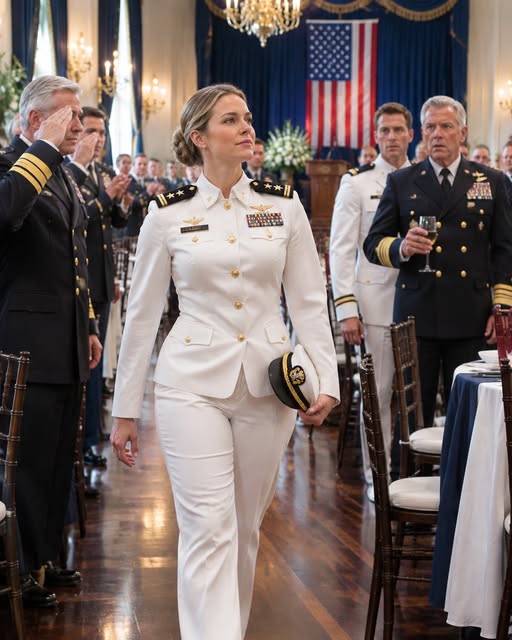
I stood on the quarterdeck of the carrier, my white cover tucked under my left arm, watching the evening colors ceremony.
A marine bugler played ""Taps"" from the flight deck above, the mournful notes carrying over the gray water, marking the conclusion of another operational day for the United States Navy.
Behind me, the sound of measured, hesitant footsteps approached across the non-skid deck.
Michael stopped three paces from my right shoulder.
He had changed out of his dress whites. He was wearing civilian clothes: a dark jacket, jeans, and work boots. His face was pale, his eyes swollen from hours of federal depositions in the base legal office, but his posture was different.
The hollow, borrowed swagger was gone.
He stood with his hands at his sides, looking out at the gray warships lined along the piers.
""The federal prosecutor agreed to deferred adjudication for me, Becca,"" Michael said softly, his voice scraping against the salt wind. ""Because I cooperated. Because I turned over the corporate emails and the bank routing slips before the grand jury convened.""
""I know,"" I replied, without turning my head. ""Admiral Vance signed off on the recommendation an hour ago.""
""I'm resigning my commission tomorrow morning,"" Michael said.
The sentence hung in the air between us, heavy and permanent.
""You don't have to resign, Michael,"" I said quietly. ""You could accept a transfer to surface logistics in San Diego. Work your way back through the line.""
Michael let out a short, self-deprecating laugh that broke into a quiet sigh.
""No, Becca. I do have to resign. I spent ten years pretending to be the officer Dad wanted me to be. I let him pull strings, I let him fix my reviews, and I let him tell me I was a leader when I was terrified every time we left the harbor.""
He turned his head to look at me, his hazel eyes clear and direct for the first time since we were children.
""I was jealous of you, Becca,"" he admitted, the words raw and unshielded. ""Every time Dad dismissed you, every time he cropped you out of the family photos... I knew deep down that you were the one who had the real iron in this family. I let him do it because it made me feel safe.""
I turned to face my brother.
The wind caught the dark strands of his hair, whipping them across his forehead. In the fading light, he didn't look like the golden boy of the Hayes dynasty anymore. He looked like my brother—broken, stripped of his illusions, but standing on his own feet for the very first time.
""Where will you go, Michael?"" I asked.
""My wife's family has a commercial marine salvage business in Maine,"" he said. ""Small tugboats. Real work. Cold water and honest engines. I’m going to learn how to be a sailor from the bottom up, without anyone named Hayes making a phone call for me.""
He reached out, his hand open between us.
I didn't take his hand.
I stepped forward, wrapped my arms around his shoulders, and pulled him into a tight, quiet embrace.
Michael’s arms came around me, his forehead resting against the gold braid of my shoulder boards, his breath shaking against my uniform. We stood there for a long time on the deck of that great warship, letting fifteen years of silence, rivalry, and stolen pride dissolve into the salt air.
""Take care of yourself, Michael,"" I whispered into his ear.
""Yes, Admiral,"" he replied, a faint, genuine smile touching his mouth as he stepped back.
He turned and walked down the brow of the ship, his boots echoing rhythmically against the steel gangway until he reached the pier, disappearing into the twilight toward the main gate.
I walked to the edge of the flight deck, resting my hands on the cold safety netting overlooking the bay.
My driver, Chief Alvarez, appeared at the hatchway thirty feet away, holding my leather briefing briefcase and a priority courier folder.
""Admiral,"" Alvarez called out with professional respect. ""The transport jet to Andrews is fueled and waiting at the naval air station. The Chairman’s office confirmed your briefing at the White House is scheduled for seven-thirty tomorrow morning.""
""Thank you, Chief,"" I said. ""I'll be down in five minutes.""
Alvarez saluted, pulled the watertight door shut, and left me alone under the emerging stars.
I pulled my phone from my pocket.
There was one voice memo waiting in the voicemail box, recorded four hours ago from the Norfolk city jail’s intake phone.
My father’s voice.
I held the speaker to my ear.
The recording was twelve seconds long:
*""Rebecca. Harrison Vance tells me the federal magistrate is setting bail at two million dollars. They've frozen my bank accounts. Michael isn't answering his phone. I need you to call the district attorney. Tell them who you are. Tell them you're my daughter.""*
I listened to the recording twice.
The desperation, the cold entitlement, the absolute inability of a selfish man to understand that the world did not exist to serve his vanity.
I didn't call the district attorney.
I tapped the screen, selected the audio file, and hit *DELETE*.
The screen flashed once: *MESSAGE PERMANENTLY REMOVED.*
I slipped the phone back into my pocket, placed my white cover squarely on my head, and adjusted the visor to shade my eyes from the harbor lights.
I turned my back on the bay, walked through the steel hatchway, and headed toward the jet that was waiting to take me back to the Pentagon.
My father had erased my name from his ceremony.
He had spent thirty-five years trying to write a family history that was built on sand, favors, and lies.
He had believed that the Hayes legacy belonged to the son who wore the medals and the father who pulled the strings.
He had forgotten that the real power of an institution doesn't belong to the men who stand in the spotlight.
It belongs to the ones who keep the watch in the dark.
Related Stories