Chapter 4: The Family Wolverine
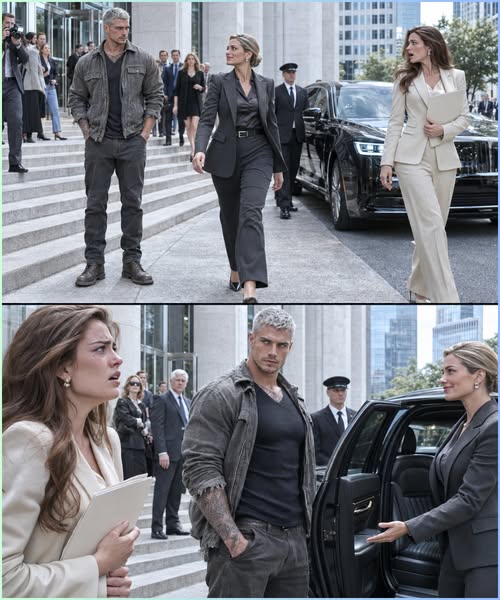
The headquarters of the Ohio Manufacturers Association sat four blocks away from the statehouse, an imposing brick-and-limestone structure where the state’s industrial power brokers had cut backroom deals for over a century.
By 2:15 PM, the second-floor press room was packed with fifty reporters, camera crews from three local television networks, and a dozen financial analysts clutching digital recorders.
Standing behind the wooden lectern was Thomas Lawson.
At fifty-eight, Michael’s uncle was a master of midwestern corporate theater. He wore a silver three-piece suit, an American flag pin on his lapel, and an expression of sorrowful, patriotic duty. Beside him stood his lead litigation attorney, Richard Vance—David Sterling’s older brother and the legal architect of the family's shadow investments.
“...and while my late father’s vision for Moraway was legendary,” Thomas was saying into the microphones, his voice amplified through the PA system, “we cannot allow an enterprise that employs four thousand Ohio workers to be handed over to an untested young man who has spent the last five years dodging administrative oversight in rural maintenance vans.”
Camera flashes strobed against the dark oak paneling.
“The board’s ratification this morning was premature,” Thomas continued, resting his palms on the podium. “We have filed an emergency petition in Franklin County Probate Court challenging the validity of the five-year covenant. My nephew, Michael Lawson, may carry the family name, but he lacks the fiduciary credentials, the executive background, and the moral stability required to lead a public company.”
Richard Vance stepped forward, holding a manila folder aloft for the cameras.
“Furthermore,” Vance declared, “we have documented evidence that during his tenure as a field technician in the south Columbus district, Michael Lawson engaged in systematic under-billing, diversion of corporate replacement parts, and unauthorized non-contract labor that cost Moraway shareholders tens of thousands of dollars in lost operating revenue.”
A murmur broke out among the business reporters.
*“Mr. Lawson!”* a reporter from the *Columbus Dispatch* shouted. *“Are you alleging criminal embezzlement against the new president?”*
“We are alleging gross operational negligence,” Thomas replied, a razor-thin smile touching his lips. “A man who can’t manage an eighty-nine-dollar repair ticket has no business managing a four-hundred-million-dollar balance sheet.”
The heavy double doors at the back of the press gallery swung open.
The room didn't go quiet all at once; the sound died in a rolling wave from back to front as heads turned, camera lenses swung around, and reporters scrambled out of the center aisle.
Michael walked in alone.
He wore no overcoat, no briefcase, and carried no papers. He walked down the center aisle with the slow, measured cadence of a man inspecting an assembly line. When he reached the front row of folding chairs, he stopped five feet from the elevated stage, looking up at his uncle.
Thomas’s voice faltered mid-sentence. His grip on the lectern tightened until his knuckles turned ivory.
“Michael,” Thomas said, trying to summon his booming executive resonance through the microphone. “This is a private press briefing for accredited media. You are out of order.”
Michael didn't look at the cameras. He didn't look at the flashing red tally lights of the television crews. He looked directly at Richard Vance.
“Mr. Vance,” Michael said, his voice quiet, conversational, yet carrying effortlessly across the silent room. “You mentioned systematic under-billing in the south Columbus sector.”
Richard Vance sneered, stepping up to the microphone. “The records speak for themselves, Mr. Lawson. You charged eighty-nine dollars on service calls where corporate protocol mandated a full four-hundred-dollar board replacement.”
“I did,” Michael said.
A collective intake of breath rustled through the press gallery.
“Do you know why, Mr. Vance?” Michael asked, stepping forward, resting one hand on the edge of the wooden stage. “Because the control boards in our Series 4 washers weren’t failing. The solder joints on the secondary relay were manufactured with an eight-percent zinc impurity to save forty cents per unit during your 2021 overseas procurement initiative.”
Thomas’s face went from pale to an ugly, mottled crimson.
“The boards were designed to fail after eighteen months,” Michael continued, his tone clinical, surgical, completely unbothered by the media storm around him. “Right after the factory warranty expired. You knew about the defect. My uncle Thomas signed the internal engineering waiver in March of that year, classifying the premature failure as ‘routine consumer wear.’ And then your private logistics company—Sterling & Vance Freight—secured the exclusive domestic distribution contract for the replacement parts at a three-hundred-percent markup.”
*“Is that true, Mr. Lawson?!”* the *Dispatch* reporter yelled, shoving a microphone toward the stage. *“Was there a planned obsolescence waiver?!”*
“That is proprietary engineering data!” Thomas shouted, his composure shattering, slamming his fist onto the podium. “This is slander! You have no proof of those specifications!”
Michael reached into his breast pocket and pulled out a small, metallic silver thumb drive.
He held it up between two fingers for the cameras to see.
“On this drive is the complete telemetry archive from four hundred and twelve service calls I conducted personally over the last twenty-four months,” Michael said. “Every faulty board. Every serial number. Every metallurgical lab report from the Ohio State engineering department. And attached as Exhibit D is the wire transfer log showing forty-two thousand dollars in monthly kickbacks routed from Sterling & Vance directly into your personal trust account in the Cayman Islands.”
Thomas’s knees visibly buckled. He reached out to grab Richard Vance’s shoulder to steady himself, knocking the microphone off its stand with an ear-splitting screech of audio feedback.
Michael turned toward the back of the room.
Walking through the rear entrance, accompanied by four uniformed state troopers, was Special Agent Douglas from the Ohio Attorney General’s Financial Crimes Division.
“Thomas Lawson,” Agent Douglas announced, his voice booming over the chaos of the room. “Richard Vance. We have an active search warrant for your offices and an administrative freeze order signed twenty minutes ago by Judge Miller. Step away from the stage.”
Reporters surged forward, shouting questions, camera lenses practically hitting Thomas’s nose as the state troopers moved in with handcuffs.
Michael stood in the center of the aisle, watching his uncle being escorted through the side exit, his face an impenetrable mask of granite.
Behind him, Harrington tapped his shoulder.
“Well played, Michael,” Harrington murmured, adjusting his silk tie. “The board won’t have to vote on Thomas’s removal now. The state will take care of it for us.”
“There’s one more thing, Arthur,” Michael said, turning toward the door.
“What’s that?”
“The Upper Arlington house,” Michael said, his voice dropping into a register of quiet, aching sorrow. “Call the broker. Put it on the market tonight.”
Harrington hesitated. “Are you sure, Michael? You spent three years planning that home.”
Michael looked down at his rough hands, the scars on his knuckles catching the dim light of the hall.
“A house is just lumber and brick, Arthur,” Michael said softly. “It doesn’t mean anything if the foundation was bought on a lie.”
---
Related Stories