Chapter 2: The View from the Corner Office
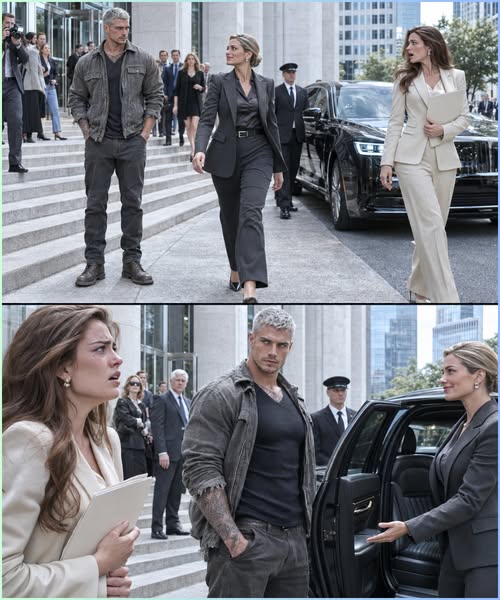
The executive floor of the Moraway Tower in downtown Columbus did not smell of burnt wiring harnesses or dirty machine oil. It smelled of polished Peruvian mahogany, high-grade linen paper, and twenty-thousand-dollar HVAC filtration systems.
Michael stood at the floor-to-ceiling glass wall of the corner office on the forty-second floor. Below him, the Scioto River cut through the city like a ribbon of gray steel. Behind him, on a long glass table, sat three silver trays of untouched pastries, two crystal carafes of ice water, and a leather binder containing the operational audit of three manufacturing plants in Ohio, Indiana, and Michigan.
The heavy mahogany double doors clicked open.
Arthur Harrington, the silver-haired attorney who had spent forty years shielding Arthur Lawson from hostile corporate takeovers, walked in. He was seventy-one, carried a slight limp from a tennis injury, and possessed eyes as sharp and unsentimental as a coroner’s scalpel.
“The board ratified the voting structure without a single dissenting vote,” Harrington said, tossing a gold Montblanc pen onto the blotter. “They were terrified your uncle Thomas would make a play for the restructuring capital, but your grandfather’s five-year field covenant locked him out entirely. You’re in the driver’s seat, Michael.”
Michael didn’t turn from the window. “How bad are the regional numbers?”
Harrington paused, pouring himself a glass of water. “You’ve spent five years in the field. You know how bad they are. Thomas has been squeezing the service division to inflate quarterly profit margins before the private equity tender. He cut the technician training budget by forty percent, doubled the markup on replacement control boards, and outsourced the customer support desks to a third-party contractor in Dallas.”
Michael turned around slowly.
He had changed out of the gray jacket. He was wearing an Italian wool suit that Harrington’s office had arranged, midnight blue, perfectly tailored to his broad shoulders. But his hands—rough, lined with small white scars across the knuckles from slipping wrenches and sharp sheet-metal edges—looked entirely foreign resting against the tailored wool.
“They’re charging four hundred dollars for forty-dollar relays,” Michael said, his voice cold.
“They’re making twenty-eight percent net margins on distress calls,” Harrington countered. “Thomas calls it ‘optimizing aftermarket revenue.’ The institutional shareholders love it.”
“It’s predatory,” Michael said. “Mrs. Davidson on the south side was quoted four hundred dollars for an entire control board when the harness clip was just loose. That’s not optimization. That’s theft under color of a warranty label.”
Harrington studied the young man standing behind the desk. A faint, approving smile tugged at the corner of the lawyer's mouth. “Your grandfather used to say the exact same thing. He told the board in ninety-eight that an appliance company that relies on broken promises to make its quarterly bonus isn’t an engineering firm—it’s an organized crime syndicate with a showroom.”
The desk intercom buzzed with a discreet chime.
Harrington pressed the button. “Yes, Evelyn?”
“Mr. Harrington,” the executive assistant’s voice came through, crisp and measured. “Mr. David Sterling from Sterling & Vance Capital is on line two. He says he has an urgent commercial property acquisition matter regarding the Moraway logistics hub in Hilliard.”
Michael’s jaw set into iron.
Harrington glanced at Michael. “David Sterling. The junior partner who’s been sniffing around our real estate holdings for six months. Do you want me to take it?”
“Put him on speaker,” Michael said.
Harrington touched the screen.
*“Harrington?”* David Sterling’s voice burst into the room, smooth, confident, dripping with the casual arrogance of a private equity climber who believed capital could bully legacy. *“Glad I caught you. Look, I know your board is going through leadership transitions today with the old man’s trust, but my group needs an answer on the Hilliard distribution warehouse. We have an institutional buyer ready to close at thirty-two million, provided the leaseback terms are signed by five today.”*
Michael stepped closer to the speakerphone.
“The Hilliard warehouse isn’t for sale, Sterling.”
A brief, confused pause hung on the line.
*“Who’s this?”* David asked, his voice hardening slightly. *“I asked for Harrington.”*
“You’re speaking to Michael Lawson,” Michael said, his tone utterly flat. “President and Chief Executive of Moraway Appliances.”
Another silence stretched over the speaker. Longer this time. Three seconds. Five. Ten.
Then, David let out a tight, defensive chuckle. *“Lawson? Wait... Michael? As in Lisa’s... Michael?”*
“The very same,” Michael said.
*“Listen, Lawson,”* David said, his tone shifting into aggressive condescension, trying desperately to re-establish control. *“I don’t know what kind of family arrangement just handed you a title, but this is an eight-figure commercial transaction. You don’t blow up a thirty-two-million-dollar institutional deal because of personal friction. Lisa told me about the divorce. I sent a car for her this morning. We’re adults here. Business is business.”*
Michael leaned his hands on the mahogany desk, looking down at the speakerphone.
“You’re right, David. Business is business. Which is why you should check your private server. At eleven-fifteen this morning, Moraway’s treasury division exercised its secondary debt covenant against Sterling & Vance Capital. We bought your firm’s commercial mezzanine notes from First National Bank forty minutes ago.”
On the other end of the line, the background noise of David’s office—the murmur of analysts, the clicking of keyboards—seemed to die instantly.
*“You... you bought our notes?”* David’s voice lost its polished cadence, cracking down the center.
“You have three delinquent interest payments on your suburban retail portfolio,” Michael continued, reading the figures from the screen with the ruthless precision of a bookkeeper. “Total outstanding liability: fourteen million, two hundred thousand dollars. Under paragraph seven of the deed of trust, Moraway is accelerating the principal balance.”
*“Lawson, you can’t do that! That requires a ninety-day cure notice!”*
“Not when the managing partner is under active investigation for industrial insider trading regarding Moraway’s commercial logistics leases,” Michael said softly. “You used Lisa’s personal email account to scrape internal shipping forecasts from our regional servers three weeks ago, David. Did you think our digital security team didn’t trace the IP address back to your penthouse in Short North?”
The line went completely, terrifyingly silent.
“You have until four o’clock to surrender your building keys to Harrington’s office,” Michael said. “Have a pleasant afternoon.”
Michael tapped the red icon, cutting the connection.
Harrington let out a slow, appreciative breath, taking off his gold-rimmed reading glasses. “Ruthless, Michael. Very clean. But you know this is going to detonate in the press within twenty-four hours.”
“Let it detonate,” Michael said, walking back to the window.
Down on the pavement, four hundred feet below, a sleek silver Porsche was parked crookedly across the yellow loading zone of the Moraway Tower. The passenger door opened, and a woman in a beige coat stepped out onto the sidewalk, looking frantically up at the towering glass spire.
Lisa had arrived.
---
Related Stories