Chapter 3: The Cold Fire
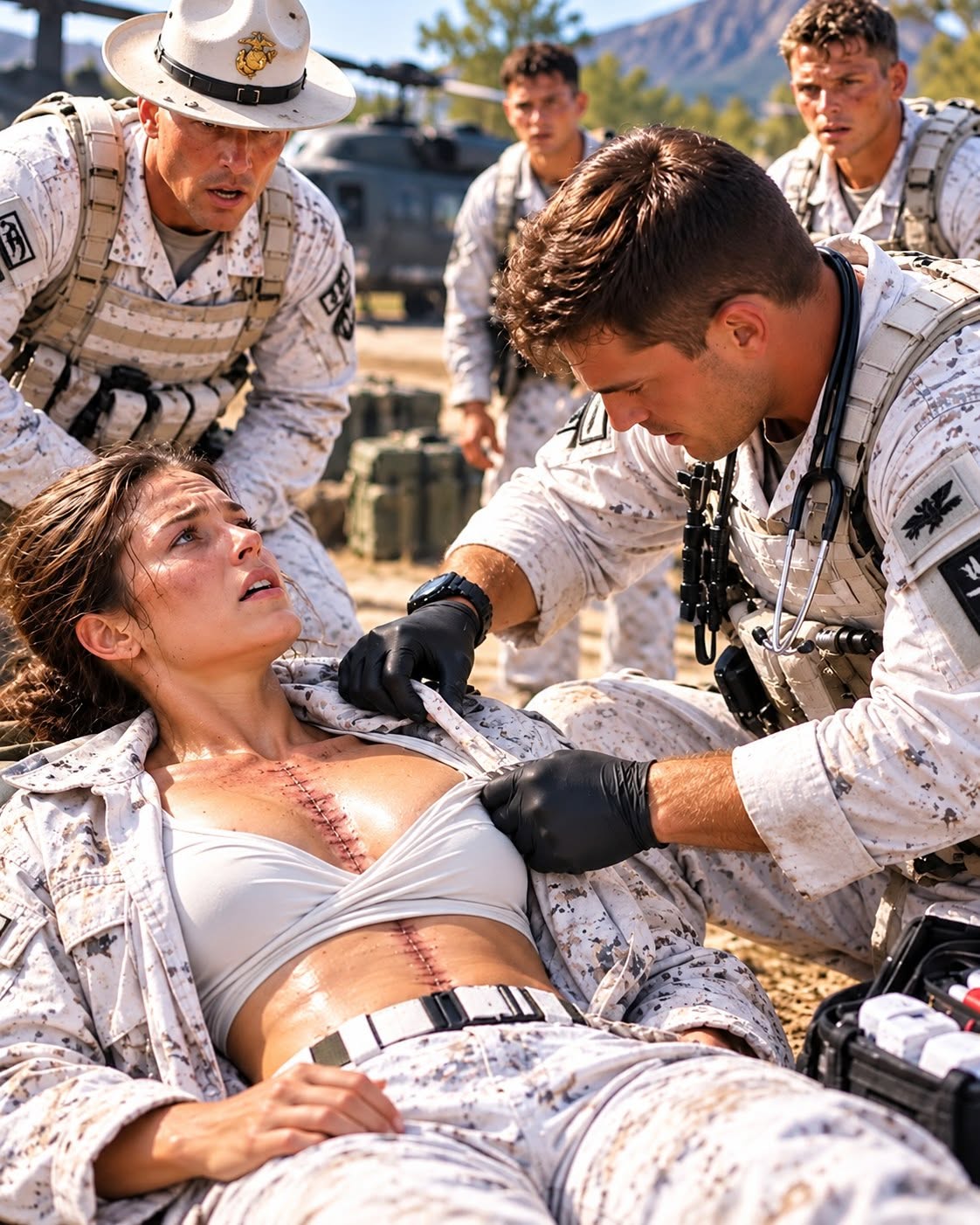
The rain started around noon, drumming a steady, heavy cadence against the high wire-reinforced glass of the hospital window.
Captain Lin had left an hour earlier to deliver her preliminary report to the brigade surgeon, leaving a lone military police guard stationed in the corridor outside my door. The private room was quiet, save for the rhythmic hiss of the IV line and the distant, muffled calls of nurses down the hall.
Cole Vega had not left.
He sat on the metal folding chair in the far corner of the room, his long legs stretched out in front of him, his arms crossed over his chest. His combat uniform was drying into stiff, salt-stained folds around his shoulders. He hadn't touched the styrofoam cup of black coffee he had fetched from the waiting room three hours ago.
“You knew,” Vega said. His voice was barely a murmur, blending into the sound of the rain against the glass. “The whole time I was riding you on the track. The whole time I was dumping your gear into the red mud at zero-dark-thirty. You knew who I was.”
I looked at the water tracking down the windowpane. “My brother had your picture on the sun visor of his truck, Sergeant. You, him, and Sergeant First Class Miller standing in front of an overturned Bradley in the Euphrates valley. He called you the only squad leader in the Third Division who knew how to read a map without an officer holding your hand.”
Vega let out a short, jagged breath that sounded like dry gravel sliding down a chute. He leaned forward, resting his elbows on his knees, burying his face in his calloused palms.
“Jesse was the best scout I ever had,” Vega whispered into his hands. “He could spot a pressure-plate wire under three inches of talcum dust before the lead tire even cleared the berm. When we were in the desert, he kept my head on straight. And then we came back stateside, and I let him walk into a meat grinder.”
“It wasn't an accident, was it?” I asked, the words falling between us like cold lead.
Vega lifted his head slowly. The shadows beneath his eyes looked like dark bruises carved into his olive skin. “What did your mother tell you?”
“The Army told my mother that Jesse mishandled an explosive breach canister during a night live-fire exercise at Fort Irwin,” I said, every syllable tasting like bitter ash. “They said he failed to clear the blast zone before setting the remote detonator. They denied her the full survivor benefit plan because they ruled it operator negligence. My father died of a heart attack six months later believing his only son was a reckless amateur who got himself killed in the desert.”
“Jesse didn't mishandle that charge,” Vega said, his voice dropping into a register so dark, so cold, that the hair on my arms stood up.
He stood up from the metal chair, walked over to the side of my bed, and reached for the hem of his combat t-shirt. With a single, deliberate motion, he pulled the olive-drab fabric up over his ribs.
Along his left flank, stretching from his armpit down to his hip bone, was a wide, jagged scar tissue furrow—the unmistakable signature of high-velocity tungsten shrapnel.
“We were evaluating a prototype remote-breaching system manufactured by Apex Defense Systems,” Vega said, pulling his shirt back down. “The contractor was testing a proprietary chemical delay fuse that had failed two bench tests in Maryland the month before. But the company had a thirty-million-dollar production deadline, and the division commander wanted the field evaluation signed off before the fiscal year closed.”
Vega’s hands clenched into fists at his sides.
“Jesse was the team breacher. When the system armed on the bunker wall, the timer malfunctioned and initiated an immediate internal burn. There was no three-minute delay. There were six seconds. Jesse didn't run. He yelled for the squad to hit the ditch, threw himself against the breach frame, and held the blast shield in place with his own body so the back-blast wouldn't incinerate eight men huddled in the trench behind him.”
My chest tightened so hard I couldn't draw breath. The monitor beside my bed gave a single, warning chirp as my pulse jumped.
“He saved you,” I whispered.
“He saved all of us,” Vega replied, his voice cracking slightly before he forced it back into iron. “I took thirty pieces of steel in my side, but I walked away because your brother took the direct concussive wavefront. And forty-eight hours later, while I was sitting in an ICU bed at Fort Irwin, Colonel Marcus Vance walked into my room with two civilian lawyers from Apex Defense.”
Vega leaned down, his face inches from mine, his eyes burning with an agony that had spent two years rotting behind a drill instructor's scowl.
“Vance told me that if the official report cited equipment failure, the entire division modernization program would be halted by Congress. He told me that Jesse was already dead, but the eight men who survived still had careers, pensions, and families to feed. He gave me an ultimatum: sign the report citing operator error, or face an immediate reduction in rank and a dishonorable discharge for supervisory negligence.”
“And you signed it,” I said, the cold truth settling into the marrow of my bones.
“I signed it,” Vega confessed, the words tearing from his throat like torn metal. “I took the coward’s way out. They transferred me to a training brigade here at Moore, tucked me away in an infantry selection battalion, and told me to keep my head down until my twenty-year retirement mark.”
He looked down at the bandage covering my ribs.
“Two years I’ve lived with that signature, Rowan. Every single day I wake up and see Jesse’s face in the mirror. And then six weeks ago, you walked off that cattle truck with his eyes, carrying his name on your chest.”
“You thought I was here for revenge,” I realized, the pieces finally assembling themselves in the dark.
“I thought you were a ghost sent to collect an unpaid debt,” Vega said softly. “I rode you because I wanted you to quit. I thought if I broke you on the field, you’d pack your bags, go back home, and stay alive. I couldn't watch another Mercer die in front of me.”
The door to the corridor clicked open with a sharp, heavy thud.
Standing in the entryway, flanked by two armed military police officers and the installation provost marshal, was Colonel Marcus Vance. He wore his dress uniform, his silver eagles gleaming on his collar, his silver hair immaculate.
He held a red-bordered folder under his arm, his cold gray eyes sweeping across the hospital room before coming to rest on my face.
“Specialist Mercer,” Colonel Vance announced, his voice smooth, clinical, and completely devoid of warmth. “Pursuant to an emergency directive issued by the commanding general an hour ago, your selection orders are formally revoked. You are remanded into immediate pretrial custody under the Uniform Code of Military Justice for fraudulent enlistment and the unauthorized possession of classified materials.”
---
Related Stories