Chapter 4: Bay Four
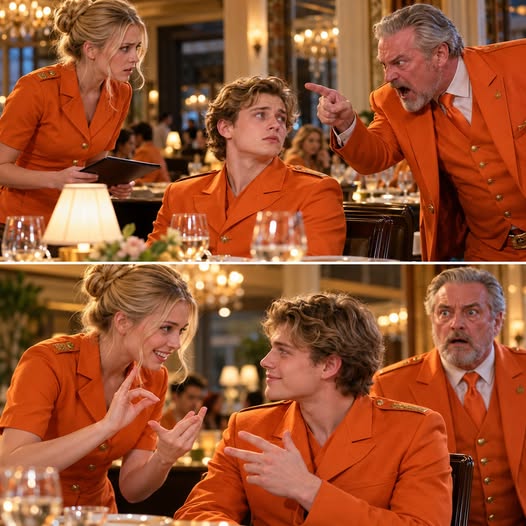
The industrial district of Delray at midnight looked like the end of the world.
Low, squat brick factories with boarded windows sat beside gravel yards piled high with crushed limestone, rusted shipping containers, and abandoned train cars half-buried in drifts of white snow. The air smelled of coal dust, brine from the river, and the bitter sulfur of the Zug Island steel mills two miles downstream.
West Fort Street was empty. Not even the city plows had made it down this far.
I killed my headlights three blocks early, creeping along the curb in second gear, my tires crunching through the unplowed slush until the rusted chain-link perimeter of 4120 came into view through the snow.
The gate was secured with a heavy iron chain, but someone had cut through the secondary padlock on the pedestrian door. The chain hung slack, looped around an iron post to look intact from the street.
I parked my Civic behind a row of rusted semi-trailers, cut the engine, and stepped out into the freezing wind.
My boots sank to the ankles in snow. I reached inside my coat, making sure the iron tire iron I had pulled from my trunk was tucked firmly into the deep waistband of my jeans, its cold metal biting through my flannel shirt.
I pushed through the pedestrian gate.
The yard was a maze of dead machinery: three flatbed trailers on flat tires, an old diesel crane with a broken boom, and a long row of dark, prefabricated corrugated steel bays.
Bay Four sat at the far eastern corner of the lot, backing directly up against the frozen banks of a drainage canal that led out to the Rouge River.
A single, forty-watt incandescent bulb burned over the small steel side door.
Beside the door frame was an electronic keypad, its red LED glowing like a tiny ember in the dark.
I pulled Adrian’s scrap of napkin from my pocket, squinting through the falling snow at the eight-digit number scrawled beneath the street address:
*1-0-2-8-1-9-9-9.*
October 28, 1999.
His mother’s birthday.
I pressed the rubber buttons on the pad. Each one gave a soft, muted chirp.
*1... 0... 2... 8... 1... 9... 9... 9.*
The magnetic lock released with a heavy, pneumatic *CLACK*.
I grabbed the brass handle, pulled the heavy door open four inches, and slipped inside, pulling it shut behind me until the latch clicked back into the strike plate.
The silence inside Bay Four was absolute.
It wasn't a warehouse.
It was an architectural studio.
The cavernous, high-ceilinged room was heated by two industrial propane blowers humming quietly in the rafters, keeping the space at a steady sixty-five degrees. Overhead, rows of bright, white daylight-balanced LEDs illuminated drafting tables, digital workstations, and four massive, eight-foot-long wooden tables covered in topographical maps and architectural scale models of the Detroit riverfront.
The walls weren't bare corrugated iron; they were lined with floor-to-ceiling cork boards pinned with thousands of blueprints, environmental permits, port authority docking charters, and corporate incorporation filings.
In the center of the room, standing beside a drafting table covered in handwritten legal ledgers, was Adrian.
He had stripped off his overcoat and his heavy sweater. He wore a simple gray long-sleeve henley, his sleeves pushed up to his forearms, revealing the pale, knotted scar tissue that stretched from his left wrist all the way past his elbow—burn scars that had healed unevenly over fourteen years.
He didn't jump when I entered.
He had placed a small, wide-angle convex mirror on the corner of his drafting table, tilted precisely toward the entrance. He had seen my reflection the second the door cracked.
He turned slowly, setting a digital caliper down on a set of blueprints.
He didn't look surprised to see me. He looked... relieved. The tense, rigid posture he had held at Table Four was completely gone, replaced by a quiet, focused intensity that made the room feel smaller.
He lifted his hands, his fingers moving in the bright white light.
*“Did Frank follow you?”*
I shook my head, walking toward the table, unzipping my heavy coat. “No. He was waiting at my car behind the restaurant. He offered me five thousand dollars to sign an affidavit saying you were psychotic.”
Adrian let out a short, silent breath through his nose—a dry, bitter acknowledgement.
*“Five thousand,”* he signed, his lips twisting into a faint grimace. *“My father is getting cheap. In twenty-twenty, he paid my cousin thirty grand to tell the probate board I threw a chair through a window.”*
He picked up a clean legal pad, grabbed a ballpoint pen, and wrote in clean, rapid block print:
*THANK YOU FOR COMING, TESS.*
I looked down at the writing, then up at his face.
“Why did you sign to me tonight?” I signed back, my hands moving with deliberate clarity. “You knew the evaluator was there. You knew what your father was doing. You’ve kept your mouth shut for fourteen years—why blow your cover to a waitress at Alder House?”
Adrian looked at my hands.
Then he reached across the table, picked up a thin, manila personnel folder from a cardboard box on the floor, and opened it.
Taped to the inside cover was a copy of my employment application from four years ago. Beside it was an old, black-and-white photocopy of an obituary from the *Detroit Free Press*, dated six years ago:
*OWEN CAMPBELL, 14. SURVIVED BY HIS SISTER, TESS.*
Beneath the obituary was a handwritten note in a woman’s elegant, cursive hand:
*“Owen’s trust fund for his heart medication was established by Julianna Rourke through the Children’s Hospital Foundation in 2010. Do not let Vincent audit this account.”*
My breath seized in my throat.
The room seemed to spin.
“Julianna?” I whispered, the word tearing out of my mouth before I could catch it. “Your mother paid for Owen’s medication?”
Adrian nodded slowly.
He stepped around the drafting table, stopping three feet from me. His gray eyes were dark with an emotion that no amount of silence could hide.
He lifted his hands, his signs deliberate, measured, every movement carrying the weight of fourteen years of grief.
*“My mother started the pediatric fund the year after the lake house caught fire,”* he signed. *“She knew Vincent was skimming from the transport union’s healthcare reserves. She set up six private medical endowments under maiden-name accounts before she tried to file for divorce.”*
Adrian looked toward the back of the bay, where a heavy, fireproof safe sat bolted to the concrete floor beneath an industrial winch.
*“My mother was leaving him, Tess,”* Adrian signed, his fingers tightening with a fierce, quiet rage that made the tendons in his neck pull taut. *“She had the forensic audits. She had the wire manifests showing how Vincent was laundering offshore money through the Canadian ferry routes. She took the papers to our lake house in Charlevoix to meet a federal prosecutor.”*
He swallowed, his throat working against the pale scar tissue on his neck.
*“Vincent didn't plant a bomb,”* Adrian signed. *“He shut off the master gas valve, locked the heavy iron storm doors from the outside while we were sleeping in the lower suite, and threw an ignition flare through the laundry vent. I broke through the cellar window with an iron firewood poker. I dragged my mother to the glass, but the frame was too narrow. She couldn't fit. She pushed me out onto the snow and told me to run.”*
A single tear tracked down the edge of his jaw, silent, unchecked.
*“When the fire department arrived, Vincent was standing on the lawn with his arm in a sling, weeping for the cameras,”* Adrian signed. *“He looked down at me in the back of the ambulance, leaned into my ear, and whispered: ‘You’re a clever boy, Adrian. But if you ever tell anyone how that door was locked, I’ll tell the state police that you were playing with matches in the basement.’”*
Adrian took a deep, shuddering breath, pulling his shoulders back.
*“I stopped speaking that night. If I didn't speak, I couldn't be forced to lie under oath. For fourteen years, I let him think the concussive blast took my mind along with my hearing. I let him think I was an idiot who couldn't balance a checkbook.”*
He turned toward the walls lined with blueprints and legal files.
*“While he was building his empire on blood and bribes, I was reading his master ledgers every night from the guest house terminal,”* Adrian signed, his eyes flashing with lethal clarity. *“I hold the digital encryption keys to every bank account, every dummy corporation, and every corrupt political contract Vincent Rourke has signed since nineteen-ninety-nine.”*
He picked up a heavy, brass-bound USB drive from the drafting table and held it out to me.
*“Everything is on here,”* he signed. *“The probate hearing is at ten tomorrow morning. If I walk into that courtroom alone with this drive, Vincent’s security will intercept me in the rotunda and claim I stole corporate property. But if you walk into that courtroom with Dr. Aris... if you take the stand as an independent witness and translate my sworn deposition in open court under federal protection...”*
He paused, his hands hovering in the warm air between us.
*“We take the company away from him, Tess. We take the docks. We take the money. And we put Vincent Rourke in a federal penitentiary for the rest of his life.”*
I looked at the brass drive resting in his palm.
I thought about the five thousand dollars sitting on the front seat of my car in the snow.
I thought about Owen lying in that hospital bed six years ago, his small chest struggling for every breath, kept alive for two extra years because a woman named Julianna Rourke had quietly paid the pharmacy bills while her own life was falling apart.
I reached out, closed my fingers around the cold brass of the drive, and looked straight into Adrian’s gray eyes.
“What time do we leave?” I signed.
---
Related Stories