Chapter 4: The Shadow in the Anteroom
The conference room adjacent to the commander’s suite smelled of damp wool coats, wet umbrella fabric, and the sharp, chemical tang of expensive cologne.
Senator James Crawford sat at the center of the mahogany conference table, his cashmere overcoat draped neatly over the back of his chair.
He was seventy-nine years old, with perfectly parted silver hair, manicured fingernails, and the pale, unblemished skin of a man who had spent four decades trading defense appropriations for campaign donations in air-conditioned committee rooms.
Beside him sat a younger man in a dark three-piece suit carrying a heavy leather briefcase—his personal counsel.
When the heavy oak door opened and I walked in behind General Vance, Senator Crawford didn't stand up.
His eyes swept over my church shoes, my gray coat, and finally settled on the small, tarnished brass crest pinned to my collar.
His hand paused against the gold fountain pen he was twirling between two fingers.
Just for half a second.
A tiny, involuntary tremor crossed his mouth—the look of an old fox who has caught the scent of a hound he thought he had drowned forty years ago in a muddy creek.
""Nathan,"" Crawford began, his voice carrying the deep, practiced resonance of the Senate floor. ""I thought this was a private executive review regarding your nomination for the third star.""
""This is private, Senator,"" General Vance said, remaining standing at the head of the table. He didn't offer a handshake. He didn't motion to the empty leather chairs. ""And this is Captain Quinn Braddock. United States Army Nurse Corps, retired.""
Crawford let out a short, nasal chuckle, looking down at his yellow legal pad. ""Yes. I believe I remember the name from the medical casualty reports. A very dedicated officer during a difficult period in the division's history.""
""You remember more than the name, James,"" I said, walking to the table and pulling out a heavy wooden chair without waiting for an invitation.
I sat down, setting my black purse squarely on the polished mahogany.
""Captain Braddock,"" Crawford’s counsel cut in smoothly, adjusting his wire-rim glasses. ""This is an official administrative inquiry authorized by the Armed Services Committee. While we appreciate your historical service, non-official civilians are not cleared for—""
""Shut your mouth, son,"" I told the lawyer, my voice flat as an iron skillet. ""The men I took orders from were dead before you were an itch in your daddy's trousers. Let the senator speak for himself.""
The lawyer flushed, looking toward Crawford for support.
Crawford didn't look at his counsel. His eyes were fixed on the tarnished brass bird on my collar, his fingers tightening around his fountain pen until the plastic groaned.
""Quinn,"" Crawford said softly, the senatorial cadence dropping into something older, thinner, and full of dust. ""You should have stayed in Clarksville. The past doesn't pay dividends. It only causes unnecessary friction for the living.""
""My brother David is dead, Senator,"" Nathan said, his voice dropping into that quiet, concussive register that silenced drill fields. ""And so is my grandfather. But you're still alive. And your signature is on the secondary flight manifest for the twenty-first of July, nineteen-sixty-eight.""
Crawford didn't flinch.
He was a professional politician; he had survived federal grand juries, press leaks, and four contested primary elections. He leaned back in his leather chair, crossing his legs with calm, infuriating deliberation.
""Nathaniel,"" Crawford sighed, as if explaining an elementary algebraic equation to a stubborn child. ""Vietnam was a logistical nightmare. Fifty thousand tons of material moved through the coastal corridors every month. Signatures were stamped by clerks. Manifests were batched. If some enterprising logistics sergeant diverted an inventory of medical surplus, it is a tragedy of wartime opportunism. It is not a matter for the modern Senate.""
""It wasn't an inventory of surplus, Senator,"" I said, opening my purse and laying the brittle yellow carbon sheet flat on the table between us.
The red grease pencil sketch glowed under the recessed LED spotlights.
""It was forty-two crates of clinical morphine,"" I said. ""Diverted from the 4th Infantry field hospital twelve hours before an NVA regiment overran the perimeter. My nurses were amputating legs with two ampoules of novocaine and half a bottle of rubbing alcohol because your logistics unit had emptied the pharmacy bunker to load a civilian cargo plane.""
Crawford's gaze fell to the paper.
He didn't touch it.
His eyes moved to the bottom right corner, where the faded purple ink stamp of the division logistics office sat beside a three-digit alphanumeric routing code:
*AUTH: CRAWFORD, J. — CAPT, ADJ-GEN.*
""A sixty-year-old carbon slip,"" Crawford’s lawyer scoffed, attempting a contemptuous smirk. ""Inadmissible under any federal evidentiary standard. The chain of custody is completely broken. It wouldn't survive ten minutes in an administrative hearing.""
""The carbon isn't the evidence, counsel,"" General Vance said.
He reached inside his service jacket, pulled out the letter from his uncle David, and laid it flat over the carbon.
""This is a dying declaration from a decorated combat officer, authenticated by the theater medical examiner’s handwriting analysis,"" Nathan said. ""And the banking records for the *Orient-Pacific Trading Corporation* in Zurich from nineteen-seventy to nineteen-eighty-four were declassified by the Swiss Banking Commission last October under the federal international tax compliance accords.""
Crawford went entirely still.
The polished, silver-haired statesman seemed to age ten years in five seconds.
The skin beneath his eyes went slack, turning a faint, grayish yellow that looked like dirty greasepaint.
""Zurich,"" Crawford whispered.
""Three million, four hundred thousand dollars,"" Nathan said, every syllable hitting the table like a lead ingot. ""Deposited into a blind testamentary trust in the name of James Crawford and Arthur Vance. The trust that funded your first congressional campaign in nineteen-eighty-two, Senator.""
Crawford slowly lowered his fountain pen onto the pad.
He didn't look at his lawyer. He didn't look at Nathan.
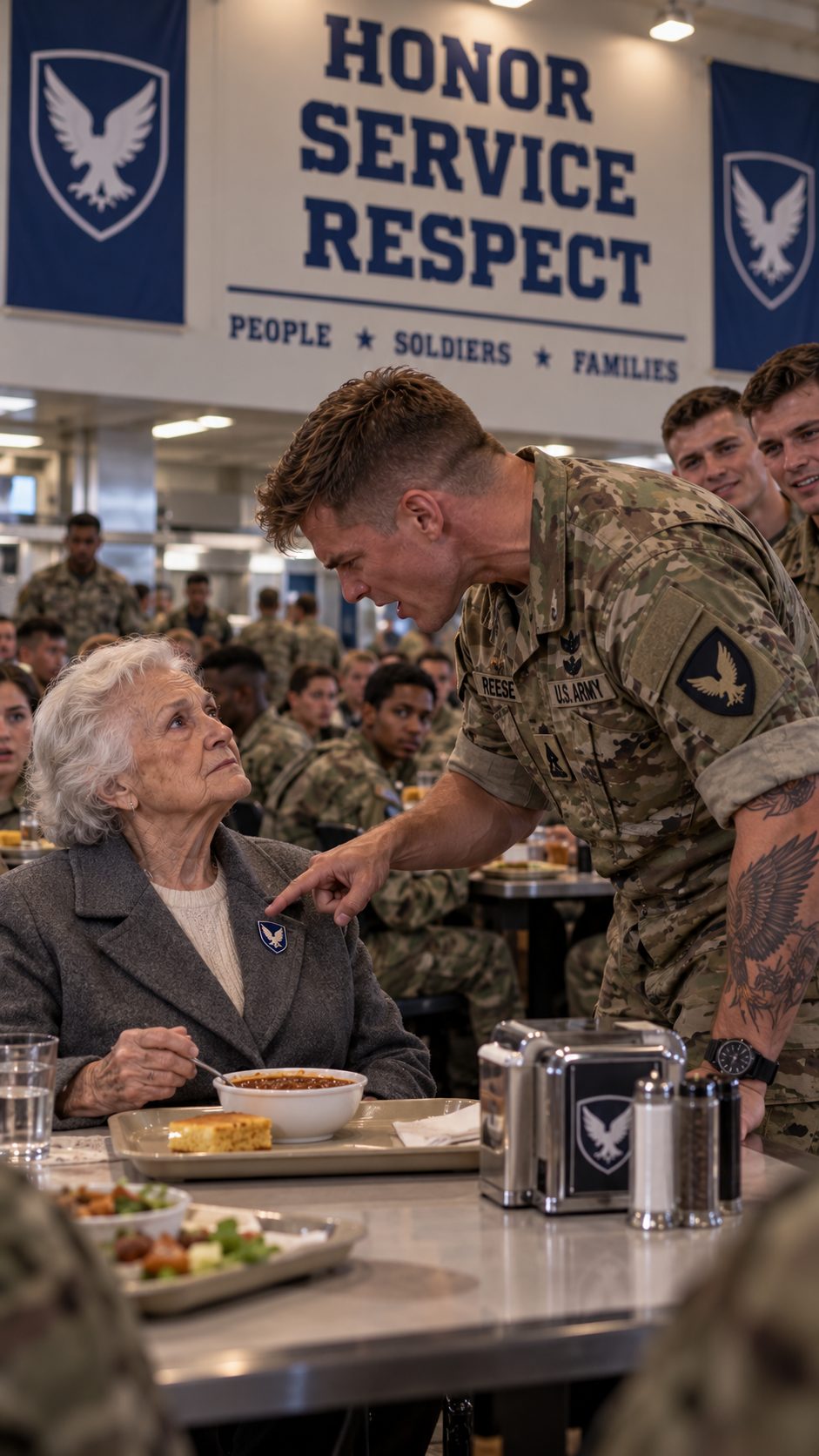
He looked at me—the old school nurse who had driven forty minutes in an old Buick to eat a five-dollar bowl of chili in an Army mess hall.
""Arthur promised me that notebook burned in the trench,"" Crawford rasped, his voice trembling with an old, poisonous exhaustion.
""Arthur lied to you, James,"" I told him gently. ""Just like he lied to his daughter, just like he lied to his grandson, and just like he lied to the boys who died at LZ English.""
The office was dead silent, save for the hum of the air conditioner.
Before Crawford could speak, the double doors behind us swung open with a sharp, heavy thud.
Standing in the doorway, wearing his service dress uniform with three rows of campaign ribbons and a freshly polished brass crest on his chest, was Staff Sergeant Reese.
Beside him stood two agents from the Federal Bureau of Investigation, wearing dark civilian suits and laminated badges clipped to their coat pockets.
""General Vance, sir,"" Reese announced, coming to a razor-sharp, textbook attention. ""The federal warrant detail has arrived from the Western District of Kentucky.""
---
Related Stories