Chapter 1: The Disconnection
“You always do this, Seraphina.”
My father’s voice rang through the receiver, dripping with the familiar, heavy condescension that had defined my entire existence.
“Dad, my arm is broken,” I repeated, my voice cracking under the weight of sheer disbelief. “I was hit by a truck. Noah is crying down the hall, and I can't even lift him out of his bassinet.”
“And Whitney is celebrating the most important night of her life,” my father countered sharply, refusing to yield an inch. “You couldn't have picked a more inconvenient time to have a reckless accident. If you'd paid attention to the road instead of wandering through your own daydream world like you always do, none of this would have happened.”
The accusation hit me harder than the impact of the delivery truck.
“I was stopped at a red light, Dad,” I whispered, tears blurring my vision and stinging the fresh stitches above my eye. “The truck's brakes failed.”
“Excuses don't fix dinner parties, Seraphina. We are hosting thirty people. Your mother is greeting guests, and Whitney is glowing. We cannot simply pack up and abandon our family obligations because you managed to scrape yourself up. Figure it out with the hospital staff. That's what nurses are for.”
A heavy, definitive click echoed in my ear.
He hung up.
I lowered the phone slowly, my left hand shaking so violently I nearly dropped the device against the metal side rail of the bed. The dial tone hummed a monotonous, empty tune, sealing the verdict. I was entirely alone.
Down the corridor, Noah's cries suddenly pitched higher, turning into a frantic, hungry wail that tore straight through my cracked ribs. The pain flared white-hot, stealing the breath from my lungs, but the emotional agony was infinitely worse. For twenty-eight years, I had accepted that I was the background character in my family’s grand production—the dutiful, quiet daughter who worked, studied, and never made a fuss so Whitney could take the spotlight.
I had thought having a baby might change that. I had foolishly believed that becoming a grandfather would soften my father's heart, that blood and a tiny helpless infant would pierce through the armor of their obsession with Whitney’s perfection.
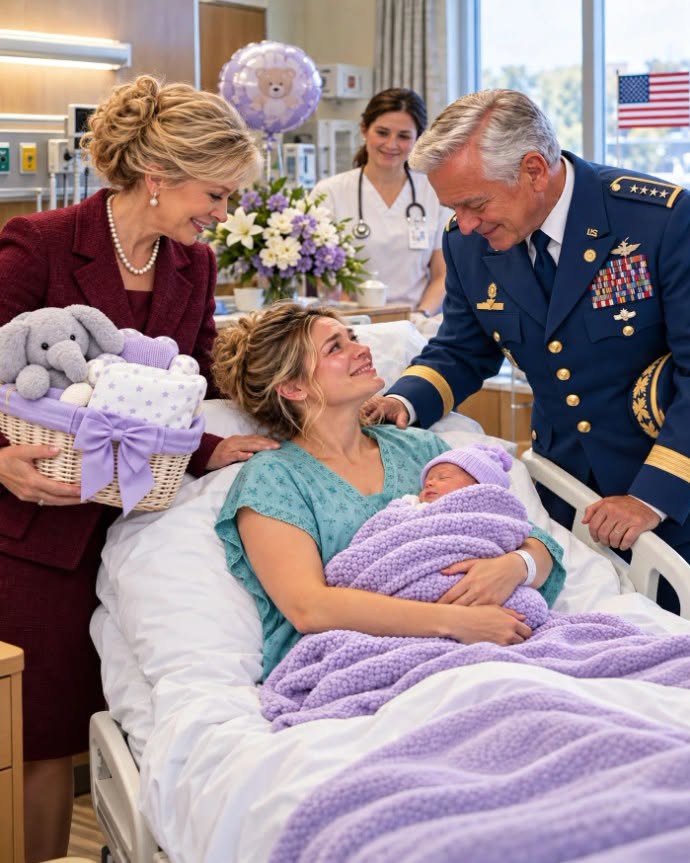
Instead, I was lying in a county hospital bed at eleven o'clock at night, abandoned because my trauma inconvenienced a catered engagement party.
A gentle knock sounded at my open door.
A nurse in pale blue scrubs stepped inside, her face a mask of exhausted sympathy. “Ms. Carter? I heard your baby monitor. He's still quite upset. Would you like me to bring him in and try to prop him near you so you can feed him?”
“I... I don't think I can manage it,” I choked out, a sob finally breaking free. “My ribs... if he squirms or kicks against me, I won't be able to hold him. I'm so scared I'll drop him.”
“Let me check with the charge nurse,” she said softly, stepping toward me to check my IV line. “Maybe we can arrange for someone from the nursery to keep him for the rest of the night, and you can pump—oh, wait, your right arm is immobilized. Let me see what we can do.”
She hurried out, leaving me in the dim, sterile quiet of the room.
I stared up at the ceiling tiles, counting the little square holes to keep from screaming. My father's words echoed in my head: *Figure it out... that's what nurses are for.* He didn't care if my son was fed, if my bones knit properly, or if I bled out quietly in a corner, as long as Whitney didn't have to field a single question about where her older sister was.
Then, the heavy hospital doors at the end of the north wing swung open with a sharp, metallic crash.
It wasn't the soft, rubber-soled shuffle of hospital orderlies.
It was the heavy, rhythmic, unyielding tread of military boots.
One. Two. Three.
The sound marched past the nurses' station, ignoring the polite requests of the night staff to keep the noise down. The boots didn't slow. They locked onto my room with terrifying, absolute precision.
My heart hammered against my ribs. I turned my head slowly toward the doorway, wincing as the stitches pulled.
A man filled the frame.
He was tall, broad-shouldered, and immaculately dressed in a crisp, dark-charcoal civilian overcoat over a tailored suit, but the posture was unmistakable. Every line of his body screamed command. His short-cropped hair was heavily frosted with silver at the temples, and his sharp, hawklike gray eyes swept the room in a fraction of a second, cataloging every IV bag, every monitor, and every bruise on my face.
Colonel Julian Vance.
My uncle. My mother's younger brother. A man who hadn't spoken to my father in twelve years, and a man I hadn't seen since I was fourteen years old.
---
Related Stories