Chapter 3: The Matriarch’s Ledger
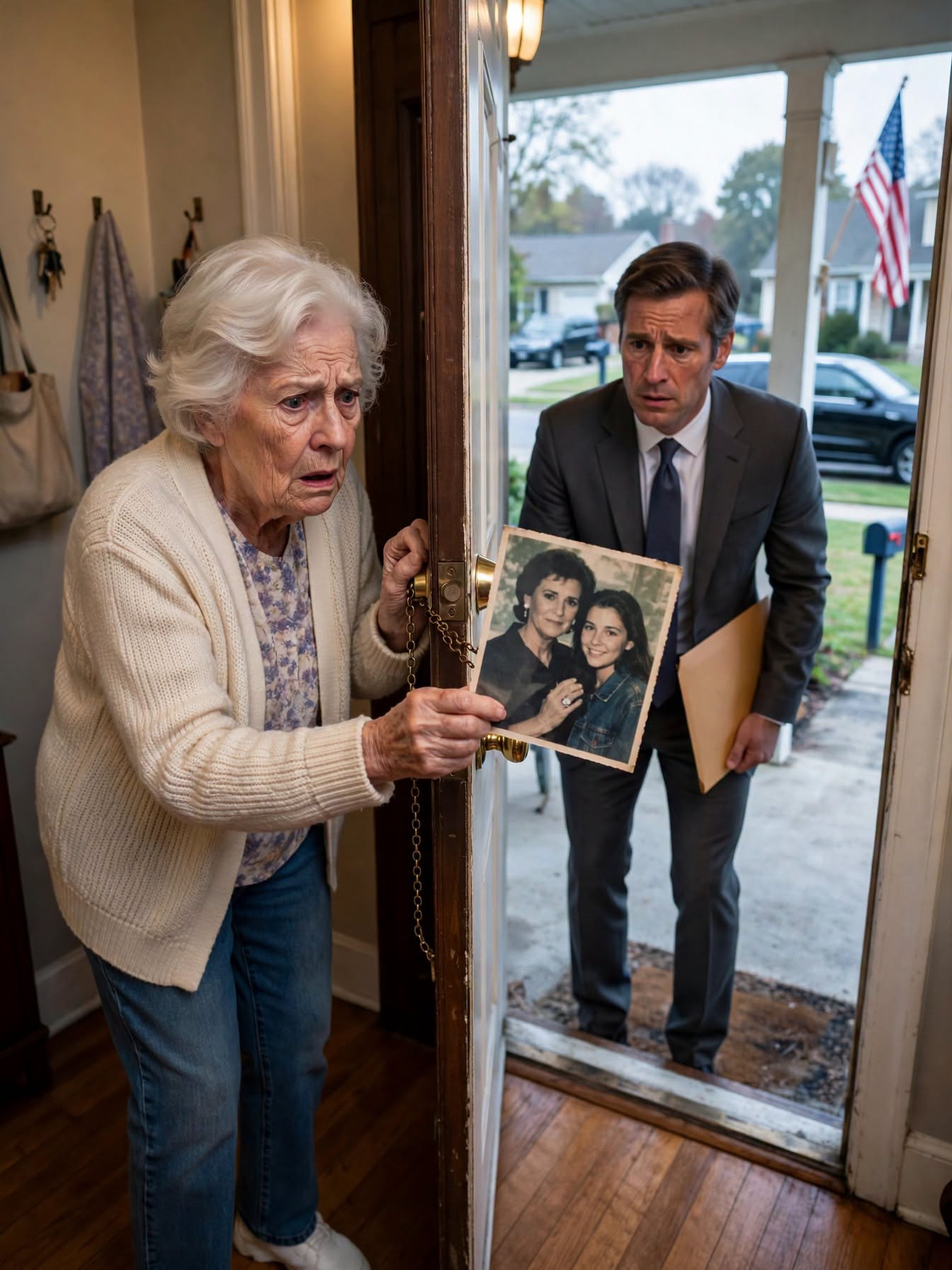
The knock on the door was light, hesitant—nothing like the demanding rap Spencer had delivered that morning.
I looked at Avis, who gave me a sharp nod, then walked down the hallway and pulled the door open.
Rosalind Vance looked smaller in person than she did in the photograph Spencer had shown me. Her hair was stark white, pinned back into a severe French twist, and her face was lined with the deep, permanent sorrow of a woman who had spent decades living in a gilded cage of her own making. Her eyes, dark and bright behind wire-rimmed glasses, scanned my face before dropping to the worn linoleum of the entryway.
“May I come in, Martha?” she asked. Her voice was remarkably steady, carrying the crisp, cultivated cadence of old money that had never needed to raise its volume to be obeyed.
I stepped aside, holding the door open. “The house is cold, Mrs. Vance. The furnace is acting up.”
“Please, call me Rosalind,” she said, stepping inside and letting her gaze drift over the water-stained wallpaper in the hall, the mismatched coat hooks, the framed kindergarten drawings of handprints pinned to the bulletin board. She didn’t look disgusted; she looked heartbroken. “And don’t apologize for the house. It has more life in these four walls than our estate has seen in twenty years.”
She walked slowly into the kitchen, leaning heavily on her cane, and accepted the chair Avis offered her without preamble. She didn't touch the coffee I poured her. Instead, she reached into her coat pocket and pulled out a worn leather-bound journal, placing it gently on the table between us.
“Harlan is dying,” Rosalind said softly, her gaze fixed on the wood grain of the table. “The doctors say he has days, maybe hours. And all he talks about in his delirium is Lorna. Not the business. Not the empire he built. He talks about the day he told her to pack her bags because she chose a man who smelled of diesel fuel and grease.”
“Gavin was an honest man,” I said, my voice hardening. “He worked twelve-hour shifts to keep his buses running safely for children whose parents could afford private cars. He never asked your family for a dime.”
“I know,” Rosalind whispered, her eyes shining with unshed tears. “I know he was, Martha. And that was his unforgivable sin in Harlan’s eyes—he proved that a person could be good without being rich.”
She opened the leather journal. The pages were filled with neat, old-fashioned cursive—entries dating back seven years, tracking every milestone of a little girl’s life that Rosalind had been forced to witness from a distance.
“Spencer didn’t just happen to find your address three months ago,” Rosalind said, looking up at me. “I hired a private investigator the day Lorna died. I’ve known where you lived every single day. I drove past this house three times last winter when I heard Poppy had bronchitis. I sat in the car just down the street, watching the chimney smoke, praying you had enough firewood.”
The anger that had been simmering in my chest suddenly flared into something hot and sharp. “You sat in a car? You watched us freeze while you had millions sitting in a bank account registered in your name?”
“If I had stepped out of that car, Harlan’s security detail would have intercepted me before I reached your gate,” Rosalind said, her voice breaking for the first time. “He had our communications monitored, Martha. Every phone call, every bank transaction, every letter. If he knew I was sending money to support Lorna’s child, he would have locked me away in a sanitarium or cut the trust entirely before the probate courts could secure it. I was a prisoner in my own home, just as Lorna was.”
She reached across the table and pushed the journal toward me.
“I didn't come here to ask for forgiveness,” she continued. “I came to give you the one thing Harlan cannot touch.”
---
Related Stories