Chapter 4: The Receipt in the Pocket
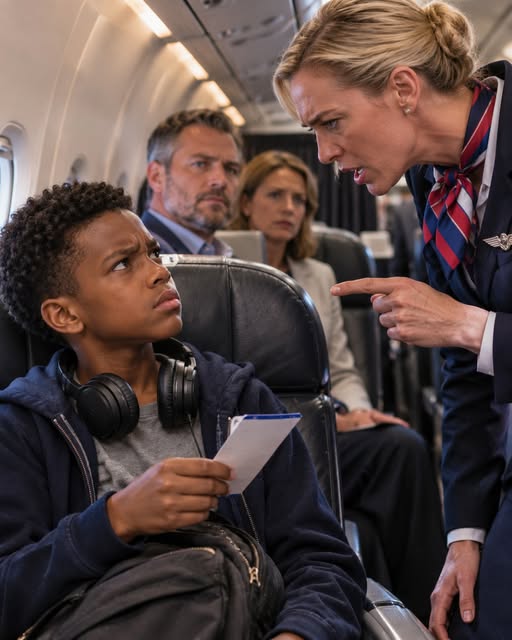
The Boeing 737 climbed smoothly through the low autumn cloud deck over north Texas, the sunlight breaking through the cabin windows in brilliant, golden sheets as we leveled off at thirty-two thousand feet.
The seatbelt sign chimed once and went dark.
Sarah walked down the aisle, offering warm towels and asking if anyone in rows one through four needed a refill on their drinks. When she reached my row, she handed me a small plastic bag of chocolate-chip cookies with a bright yellow smiley-face sticker on the front.
""From the captain,"" Sarah whispered with a wink. ""She said you're the most composed passenger she's flown all week.""
""Thank you, Sarah,"" I smiled.
Across the aisle, Robert Miller had opened his laptop, typing furiously into an encrypted corporate email client.
I waited until Sarah returned to the forward galley behind the blue privacy curtain.
Then, keeping my hands inside my jacket pockets, I pulled out the small, paper baggage claim receipt that the curbside skycap had handed my father three hours ago outside Terminal C.
It was standard white thermal paper, slightly crumpled at the corners.
Printed across the top was the Mesa Airlines logo, followed by my name: *JOHNSON, MALIK (UMNR).*
Below my flight details was a standard barcode, and beneath that, a ten-digit alphanumeric tracking sequence:
*BAG TAG: MS-4491-0822.*
I looked closer.
Just below the barcode, where the computer usually printed the baggage weight and terminal destination, there was a secondary line of text stamped in faint purple ink:
*MANIFEST AUDIT CODE: DOT-OIG-SPECIAL RESERVE // BAY 3.*
My heart hammered against my ribs like a trapped bird.
*DOT-OIG.*
Department of Transportation — Office of the Inspector General.
My father hadn't just dropped me off at the airport with a hug and a bag of pretzels.
He hadn't been caught off guard when Catherine Ward tried to bully me out of seat 2A.
He had known about the reservation scrubs before we even pulled into the parking garage this morning.
I looked at Robert Miller. The executive was leaning back in his seat, rubbing his temples, looking completely exhausted by the corporate warfare playing out around him.
""Mr. Miller?"" I said softly.
Miller glanced up from his screen, adjusting his reading glasses. ""Yes, Malik?""
""What is Bay Three?""
Miller’s fingers froze over his keyboard.
He turned his head slowly, his eyes narrowing behind his silver frames. ""Where did you hear that term?""
I held up the white thermal receipt, pointing to the purple ink stamped at the bottom.
Miller leaned across the aisle, took the paper gently from my fingers, and read the ten-digit code.
The color that had returned to his face after David Vance’s departure drained away again, leaving him looking stunned, almost paralyzed.
""Bay Three is the secure cargo compartment directly beneath the forward galley,"" Miller whispered, his voice barely louder than the hum of the air vents above our heads. ""It’s reserved exclusively for priority diplomatic mail, organ transplant transfers, and...""
He stopped.
He looked toward the floorboards between our feet, his gaze piercing through the carpet as if he could see the metal containers resting in the dark belly of the plane.
""...and sealed federal evidence containers,"" Miller finished.
""What's in there, Mr. Miller?"" I asked.
Miller handed the receipt back to me, his hands noticeably shaking.
""Two weeks ago,"" Miller said, looking around the cabin to ensure no other passengers were listening, ""the regional maintenance depot in Abilene reported thirty-four counterfeit titanium fan blades that had been installed on Mesa’s regional fleet to bypass supply chain delays.""
My breath locked in my throat. ""Counterfeit parts?""
""Parts purchased from an uncertified supplier in Mexico,"" Miller revealed. ""David Vance personally authorized the purchase orders using a corporate credit shell. When the FAA began sniffing around the paper trail, Vance panicked. He needed those parts out of the Texas maintenance facility before the federal raid on Monday.""
Miller leaned in so close I could smell the peppermint on his breath.
""David Vance wasn't flying to Charlotte to catch a connecting flight, Malik,"" Miller whispered. ""He was escorting that evidence out of state. He had those parts packed into an unmanifested aluminum crate, marked as priority baggage, and loaded into Bay Three under his personal executive baggage waiver.""
The realization hit me with the force of an oncoming train.
Vance hadn't just wanted my seat because he was arrogant.
He had needed seat 2A because the emergency access hatch for the forward cargo inspection bay was located directly beneath the floor carpeting of row two.
From seat 2A, a passenger with a physical override key could access the manual release latch for the forward compartment during an in-flight emergency—or drop an electronic de-magnetizing pulse that would fry the digital tracking chips embedded in the crates below.
And my father had known.
My dad hadn't put me in danger; he had put me in seat 2A because he knew that as long as an eleven-year-old boy with an open ticket was sitting in that chair, David Vance couldn't touch the floor hatch without fifty passengers watching him do it.
The interphone chimed twice from the forward galley.
*Ding-ding.*
Sarah’s voice came through the cabin speaker, sounding tense, clipped, and completely different from her earlier warmth:
*""Ladies and gentlemen, from the flight deck. We have been instructed by air traffic control to divert our arrival from Charlotte-Douglas International to Greenville-Spartanburg for an unscheduled technical inspection. Please remain seated with your seatbelts fastened.""*
Across the aisle, Miller’s laptop screen flashed red with an incoming priority alert.
He looked at the display, then looked at me, his eyes wide with disbelief.
""Malik,"" Miller breathed. ""Your father didn't stay in Dallas.""
""Where is he?"" I asked.
Miller turned the screen toward me.
On the flight tracking radar was a twin-engine Department of Transportation intercept aircraft, flying five miles off our starboard wing, matching our descent corridor into the mountains of South Carolina.
And piloting the chase plane was Marcus Johnson.
---
Related Stories