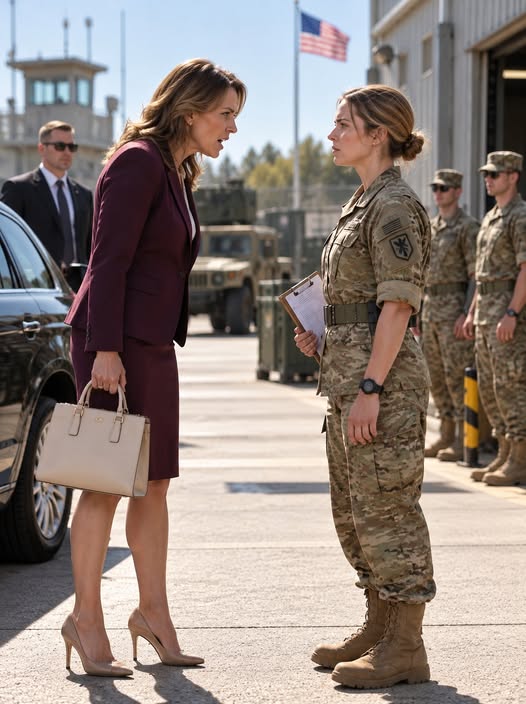
Chapter 2: The Suite on the Forty-Second Floor
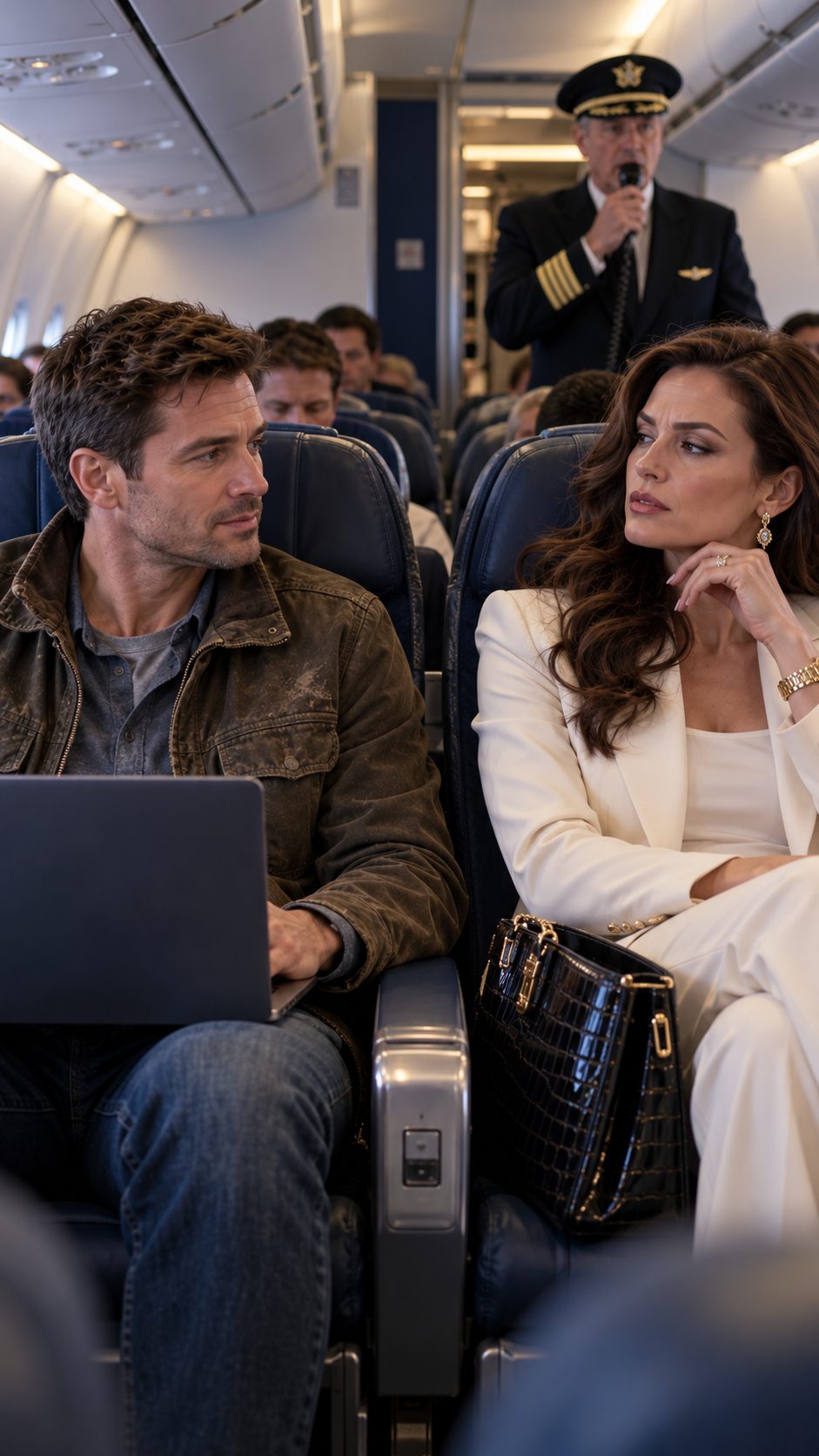
The rain in Seattle was thin and persistent, washing down the glass facade of the Columbia Center until the streetlights below blurred into streaks of amber and red.
I stepped off the elevator on the forty-second floor at 1:45 PM.
I had taken the light rail from Sea-Tac to downtown for three dollars and fifty cents. My boots were slightly damp at the welt, and my nine-year-old wool jacket smelled faintly of wet sheep and coffee, but my canvas bag was dry.
Arthur Sterling was standing by the panoramic window of the boardroom when the receptionist opened the double walnut doors.
He was sixty-eight, built like a retired dockworker in a bespoke Brioni suit, with a head of thick white hair and a reputation for firing chief executives over breakfast if their dispatch reliability dropped below ninety-eight percent.
""Caleb,"" Sterling boomed, turning around with a wide grin and extending a heavy, calloused hand. ""Dan Keller texted me from the tarmac. Said he had to embarrass you over the PA just to make sure you didn't sneak through baggage claim without saying hello.""
""Dan always had a flair for drama, Arthur,"" I said, taking his hand with a firm grip.
""He respects you. We all do."" Sterling waved a hand toward the massive oval conference table.
Sitting along the right side were four vice presidents, three corporate attorneys, and the chief financial officer of Sterling Atlantic, all surrounded by leather folders and tablets.
At the far end of the left side sat Victoria Ashborn.
She had changed out of her travel coat. She wore a sharp, midnight-blue power suit that looked like armor, her silver-streaked hair swept back into an immaculate knot. Her leather presentation binders were laid out with mathematical precision before her two technical directors.
She didn't smile when I walked in.
She looked at my damp boots. She looked at my canvas bag. But when our eyes met, there was none of the dismissal she had worn in row thirty-two. There was only a coiled, vigilant stillness.
""We were just about to review the final execution draft, Caleb,"" Sterling said, settling into the heavy leather chair at the head of the table. ""Ashborn’s team gave a hell of a presentation while you were on the train. Full fleet retrofits over eighteen months. They’re guaranteeing a nine percent efficiency boost on our secondary navigation routes.""
""Nine percent is a very attractive number,"" I said, pulling out a plain wooden chair near the foot of the table, two seats away from Ashborn's lead engineer.
Victoria leaned forward, resting her forearms on the polished mahogany. Her voice was smooth, resonant, carrying every bit of that boardroom authority she had bragged about above the clouds.
""It is an achievable number, Mr. Sterling,"" she said, her eyes tracking mine. ""Our multiplex units have undergone twelve thousand hours of simulated bench testing in our Denver laboratories. The architecture is mature, scalable, and ready for immediate deployment.""
""And the price is firm?"" Sterling asked, glancing toward his CFO.
""Two hundred and forty million,"" Victoria replied without flinching. ""All-inclusive. Hardware, firmware licenses, and three years of depot-level maintenance support.""
Sterling nodded slowly, clearly pleased. He tapped a heavy gold fountain pen against the blotter. ""Caleb, you’ve spent forty-eight hours with their technical documentation. Arthur Sterling doesn't spend a quarter of a billion dollars without his avionics conscience telling him the metal works. What are we looking at?""
Every face around the table turned toward me.
Victoria Ashborn’s technical director, a slender man named Harris with dark circles under his eyes, shifted his weight and picked up his water glass.
I opened my canvas bag, pulled out the dented laptop, and set it flat on the wood. I didn't open the screen. I reached into the front sleeve and pulled out a single sheet of paper—a standard flight-line maintenance log with three red grease-pencil marks along the margin.
""The architecture is brilliant, Arthur,"" I said quietly.
Victoria’s shoulders dropped half an inch. A faint, almost imperceptible breath of relief escaped her parted lips.
""The processing speed on the bus is forty percent faster than anything Honeywell or Collins is producing,"" I continued, sliding the paper across the table toward Sterling. ""If it functions in the air the way it functions on their bench, it will save your fleet thirty million dollars in fuel over the next five years.""
""That sounds like an endorsement to me,"" the CFO chimed in, reaching for his signature pen.
""It would be,"" I said, ""if the units didn't overheat after three consecutive hours of pressurized operation.""
The boardroom went so quiet you could hear the hiss of the rain against the double-glazed glass forty stories above fourth avenue.
Harris, the technical director, set his water glass down with a sharp, trembling clatter.
Victoria didn't flinch. Her gaze remained pinned to mine, hard and cold as mountain granite. ""Mr. Rowan is referencing an isolated thermal spike noted during extreme boundary testing in July. Our engineering bulletin addressed that anomaly four months ago.""
""Your bulletin addressed the software logging, Ms. Ashborn,"" I said, leaning forward. ""You dialed back the reporting frequency so the central maintenance computer wouldn't flag the fault code until the third cycle.""
Sterling stopped tapping his pen.
His eyes slowly moved from my face to the paper on his blotter, then over to Victoria. The easy, grandfatherly warmth that usually defined his boardroom demeanor evaporated, replaced by the lethal, calculating coldness that had built an international airline.
""Caleb,"" Sterling said, his voice dropping into a dangerous rumble. ""Explain that in plain English.""
""The units run hot because they used commercial-grade copper heat sinks instead of aerospace-grade beryllium-copper alloys to save eighteen dollars per module,"" I said, looking directly at Harris. ""When an aircraft sits on the tarmac in Phoenix or Las Vegas in August for forty minutes, the multiplex core reaches eighty-four degrees Celsius. At eighty-five degrees, the system executes an automated thermal shutdown to prevent component melting.""
I paused, letting the reality settle into the room like a cold draft.
""When that unit shuts down at thirty thousand feet,"" I added softly, ""the flight crew loses both secondary navigational displays and the backup autopilot linkage. The pilots will be flying raw data on standby instruments in the dark.""
Sterling’s hand closed around his gold pen, his knuckles whitening until the skin stretched tight.
""Victoria,"" Sterling whispered. ""Is that true?""
Victoria Ashborn did not look at her engineer. She did not look at her lawyers.
She sat tall in her midnight-blue suit, her jaw set, her breathing slow and controlled. She had built her company from an empty hangar in Colorado into a four-hundred-million-dollar defense and commercial powerhouse by never showing fear in front of a client.
""Mr. Rowan’s analysis is based on theoretical maximums, Arthur,"" she said, her voice dropping into that smooth, persuasive register she had used on the phone at Gate B14. ""Our real-world data demonstrates that the convective cooling in the forward avionics bay provides more than adequate thermal dissipation under normal operating envelopes.""
""Normal operating envelopes,"" I repeated, opening my laptop.
I spun the screen toward the center of the table.
Displayed on the display wasn't an engineering simulation. It was an internal Slack thread from Ashborn Flight Dynamics, dated October 12th—three weeks ago.
The messages were sent by Harris to Victoria Ashborn’s personal account:
*“Victoria, the bench test on Serial Unit 04 failed after two hours at forty degrees ambient. The chip de-soldered from the board. If Sterling runs these through their southern routes, they are going to have inflight aborts within sixty days. We cannot ship this hardware without re-tooling the heat sink.”*
And beneath it, the response from Victoria Ashborn:
*“We ship the current revision. We have eighty million dollars in commercial paper maturing on November first. Sign the certificate of compliance, Harris, or I will find a chief engineer who can.”*
The room fell into an abyss of silence so profound that even the rain outside seemed to fade away.
Sterling didn't yell. He didn't slam the table.
He slowly pushed back his heavy leather chair, stood up, and looked down at the woman he had known for fifteen years.
""Get out of my building, Victoria,"" Sterling said.
---
Related Stories