Chapter 4: The Ledger of the Living
The pen didn't shake.
I signed the affidavit using my full legal name: *Amelia Carter Hale, Captain, United States Army (Separated).*
I pressed the notary stamp Shaw had brought in his satchel firmly onto the blue vellum paper, the mechanical click sounding like the chambering of a round in the quiet room.
""The U.S. Attorney’s office in Alexandria will file this under seal at midnight,"" Shaw said, picking up the folder. ""The Coast Guard boarding team will take the *Chesapeake Dawn* by dawn. By tomorrow afternoon, Charles and Preston won't be worrying about divorce court. They'll be answering to the FBI's counter-proliferation task force.""
He walked to the door, paused with his hand on the brass knob, and looked back at me over his shoulder.
""You need to stay off the streets tonight, Amelia. Charles Hale is an old animal, but cornered animals don't care about decorum.""
""I have business to finish at the house, Marcus,"" I said.
Shaw’s brow furrowed. ""That house is under twenty-four-hour surveillance by Voss’s private security firm.""
""I know,"" I replied, closing the lid of my laptop. ""They're watching the front gate. They aren't watching the utility easement along the creek.""
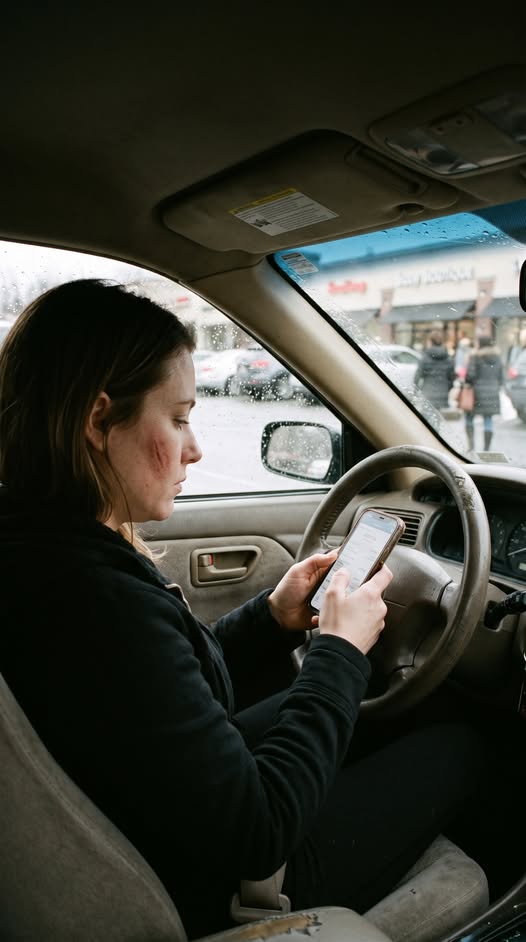
Thirty minutes later, I parked my rented sedan two blocks south of the Hale estate in Windsor Farms.
The rain had tapered to a heavy, clinging mist that blurred the yellow carriage lamps lining the brick perimeter walls. The air smelled of wet boxwood and rotting oak leaves.
For seven years, this neighborhood had been my cage. The five-acre property, with its Georgian brick manor house, slate roof, and white-columned portico, had looked like an inheritance. In reality, it had been a fortress designed to keep the world out and the quiet wife inside.
I slipped through the iron gate behind the carriage house, using the service key I had kept on my ring. The gravel along the garden path was soft under my leather boots.
The master bedroom on the second floor was dark, but the light was on in the library—Charles Hale's private sanctuary on the ground floor.
I didn't enter through the back terrace. I took the exterior cellar stairs down to the old wine vault beneath the south wing.
Most people who visited the Hale estate believed the cellar was used for Burgundy and port. But sixty years ago, during the height of the Cold War, Preston’s grandfather had installed a reinforced fireproof room behind the racking system to store maritime trade licenses and unredacted shipyard logs.
I reached behind the sixth oak tier, found the magnetic latch, and pushed.
The false panel swung back with a low, hydraulic hiss.
Inside, the room was four feet square, illuminated by a low-wattage emergency bulb that smelled of hot dust. A four-drawer steel filing cabinet sat bolted to the concrete floor.
I didn't need to pick the lock.
The combination was the hull registration number of the first cargo ship Charles had built in nineteen-seventy-four: *0-4-1-8-7-4.*
The dial turned with smooth, heavy clicks.
The bottom drawer rolled open.
Inside sat three black leather-bound ledgers. These weren't the sanitized corporate filings Martin Voss had stacked on his courtroom table. These were the handwritten records of Charles Hale's private transactions, dating back twenty-five years—every port authority bribe, every off-manifest fuel transfer, every offshore trust account held in the Cayman Islands under shell names.
I pulled out the ledger for fiscal years twenty-twenty through twenty-twenty-four and flipped to the tab marked *PROJECT MERIDIAN*.
There it was.
The contract with the logistics broker in Miami. The cash advances totaling twelve million dollars transferred to a private account in Panama.
And attached to the last page, held by a rusty brass paperclip, was a handwritten memo on Hale Maritime stationery, dated three weeks ago:
> *Preston,*
> *The girl will be served on the twenty-second. Once the premarital waiver is entered into the record, the transfer of Hub Four to the shell LLC will close. She will have no legal standing to inspect the terminal logs.*
> *Ensure she does not speak to her old military contacts.*
> *If she resists, provide Voss with the medical evaluation records from her twenty-eighteen hospital stay.*
> *A history of depressive instability will satisfy the probate judge.*
> *—C.H.*
My fingers went ice-cold.
*Her twenty-eighteen hospital stay.*
Seven years ago, in the second year of our marriage, I had suffered a miscarriage at twenty weeks.
I had spent four days in the regional hospital in Henrico, bleeding, broken, grieving the only child I would ever carry. Preston had held my hand by the bedside, stroking my hair, whispering that we would get through it, that we had time, that the family would take care of everything.
And his father had spent those four days copying my psychiatric intake forms to use as an emergency weapon if I ever stepped out of line.
A floorboard creaked above my head.
Slowly. Heavy.
The sound came from the library right above the wine vault.
I slipped the ledger into my canvas satchel, clicked the steel drawer shut, and stepped out into the cellar passageway, leaving the false panel open two inches so the latch wouldn't engage.
I climbed the narrow spiral stairs leading up to the library's concealed service door.
Through the crack in the mahogany paneling, I could hear voices.
""You're a coward, Preston,"" Charles Hale’s voice rasped, thick with whiskey and rage. ""You stood in that diner and begged her? You offered her five million dollars of my money?""
""She knows about the ship, Dad!"" Preston shouted back, his voice high, cracking with hysterical pressure. ""She had the corporate filings! She knew about the bridge loan! Do you have any idea what will happen if she brings an intelligence officer into that courtroom tomorrow?""
""She doesn't have an intelligence officer,"" Charles sneered. A glass clinked against the decanter. ""She’s an unemployed medic who spent four years reviewing truck leases in North Carolina. She bluffing. Voss will have her in contempt by three o'clock.""
""She wasn't bluffing,"" Preston whispered.
The silence that followed was heavy and poisonous.
""I looked at her eyes today, Dad,"" Preston continued softly, his voice trembling. ""She looked at me the way she looked at the reports when the hurricane hit Norfolk three years ago. Cold. Fast. Calculating every loss.""
""Then we change the calculation,"" Charles said.
A chair scraped against the Persian rug.
""What does that mean?"" Preston asked.
""It means the car that hits her on the way to the courthouse tomorrow morning won't be driving an eighty-foot truck,"" Charles said, his voice flat, devoid of any human resonance. ""It'll be a local delivery van with stolen plates. She doesn't make it to Morrison's bench, Preston. And without her testimony, the premarital forgery is just an unsubstantiated accusation by an interested party.""
My heart hammered once, hard, against my ribs, then settled into absolute, crystalline stillness.
The battlefield had changed.
This was no longer a dissolution of marriage.
This was a combat zone.
I stepped back down the cellar stairs, soundless as a shadow, slipped through the wine vault, and walked out into the misty garden.
I reached my car, threw the canvas satchel onto the passenger seat, and pulled out my phone.
I didn't call Major Shaw.
I dialed the private cell phone number of Detective Sergeant Miller, Virginia State Police, Special Investigations Division—a man who had served with my father in the 82nd Airborne before I was born.
""Sergeant Miller,"" I said when the line connected. ""This is Captain Carter. I need an emergency wiretap order on Charles Hale's residence... and four units on Hanover Avenue before midnight.""
---
Related Stories