Chapter 1: The Gathering Frost
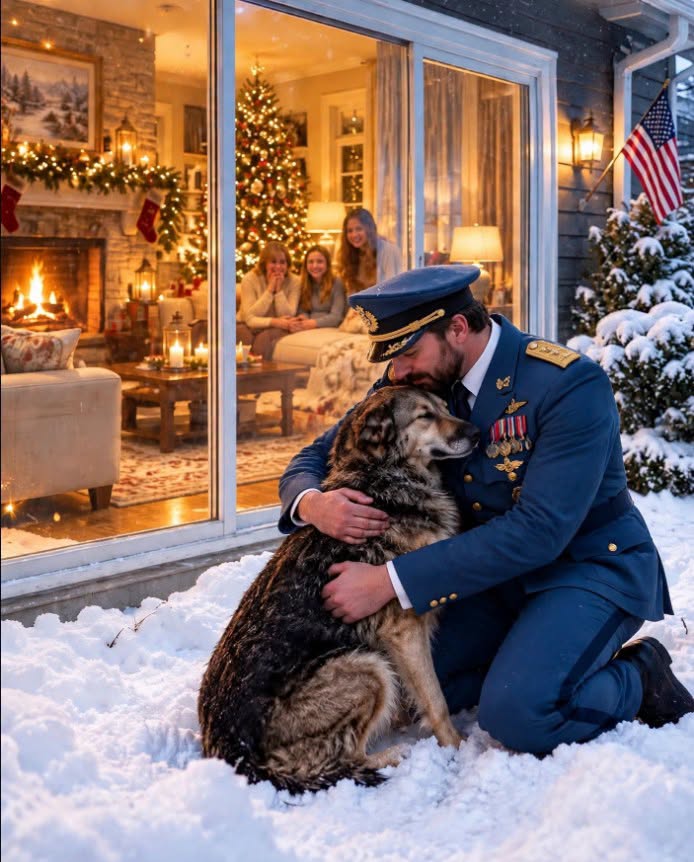
For the first two months, the arrangement felt almost normal.
Sarah and I set up our things in the converted guest bedroom upstairs, squeezing our queen-sized bed and a pair of mismatched dressers into the space. We kept our expenses low, depositing our rent money directly into a dedicated savings account every two weeks, watching the numbers climb toward our dream of a down payment.
Downstairs, my parents maintained their routine. My mother cooked Sunday pot roast; my father grumbled about the price of lumber while reading the morning paper.
And Atticus settled into the rhythm of the house.
Because my parents had hardwood floors throughout the main level, we laid down long rubber-backed runners so Atticus wouldn’t slip and wrench his bad hips. He spent his afternoons lying on a plush orthopedic dog bed near the kitchen island, where he could keep an eye on my mother’s cooking and catch any stray carrot peelings that hit the floor.
At first, my mother smiled when he nudged her knee with his gray muzzle.
“He’s a sweet old boy, isn’t he?” she’d say, tossing him a piece of apple.
But as autumn slid into early winter, the atmosphere in the house began to shift subtly, like tectonic plates grinding beneath the surface.
It started with small complaints.
“He sheds so much,” my mother remarked one morning, pointing a dustpan toward a clump of Shepherd hair near the hallway vent. “I vacuumed that rug yesterday.”
“He’s blowing his winter coat, Mom,” I replied mildly, grabbing a roll of paper towels to help clean it up. “It’ll pass.”
Then my father started making remarks about the space Atticus occupied.
“That dog bed is blocking the path to the pantry,” he muttered one evening, stepping heavily around Atticus’s bed with a carton of milk in his hand. “A seventy-pound animal needs to be outside or locked in a crate when we’re moving around the kitchen. It’s a tripping hazard.”
“Dad, his hips are too bad for the cold, and he hates crates,” I said, feeling a familiar tightness form in my chest. “He stays out of the way.”
“In a house this size, *any* animal is in the way,” my father shot back.
Sarah noticed the change before I did. One night, while we were upstairs folding laundry, she closed our bedroom door and looked at me with deep concern in her eyes.
“Your parents are getting tired of him, Mark,” she said softly.
“They agreed to let him move in with us,” I argued, though the defensiveness in my own voice betrayed my growing unease. “It’s temporary. Just a few more months.”
“It’s not just the dog,” Sarah murmured, folding a sweatshirt with sharp, mechanical precision. “Have you noticed how your mother looks at us when we talk about house hunting? Like we’re guests who’ve stayed past our welcome, even though she invited us.”
I brushed it off. I wanted to believe that family meant grace, that my parents wouldn't resent us for trying to build our lives.
I was dangerously naive.
By mid-December, the temperature dropped into the teens, and a fierce winter storm warning was issued for the entire county. The local news anchors warned of blizzard conditions, dropping wind chills, and heavy snow accumulation expected by nightfall.
That was the day the frost inside the house turned from emotional to literal.
---
Related Stories