Chapter 1: The Total on the Page
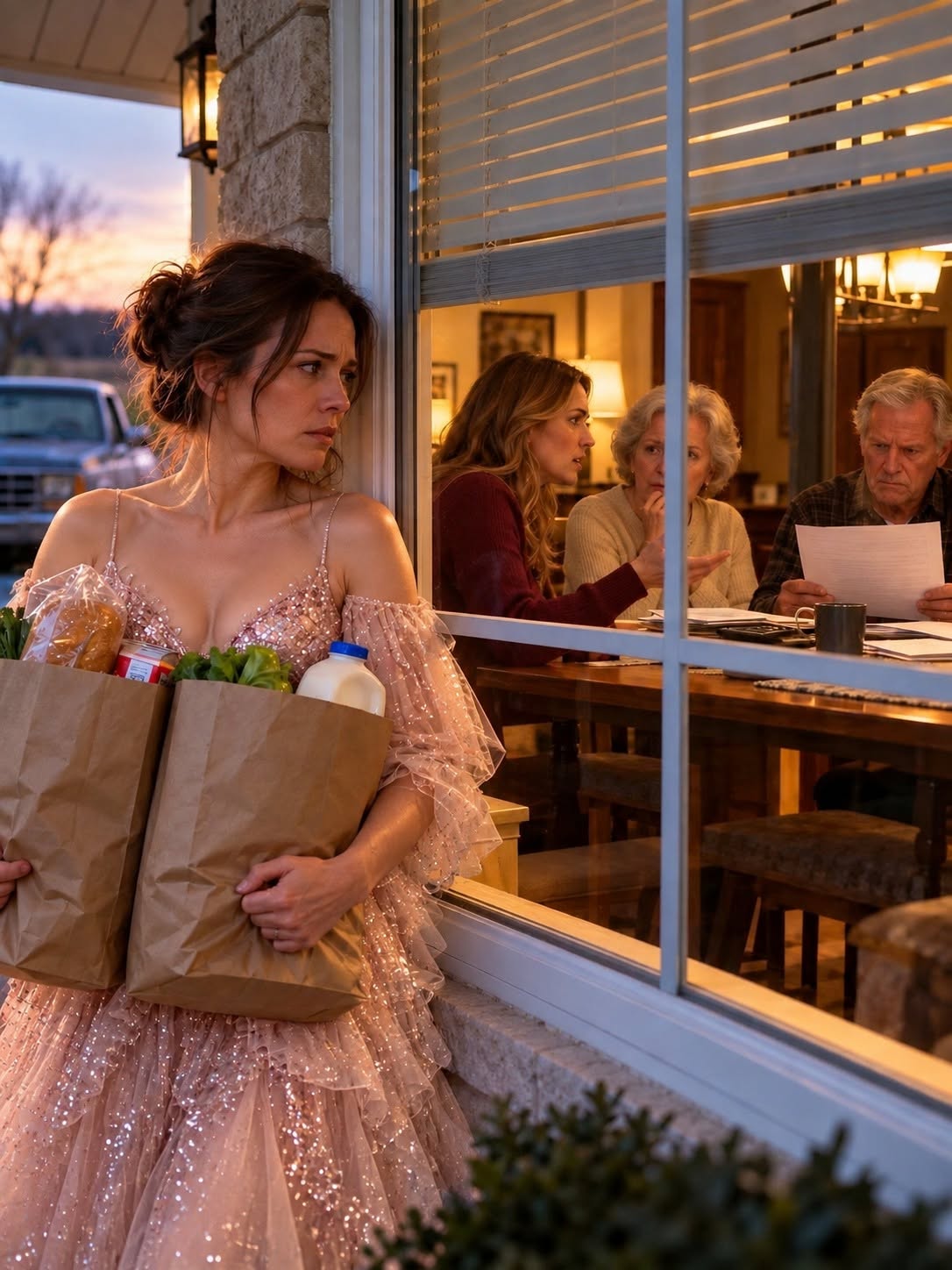
The number at the bottom of the fourth page was $482,600.
It was printed in the plain, blocky font of a local credit union statement, boxed in by two faint gray lines. Beneath it sat twelve years of withdrawals, categorized with the neat, methodical shorthand of someone who had turned deceit into a bookkeeping routine.
*10/14 – Fay tractor hydraulic repair: $4,200.*
*03/18 – Spring planting shortfall, Fay: $6,500.*
*07/22 – Emergency combine parts, North Parcel: $8,900.*
I stared at the numbers until the black ink seemed to bleed into the white paper. My hands, calloused and rough from fifteen years of handling fencing wire and rusted hitch pins, did not shake.
""Fay?""
Dad’s voice was barely louder than the hum of the refrigerator. He had aged ten years since breakfast. The skin beneath his eyes was bruised with gray shadows, and his cardigan, usually buttoned straight to the collar, hung crooked over his chest.
""I have never seen a single cent of this,"" I said. My voice was quiet, flat, and steady. ""Not four thousand. Not four dollars.""
Mom let out a sound that wasn't quite a breath and wasn't quite a sob. She set her ceramic mug onto the saucer, but her fingers missed the rim, sending lukewarm coffee splashing across the laminate tabletop. She didn't clean it up. She just sat there, her hands trembling in her lap, looking between me and the woman sitting opposite her.
Ranata hadn't moved. She had her elbows propped on the table, her manicured fingers laced tightly together beneath her chin. Her posture was rigid, the defensive stiffness of someone who had spent her entire life convincing herself that her own version of the truth was the only one that mattered.
""You don't understand the pressure we were under,"" Ranata said. Her voice didn't carry shame. It carried the sharp, defensive edge of an executive being audited by someone she considered beneath her.
""The pressure *who* was under?"" Dad asked. He didn't yell. The absence of anger in his voice was far more terrifying than a shout. ""I took two home equity lines on this house, Ranata. I took early distributions from my state pension. Every time you came over here with another story about Fay losing the north acreage or Fay freezing in that farmhouse without heat, your mother and I went to the bank.""
""And where did you think that money was going, Dad?"" Ranata fired back, her eyes finally flashing toward him. ""Look at her! Look at what she drives! Look at her clothes! You think an eighty-acre farm runs on stubbornness? I was managing the family's assets! Desmond’s firm had bridging capital tied up in the regional logistics park. I was balancing cash flow!""
""You weren't balancing cash flow,"" Desmond muttered from the shadow beside the sink.
Ranata’s head snapped toward her husband. ""Desmond, shut up.""
""No,"" Desmond said, his face pale under the kitchen's warm track lighting. He was wearing his tailored fleece and Italian loafers, looking completely out of place in my parents' modest ranch-style kitchen. He held a glass of water he hadn't touched. ""We’re done lying, Ranata. The process servers were at the office this morning. The sheriff’s notice came to the house yesterday. It's over.""
The word hung in the room like cold smoke.
Dad looked slowly from Desmond back to Ranata. ""What sheriff's notice?""
Ranata looked away, her lips pressing into a thin, colorless line.
""What sheriff's notice, Ranata?"" Dad repeated, his hand coming down flat on the kitchen table. The force of it rattled the silverware in the ceramic crock by the stove.
Desmond swallowed hard. ""The second mortgage on this house, Mr. Davis. The balloon payment matured in January. Ranata said she was handling the extensions through her corporate account. She wasn't. The bank filed for summary judgment. You have fourteen days before the property is listed for judicial foreclosure.""
My mother’s hands went to her mouth. She didn't scream. She simply shrank backward into her chair, her eyes fixing on the wallpaper she had hung with her own hands twenty-five years ago.
Dad sat entirely still. His shoulders, which had carried thirty years of shifts at the regional freight terminal, bowed forward as if an invisible beam had cracked across his spine.
""Our home,"" Mom whispered. ""Robert... our home.""
I looked at Ranata.
For fifteen years, my sister had arrived at Sunday dinners with boutique shopping bags from downtown, talking about Desmond’s commercial developments, their winter vacations to Scottsdale, and their daughter’s private equestrian lessons. And every time she spoke, she made sure to drop a small, pitying remark about me—the feral younger sister who lived among the mud and the sheep, too proud to admit she was drowning.
She hadn't just manufactured my poverty to feel superior.
She had manufactured my poverty to liquidate our parents' retirement into her husband's sinking commercial ventures, using my silence as her shield.
Dad turned his head slowly toward the chair where I sat.
His eyes traveled down to the plain brown folder resting against my work boots on the linoleum. It was thick, bound with heavy metal clasps, the cardboard edges slightly scuffed from sitting in the glove box of my pickup.
""You brought papers too, Fay,"" Dad said, his voice hollowed out, stripped of everything but raw exhaustion. ""What did you bring? More bills? Is that why you came by this afternoon?""
He reached out an old, liver-spotted hand toward the brown folder, expecting another ledger of debt. Another failure from the daughter who couldn't keep her head above water.
I reached down, lifted the folder, and placed it directly in the center of the table, over the top of the credit union statements.
""Open it, Dad,"" I said.
Related Stories