Chapter 5: The Name on the Glass
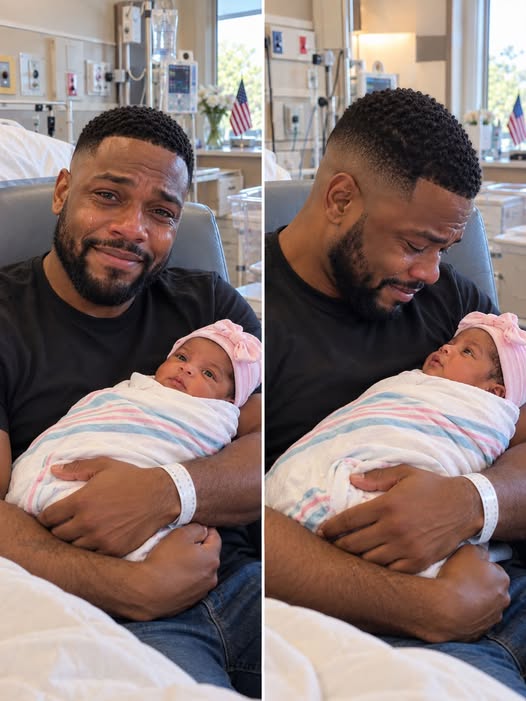
The nursery observation corridor was completely deserted.
At seven-thirty on a Tuesday evening, the visiting hours for the maternity wing had closed, and the overhead fluorescent banks had been dimmed to a pale, aqueous blue.
Through the plate-glass window of Room 412, two pediatric nurses wearing yellow isolation gowns were standing over the clear plastic bassinet. One of them held an electronic barcode scanner, cataloging the small white plastic bands secured around the newborn’s left wrist and right ankle.
The second nurse was gently folding a pink cotton receiving blanket around the infant’s chest.
I stood with my forehead pressed against the cold glass.
The grease on my hands left a faint, smudged crescent on the polished surface, but I didn't pull away.
She weighed six pounds, two ounces. The handwritten medical card slotted into the front of the bassinet read simply: **INFANT FEMALE MILLER – BEDSIDE EVIDENCE / HOLD.**
She had a thick mop of dark, raven-black hair—not the golden-brown curls that my three boys had been born with, but the deep, ink-black hair of a girl whose family I had never met. Her skin was slightly mottled, a pale porcelain pink that looked almost translucent beneath the blue night-lights.
As I watched through the glass, her tiny rosebud mouth opened in a silent, yawning stretch. Her miniature hands, freed from the cotton mittens, reached into the empty air, her five perfect, translucent fingernails catching the light.
She didn't know about the municipal dump truck on the bypass four years ago.
She didn't know about the sixty thousand dollars of medical debt, or the motel room off the interstate in Wilmington, or the two white pills dissolved in a paper cup of water.
She didn't know that the woman who had carried her through thirty-eight weeks of morning sickness was lying on a stainless-steel drawer three floors below our feet.
She only knew that the world was cold, and that the bassinet was hard, and that nobody was holding her against their chest.
""Clara.""
My mother’s voice came from three paces behind me.
She had sent Liam home in a county cruiser with his soccer coach’s wife. She stood in the dim corridor with her coat over her arm, holding my old leather handbag and the keys to my minivan.
""We need to leave, darling,"" my mother said softly. ""The district attorney’s investigators are setting up in the administrative conference room. The local news vans are already pulling into the emergency bay outside.""
""I had the name picked out since I was nineteen, Mom,"" I said.
My voice didn't sound like mine. It sounded like an old woman speaking from the bottom of an abandoned well.
""I know, Clara,"" my mother whispered, stepping up beside me, resting a gloved hand on my trembling shoulder. ""You wanted to name her Eleanor. After your grandmother.""
""Eleanor Grace Vance,"" I whispered, watching the baby’s tiny chest rise and fall beneath the striped hospital cotton. ""I had the nursery painted in my head. Pale yellow walls. White wicker shelves. The little wooden rocking chair my dad carved before he had his stroke.""
I lifted my right hand, pressing my palm flat against the plate glass, right where the baby’s bassinet sat on the other side.
""Mark kept that box in the garage for four years, Mom,"" I said, a jagged, dry sob tearing through my throat. ""He kept it on the high shelf above his socket wrenches. Every time he went out there to change the oil on the mower, every time he fixed the chain on Liam’s bicycle, he looked at that orange bonnet.""
""He was sick, Clara,"" my mother said, her fingers tightening on my coat. ""A man who builds an altar out of a lie is a sick man.""
""No,"" I said, shaking my head slowly, feeling the cold glass numb my forehead. ""He wasn't sick. He was monstrously, terrifyingly clear. He thought if he gave me what I wanted, the sin wouldn't count. He thought love was a transaction where you can pay for a murder with a cradle.""
Inside Room 412, the transport team arrived.
Two state marshals in dark tactical vests, accompanied by a female pediatric transport nurse carrying a specialized heated incubator pod, stepped through the double doors.
The nurse on duty lifted the baby out of the plastic bassinet.
The infant began to cry—a thin, reedy, kitten-like wail that didn't penetrate the double-paned acoustic glass, but I could see her tiny throat working, her mouth an open oval of raw, instinctual terror as stranger's hands bundled her into the medical transport pod.
The female marshal snapped the clear acrylic lid of the pod shut.
*Click.*
The latch engaged. The red digital temperature display on the pod illuminated: **98.6°F – TRANSPORT LOCK ENGAGED.**
The transport team turned toward the rear service elevator, wheeling the gurney away from the window, their rubber soles squeaking in synchronized rhythm down the tiled floor.
The room behind the glass was empty now.
Just an unmade plastic bassinet, a discarded paper tape measure, and a strip of blue umbilical clamp tape lying on the floor.
I stood there in the empty, blue-lit corridor for five long minutes, staring at the empty space where the baby had been.
My mother held out the minivan keys.
""Come home, Clara,"" she said. ""Liam and Noah are waiting. The four-year-old hasn't had his bath.""
I looked at the silver keys in my mother's palm.
I looked at the grocery store loyalty tag hanging from the brass ring, the little plastic photo fob with Liam's kindergarten school portrait, the small dent on the ignition key where Mark had dropped it on the concrete driveway three years ago while building the boys' swing set.
My life was waiting for me forty miles north.
Three boys who needed dinner. A mortgage that had twelve years left on the amortization schedule. A pile of laundry sitting on the dryer in the utility room.
And a cardboard box sitting on the high shelf above the tools in the garage.
I took the keys from my mother's hand.
""I'm not going home yet, Mom,"" I said.
My mother frowned, her brow furrowing in alarm. ""Clara, what are you talking about? There is nothing left for you here. The state has the child. Mark is in the basement holding cells with the felony intake unit.""
I turned away from the glass.
I didn't walk toward the front lobby where the cameras were flashing against the rain-soaked entrance.
I walked toward the stairwell door marked: **DEPARTMENT OF FORENSIC PATHOLOGY & AUTOPSY SUITE – AUTHORIZED PERSONNEL ONLY.**
""Clara!"" my mother called out, her voice sharp with sudden, panicked fear as her heels clicked frantically after me. ""Where are you going?""
I pushed the heavy steel fire door open, my hand steady on the cold panic bar.
""Laura Miller has no family left in this state, Mom,"" I said, looking back over my shoulder into the sterile light of the maternity hall. ""Her brother is in a cemetery in Guilford. Her father is in the ground in High Point. And her mother is in a locked memory-care unit in Raleigh.""
I stepped through the door onto the concrete landing of the stairwell.
""Somebody has to claim her body,"" I whispered. ""And somebody has to tell the coroner what name to put on her headstone.""
Related Stories