Chapter 1: The Welcome Home Committee
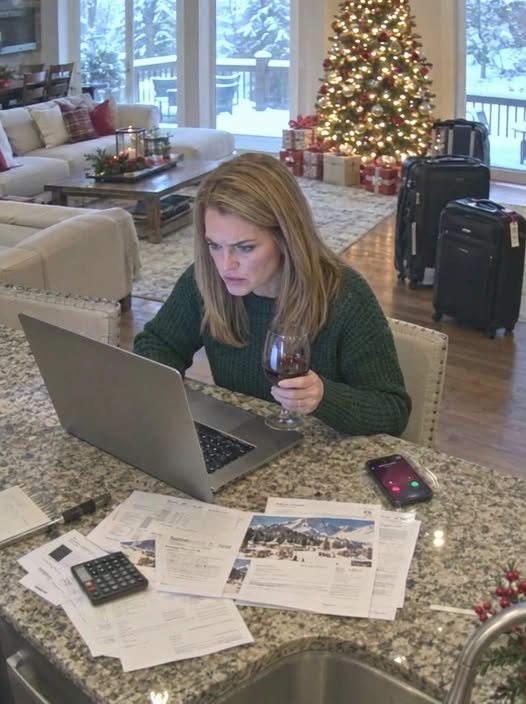
The first sign that my family had learned absolutely nothing arrived before my luggage even hit the carousel at O’Hare.
I stepped off the fourteen-hour connection from Doha, sun-kissed, deeply rested, and still carrying the faint scent of coconut oil and sea salt. My skin had color, my shoulders were dropped two inches lower than they had been in a decade, and the chronic tension headache that had lived at the base of my skull since my twenties had completely vanished. For twelve glorious days, I hadn't fielded a single passive-aggressive text or solved a single manufactured crisis.
Then I took my phone off airplane mode.
The device vibrated so violently in my palm that it nearly slipped from my fingers. Sixty-four text messages. Twelve missed calls. Three voicemails.
I ignored the avalanche of notifications, grabbed my rolling suitcase, and headed toward the ground transportation exit. It was mid-January in Chicago, thirty-one degrees with dirty gray slush lining the curbs, a brutal contrast to the turquoise lagoon I had floated in forty-eight hours ago. I zipped my down coat, pulled on my leather gloves, and ordered an Uber Black.
Ten minutes later, as the sedan pulled into the quiet, tree-lined cul-de-sac of my suburban neighborhood, my headlights swept across my driveway.
Parked directly in front of my three-car garage was Brad’s battered silver Ford F-150.
Beside it sat my mother’s beige Toyota Camry.
My hands tightened on the leather strap of my purse. They weren't just waiting; they had made themselves comfortable. Smoke drifted lazily from my stone chimney, and the exterior floodlights I had set on a timer were switched on.
I paid the driver, took a slow, grounding breath of the freezing winter air, and walked up the front flagstone walkway. When I inserted my key into the deadbolt, it didn't turn.
The lock had already been unlocked from the inside.
I pushed the heavy oak door open. The foyer was stiflingly warm, smelling of cinnamon potpourri and fried pork chops—my mother’s signature meal whenever she wanted to soften the ground before detonating a financial bomb. Sitting on my imported Turkish runner rug was a row of muddy winter boots: Brad’s work boots, my sister’s snow boots, my mother’s orthopedic slip-ons, and my father’s loafers.
""Sarah? Is that you, honey?""
My mother, Helen, hurried out from my kitchen wearing one of my linen aprons. Her gray curls were meticulously sprayed, and she wore that trembling, fragile-martyr expression she had weaponized against me my entire life.
Behind her came Veronica, holding a mug of my expensive pour-over coffee. She looked tired, pale, and thoroughly deflated, wearing an oversized sweater that looked three sizes too large.
""Mom. Veronica,"" I said, dropping my keys into the porcelain dish on the console table. I didn't take off my coat. I didn't step past the foyer threshold. ""Who gave you a key to my house?""
My mother’s face fell into familiar lines of wounded piety. ""Sarah, please. Is that any way to greet your family after disappearing for three weeks? We were worried sick about you! You turned your phone off, you abandoned us over the holidays—""
""I have a smart lock with an emergency entry pad,"" I interrupted, staring directly at Veronica. ""The master PIN is for emergency first responders and house cleaners. How did you get in?""
Veronica shifted on her feet, averting her eyes. ""Dad knew the code you set for the water heater replacement two years ago. Sarah, please don't start with the hostility. We came here to make peace. We've been waiting for six hours.""
""In my house. Eating my food. Using my utilities."" I took off my gloves, one finger at a time, keeping my posture rigid. ""You didn't come here to make peace, Veronica. If you wanted to make peace, you would have sent flowers or waited for me to answer your voicemail. You're here because something broke, and you need me to pay to fix it.""
""Sarah!"" my father’s booming voice echoed from my living room.
Arthur strode into the hallway, a glass of my twenty-year-old single malt scotch in his hand. He looked older, his jowls sagging, but the paternal arrogance that had dictated my childhood was still plastered across his features. Brad trailed two paces behind him, looking like a whipped dog with his hands shoved deep into his denim pockets.
""Your mother cooked dinner,"" Arthur barked, waving his glass dismissively. ""Your sister came here to swallow her pride and apologize face-to-face. Show some damn respect and sit at your own table.""
I looked at the four of them standing in my foyer. For eighteen years, this exact formation had worked. The weeping mother, the defensive sister, the posturing father, and the silent, parasitic brother-in-law. They created a suffocating wall of obligation, backing me into a corner until I pulled out my checkbook just to make the noise stop.
I smiled. It wasn't a warm smile. It was the cold, clinical expression I used when terminating third-party vendor contracts at work.
""You have five minutes to get your coats,"" I said quietly.
The hallway went dead silent.
""What did you say?"" my father growled, his face reddening.
""I said you have five minutes to pack up your muddy boots, put down my scotch, and get out of my home,"" I repeated. ""If you are still inside this foyer at eight-fifteen, I am pressing the silent alarm on my security panel and reporting four adult trespassers to the Cook County Sheriff.""
""Sarah, you wouldn't!"" Veronica gasped, clutching her coffee mug against her chest. ""The neighbors—""
""The neighbors already know I was in the Maldives,"" I replied. ""And they know I didn't invite you. Four minutes.""
Brad finally cleared his throat, taking half a step forward. ""Look, Sarah... just hear us out. We’re in real trouble here. We wouldn't be here if it wasn't serious.""
""Brad,"" I said, looking him up and down with unvarnished disgust. ""The only time you ever speak to me is when you're in real trouble. And frankly, your trouble stopped being my payroll three weeks ago.""
""It's about Dad's house!"" my mother cried out, breaking down into ragged, theatrical sobs, burying her face in my stolen apron. ""They're going to seize the house, Sarah! They're taking our home!""
I paused, my hand resting on the banister of my staircase.
My parents owned a modest, three-bedroom ranch in Arlington Heights. It was fully paid off seven years ago—paid off with a seventy-thousand-dollar lump-sum check written from my personal money market account after my first major corporate promotion.
""The house has no mortgage, Mom,"" I said, my brow furrowing slightly. ""What are you talking about?""
Arthur looked at his scotch, his jaw working silently, the bluster draining from his posture like air from a punctured tire.
Veronica looked down at her boots.
Brad was the one who pulled a crumpled, certified legal notice from his back pocket, holding it out with a trembling hand.
I took the envelope, opened the tri-fold document, and scanned the bold, stamped red header across the top page:
NOTICE OF DEFAULT AND IMMINENT FORECLOSURE PROCEEDING.LENDER: HORIZON COMMERCIAL LENDING CORP.COLLATERAL PROPERTY: 1412 MAPLEWOOD TERRACE, ARLINGTON HEIGHTS, IL.OUTSTANDING PRINCIPAL AND ACCRUED PENALTIES: $164,500.00.FINAL CURE DEADLINE: JANUARY 20TH.
January 20th was five days away.
I stared at the document, then looked up at my father. ""You mortgaged the deed I gave you?""
""It wasn't a mortgage,"" Arthur stammered, his eyes darting toward Brad. ""It was a commercial equity bridge loan. To help Brad expand the contracting company.""
""Brad doesn't have a contracting company,"" I said, my voice dropping to a whisper of pure, icy disbelief. ""Brad has a pickup truck and an expired business license.""
""He was building a fleet, Sarah!"" Veronica shrieked, defensive rage instantly overriding her guilt. ""He needed heavy machinery! We were going to pay it back before the balloon payment hit in December, but the commercial market froze, and the cabin cancellation wrecked our cash flow!""
""My cancellation?"" I laughed, a sharp, humorless sound that echoed off the vaulted ceiling. ""You gambled our parents' home on a speculative equipment loan, and you're blaming an eighteen-thousand-dollar ski trip?""
""Sarah, please,"" my mother wept, dropping to her knees on my entryway floor, her hands reaching out to clutch the hem of my woolen coat. ""The bank gave us until Friday. If we don't wire the delinquent sixteen thousand dollars by noon, they accelerate the entire balance. We'll be on the street. Your father and I will be homeless.""
I looked down at my mother sobbing at my feet, then at my sister, then at the two men standing behind them waiting for the miracle they had come to expect.
Then I flipped to the final page of the foreclosure filing.
And right there, on the secondary line marked Authorized Co-Guarantor and Liquidity Underwriter, sat my printed legal name: Sarah Elizabeth Jenkins.
Beside it was a signature that looked remarkably like mine—written in blue ballpoint ink, dated three months ago, while I was leading a trade conference in Frankfurt.
Related Stories